The Last Mile Liturgy: How Retail Shop Delivery and Local Catering Services Are Redefining Small Business Logistics
The modern food service landscape is no longer defined by the four walls of a kitchen or the static counter of a retail shop. Instead, it is shaped by the invisible threads of logistics—those fleeting, high-stakes moments when a meal transitions from preparation to plate, from shop shelf to customer doorstep. The rise of retail shop delivery and local catering services has not just expanded the reach of small businesses; it has forced them to rethink the very mechanics of how they operate. The last mile, once an afterthought, is now the battleground where customer loyalty is won or lost.
The Retail Shop Delivery Paradox
For decades, retail shops—whether selling artisanal cheeses, specialty baked goods, or curated meal kits—operated under a simple premise: if you build it, they will come. Foot traffic was the lifeblood of these businesses, and proximity to customers was their greatest asset. But the digital revolution, accelerated by the pandemic, has dismantled this model. Today, a customer in a neighboring suburb expects the same level of convenience as one walking past the storefront. The result? A scramble to adapt, often with mixed success.
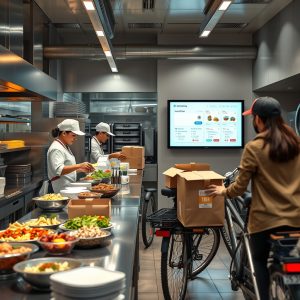
The paradox of retail shop delivery lies in its dual nature: it is both an opportunity and a logistical nightmare. On one hand, it allows small businesses to compete with larger chains by offering on-demand services that were once the exclusive domain of corporate giants. On the other, it introduces a host of variables—traffic patterns, delivery windows, temperature control, packaging integrity—that can turn a profitable order into a costly mistake. The businesses that thrive in this environment are those that treat delivery not as an add-on but as a core competency, one that requires the same precision as product sourcing or customer service.
The Local Catering Service Advantage
While retail shops grapple with the complexities of delivery, local catering services have long understood that logistics are inseparable from the culinary experience. A wedding reception, corporate event, or private dinner is not just about the food; it’s about the seamless execution of a promise. The best caterers don’t just deliver meals—they deliver an experience, one where timing, presentation, and reliability are as critical as the ingredients themselves.
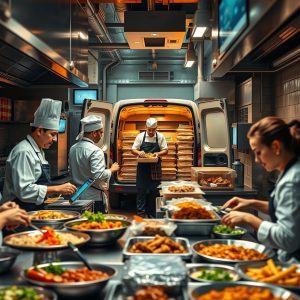
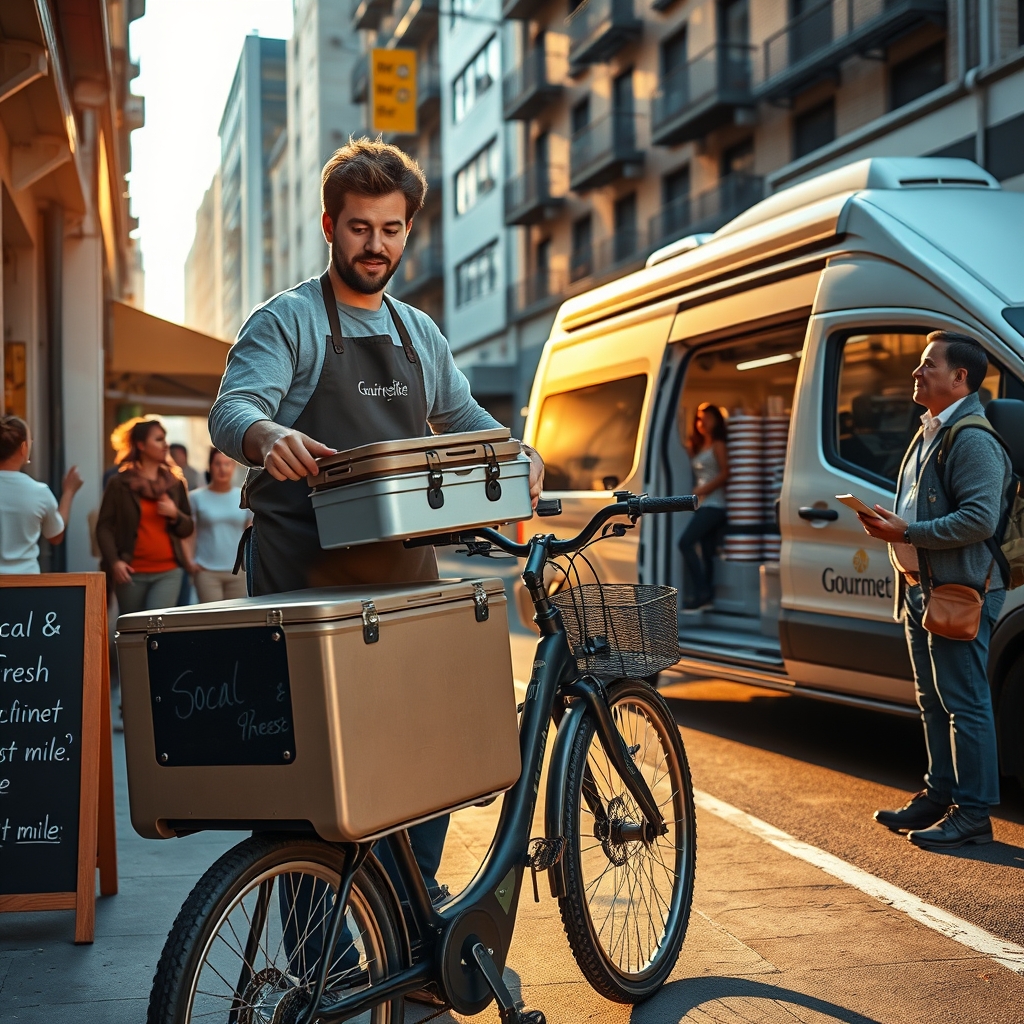
This advantage, however, is not innate. It is the result of a deliberate focus on micro-logistics—the art of optimizing every step of the delivery process, from the moment an order is placed to the second it is presented to the customer. For local caterers, this often means investing in specialized equipment (insulated containers, temperature-controlled vehicles), training staff to handle last-minute changes, and developing contingency plans for everything from traffic jams to inclement weather. The goal is not just to meet expectations but to anticipate them, turning potential disruptions into opportunities for customer service excellence.
The Small Business Logistics Revolution
The shift toward on-demand services has not just changed how small businesses operate; it has redefined what it means to be a small business in the first place. The traditional model—where a shop or catering service relied on a local customer base—is no longer sufficient. Today, success hinges on a business’s ability to scale its logistics without sacrificing the personal touch that sets it apart from larger competitors.
This revolution is most evident in the rise of cloud kitchen businesses and express delivery services, which have blurred the lines between catering, retail, and meal delivery. A bakery that once sold pastries over the counter now offers same-day delivery for office meetings. A butcher shop that specialized in custom cuts now provides pre-packaged meal kits for home cooks. The common denominator? A relentless focus on the last mile, where the difference between a satisfied customer and a lost one is measured in minutes and degrees (of temperature, of course).
The Human Element in Hyper-Local Logistics
Amid the algorithms and automation that dominate modern logistics, it’s easy to overlook the human element. Yet, for small businesses, this is often their greatest asset. A retail shop owner who personally delivers an order to a regular customer isn’t just fulfilling a transaction; they’re reinforcing a relationship. A caterer who calls ahead to confirm dietary restrictions isn’t just covering their bases; they’re demonstrating a level of care that no app or automated system can replicate.
This human touch is particularly critical in home catering services and drop-off catering, where the stakes are higher. A corporate lunch delivered to an office can be reheated or replaced if something goes wrong. A meal delivered to a private home, where it might be the centerpiece of a family gathering or a romantic dinner, carries a different weight. The businesses that excel in this space are those that understand logistics are not just about efficiency but about empathy—anticipating not just what the customer wants, but how they want to feel when they receive it.
The Future of Small Business Logistics
The next frontier for retail shop delivery and local catering services lies in the integration of technology and tradition. Apps and platforms can streamline ordering and tracking, but they cannot replace the intuition of a seasoned caterer or the local knowledge of a shop owner. The challenge—and the opportunity—is to use these tools to enhance, rather than replace, the human elements that define small business success.
For businesses willing to embrace this balance, the rewards are substantial. The ability to offer pickup and delivery services that are both efficient and personal, to turn the chaos of the last mile into a competitive advantage, is no longer a luxury—it’s a necessity. The businesses that will dominate the next decade are not those with the most advanced technology or the largest delivery fleets, but those that understand logistics as an extension of their brand, a silent promise that every order, no matter how small, will arrive exactly as intended.
The last mile is no longer just a logistical challenge; it is the defining moment of the customer experience. For small businesses, mastering it is not just about survival—it’s about redefining what it means to serve a community in the digital age. The tools are there. The demand is undeniable. The only question left is whether businesses will rise to the occasion or be left behind in the dust of those that do.