The Culinary Logistics Conundrum: How Catering Services Are Redefining the Art of the Impossible Handoff
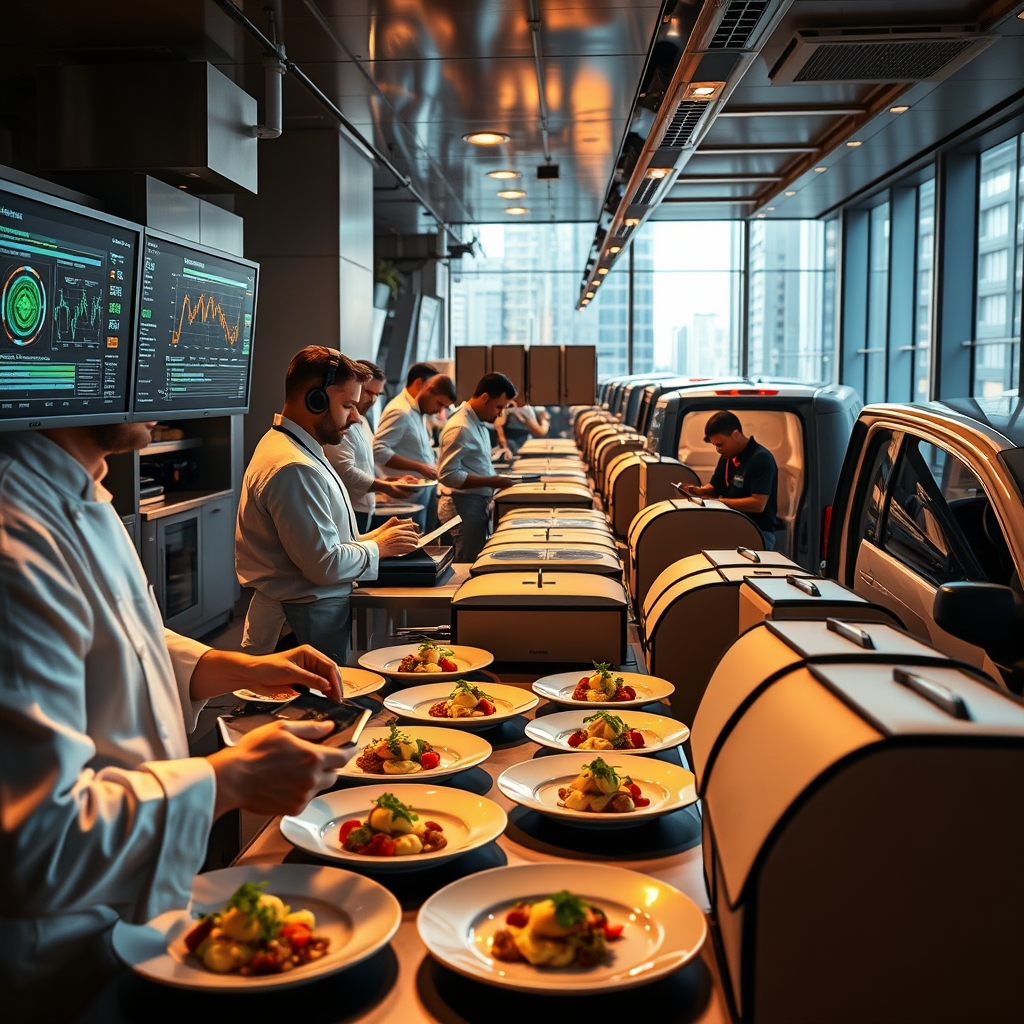
The modern catering industry is no longer just about food—it is about the seamless orchestration of time, temperature, and trust. Every plate delivered to a corporate boardroom, every buffet spread at a wedding, and every meal dropped off at a private residence is the culmination of a logistical ballet that few customers ever see. Yet, it is this unseen choreography that separates the exceptional from the merely adequate. The rise of on-demand services, cloud kitchens, and hyper-local delivery has not simplified this challenge; it has amplified it, turning catering into a high-stakes game where the margin for error is thinner than a filo pastry sheet.
The Paradox of Perfection
Catering services operate in a paradox: the more convenient they become, the more complex their operations grow. An online catering order placed with a single tap on a smartphone triggers a cascade of decisions—kitchen capacity, ingredient freshness, delivery routing, and real-time traffic conditions—all of which must align perfectly to meet the customer’s expectation of flawless execution. This is not merely about delivering food; it is about delivering an experience that feels effortless, even when the backend is anything but. The most successful catering businesses understand that the handoff—the moment when the meal transitions from their control to the customer’s—is where reputations are made or broken.
Consider the corporate catering sector, where punctuality is non-negotiable. A delayed lunch delivery doesn’t just disrupt a meeting; it erodes trust in the service provider. Here, logistics isn’t just a support function—it is the product. The same applies to event catering, where the stakes are even higher. A wedding or gala is a one-time performance, and any misstep—cold entrees, missing dishes, or late arrivals—becomes a permanent blemish on the caterer’s record. The pressure to execute flawlessly has given rise to a new breed of catering businesses that treat logistics as a science, not an afterthought.
The Cloud Kitchen Advantage
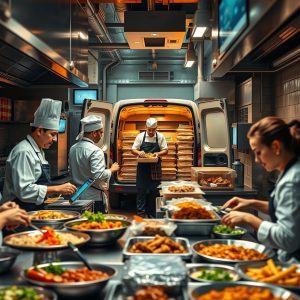
Cloud kitchens have emerged as a game-changer in this logistical arms race. By stripping away the overhead of traditional brick-and-mortar restaurants, these delivery-only operations can focus entirely on optimizing their supply chains, production workflows, and last-mile delivery. The result? Faster turnaround times, lower costs, and the ability to scale rapidly without the constraints of physical dining spaces. For catering services, cloud kitchens offer a strategic advantage: the ability to fulfill large, complex orders without the logistical bottlenecks of a conventional kitchen.
Yet, the cloud kitchen model is not without its challenges. Without a physical storefront, these businesses must rely entirely on digital interfaces—websites, apps, and third-party platforms—to connect with customers. This shift places an even greater emphasis on customer service excellence. A delayed response to an online catering order or a miscommunication about delivery times can quickly spiral into a public relations nightmare. The most successful cloud kitchen-based catering services mitigate this risk by integrating real-time tracking, automated updates, and proactive customer support into their operations. The goal is to make the customer feel informed and in control, even when the backend is a whirlwind of activity.
The Last Mile: Where Theory Meets Reality
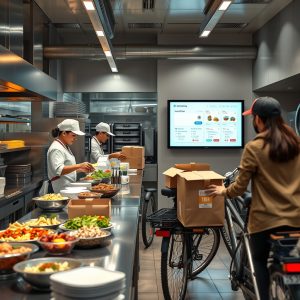
The last mile of delivery is where the theoretical precision of catering logistics collides with the messy realities of the physical world. Traffic jams, inclement weather, and unpredictable customer locations can turn a meticulously planned delivery into a logistical nightmare. This is where express delivery services and micro-logistics providers come into play. By leveraging route optimization software, real-time traffic data, and localized delivery hubs, catering businesses can minimize delays and ensure that meals arrive at their peak quality.
For small business catering services, mastering the last mile is often the difference between survival and obsolescence. Unlike large corporate caterers with dedicated logistics teams, small operators must rely on agility and creativity to compete. This might mean partnering with local delivery services, offering flexible pickup options, or even deploying their own drivers for high-priority orders. The key is to turn the constraints of the last mile into a competitive advantage—whether by offering faster delivery times, more personalized service, or greater flexibility in order customization.
The Human Factor in a Digital Age
Despite the technological advancements reshaping the catering industry, the human element remains irreplaceable. A well-designed app can streamline the ordering process, and AI-driven logistics can optimize delivery routes, but it is the people behind the scenes—chefs, drivers, and customer service representatives—who ultimately determine whether a catering service succeeds or fails. This is particularly true in the realm of home catering and private events, where customers expect a level of personalization that algorithms cannot replicate.
Customer service excellence in catering is not just about resolving complaints; it is about anticipating needs before they arise. A caterer who remembers a client’s dietary restrictions, suggests menu adjustments based on the season, or proactively communicates delays demonstrates a level of care that transcends transactional relationships. In an era where online reviews can make or break a business, this kind of attentiveness is not just good practice—it is a survival strategy.
The Future of Catering: Beyond the Plate
The next frontier for catering services lies in redefining what it means to deliver value beyond the meal itself. This could mean offering immersive dining experiences, such as interactive chef-led events, or leveraging data analytics to predict customer preferences before they even place an order. The most forward-thinking catering businesses are already experimenting with subscription models, where customers receive curated meal plans tailored to their tastes and schedules. Others are exploring the potential of ghost kitchens to create virtual catering brands that specialize in niche cuisines or dietary needs.
The common thread among these innovations is a relentless focus on reducing friction—whether in the ordering process, the delivery experience, or the post-meal follow-up. The catering services that thrive in this new landscape will be those that recognize logistics not as a necessary evil, but as a strategic asset. They will treat every handoff as an opportunity to reinforce trust, every delay as a chance to demonstrate resilience, and every meal as a testament to their ability to turn complexity into simplicity. The impossible handoff is no longer impossible—it is the new standard, and those who master it will define the future of food service.
The catering industry’s evolution is a testament to the power of precision, adaptability, and customer-centricity. As technology continues to reshape the way food is ordered, prepared, and delivered, the businesses that succeed will be those that never lose sight of the human element—the moment when a meal, meticulously crafted and flawlessly delivered, transforms a simple transaction into an unforgettable experience. The logistics may be invisible, but their impact is anything but.