The Last Mile Liturgy: How Hyper-Local Catering Networks Are Weaponizing Proximity for Market Domination
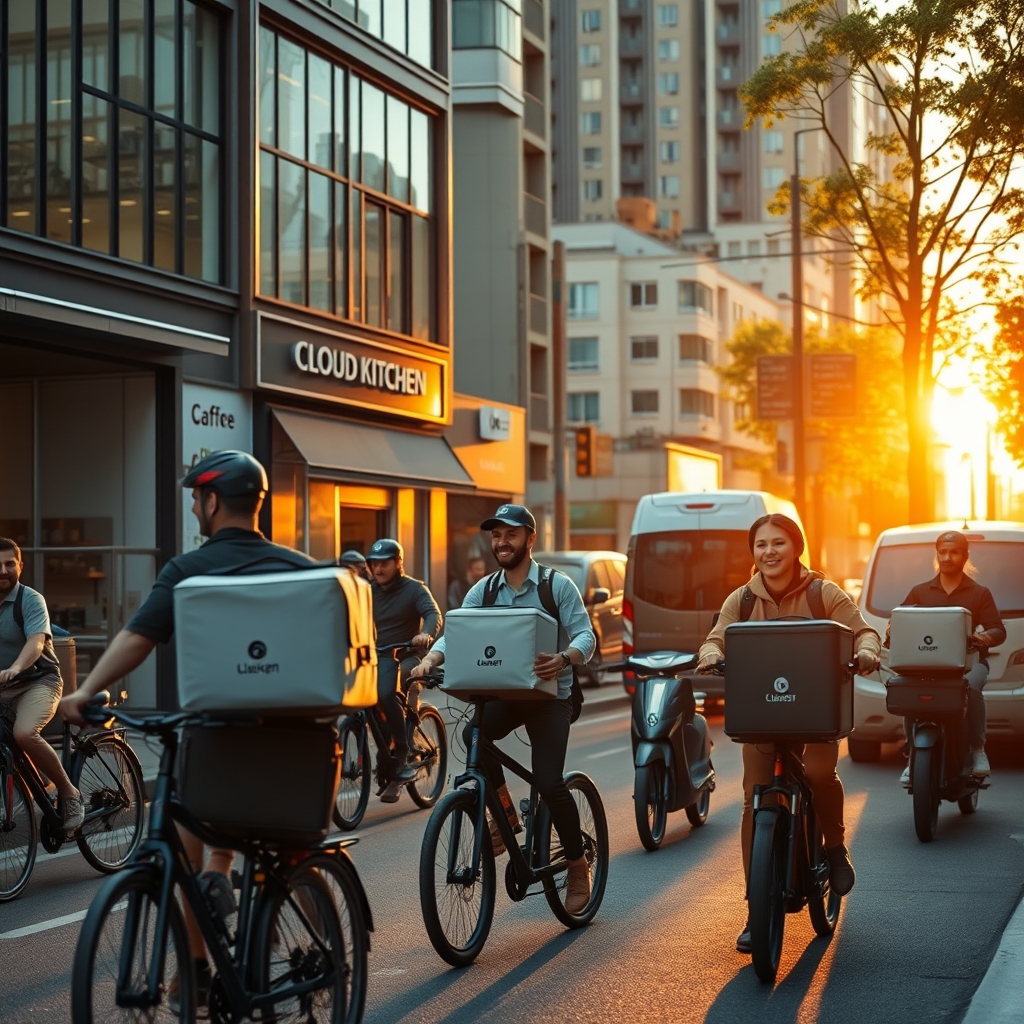
The modern catering industry is no longer defined by the grandeur of banquet halls or the exclusivity of high-end chefs. Instead, it is being reshaped by an invisible yet relentless force: hyper-local logistics. The battle for market dominance is now fought in the last mile—the final, critical stretch where food transitions from kitchen to customer. This is where catering services, cloud kitchens, and small business delivery networks are rewriting the rules of engagement, turning proximity into a weapon of mass disruption.
The Proximity Paradox: Why Closer Isn’t Always Cheaper
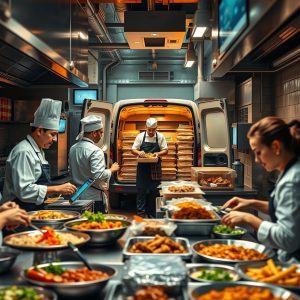
At first glance, hyper-local catering seems like a no-brainer. Shorter distances mean lower delivery costs, faster turnaround times, and fresher food. Yet, the economics of proximity are far more nuanced. The real cost isn’t in the miles traveled but in the operational complexity of managing a fragmented network of kitchens, pickup points, and delivery hubs. For catering businesses, the challenge lies in balancing the efficiency of centralized production with the agility of decentralized distribution. Cloud kitchens, for instance, thrive on this model—centralizing food preparation while dispersing delivery nodes to minimize transit time. But this requires a level of logistical precision that most traditional catering services struggle to achieve.
The Cloud Kitchen Conundrum: Scaling Without Sacrificing Control
Cloud kitchens have emerged as the darlings of the on-demand food economy, offering a low-overhead alternative to brick-and-mortar restaurants. Yet, their success hinges on one critical factor: the ability to maintain quality and consistency across a dispersed network. Unlike traditional catering, where a single kitchen serves a limited geographic area, cloud kitchens operate in a state of perpetual motion—adapting menus, adjusting production volumes, and rerouting deliveries in real time. The result? A logistical tightrope walk where one misstep can mean the difference between a seamless experience and a customer service disaster.
For catering businesses looking to emulate this model, the lesson is clear: hyper-local doesn’t mean hyper-simple. It demands a level of operational sophistication that goes beyond mere proximity. It requires predictive analytics to anticipate demand, dynamic routing algorithms to optimize delivery paths, and real-time communication tools to keep customers informed. The most successful players in this space aren’t just those with the closest kitchens—they’re the ones with the smartest logistics.
The Pickup and Delivery Dilemma: Convenience vs. Control
Pickup and delivery services have long been the backbone of the catering industry, but the rise of on-demand expectations has forced a reckoning. Customers no longer tolerate delays, inaccuracies, or lack of transparency. They want their food hot, their orders correct, and their delivery times precise—all without lifting a finger. This has created a paradox for catering businesses: how do you offer the convenience of pickup and delivery without ceding control over the customer experience?
The Retail Shop Delivery Revolution: Small Businesses, Big Ambitions
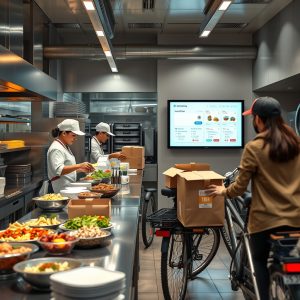
Local retail shops and small catering businesses are finding innovative ways to compete in this high-stakes environment. By leveraging hyper-local delivery networks, they’re able to offer the same level of convenience as larger players—without the overhead. The key? Strategic partnerships with third-party logistics providers and the adoption of micro-fulfillment centers. These small-scale hubs allow businesses to store, pack, and dispatch orders with minimal delay, turning the last mile into a competitive advantage rather than a logistical bottleneck.
But this approach isn’t without its challenges. Small businesses often lack the resources to invest in advanced logistics technology, leaving them vulnerable to inefficiencies. The solution lies in collaboration—pooling resources with other local businesses to create shared delivery networks, or partnering with tech platforms that specialize in last-mile optimization. The goal isn’t just to deliver food faster; it’s to deliver an experience that feels effortless, personalized, and reliable.
The Customer Service Imperative: Why Logistics Alone Isn’t Enough
In the age of on-demand everything, customer service excellence has become the ultimate differentiator. No amount of logistical prowess can compensate for a poor interaction, a delayed response, or a lack of transparency. The most successful catering services understand this implicitly—they treat customer service not as an afterthought but as the foundation of their operations. This means proactive communication, real-time order tracking, and a willingness to go above and beyond when things go wrong.
For catering businesses, this shift has profound implications. It means investing in training, technology, and processes that prioritize the customer experience at every touchpoint. It means treating every delivery not just as a transaction but as an opportunity to build trust and loyalty. And it means recognizing that in a world where convenience is king, the companies that win aren’t just the fastest—they’re the ones that make their customers feel valued, heard, and understood.
The last mile isn’t just a logistical challenge; it’s a cultural one. The catering services that thrive in this new landscape will be those that understand the delicate balance between speed, quality, and human connection. They will be the ones that turn the mundane act of delivering food into an experience worth remembering—one where every meal arrives not just on time, but with the promise of something more.