The Last Mile Litmus: How Catering Services Are Decoding the Science of Sensory Logistics
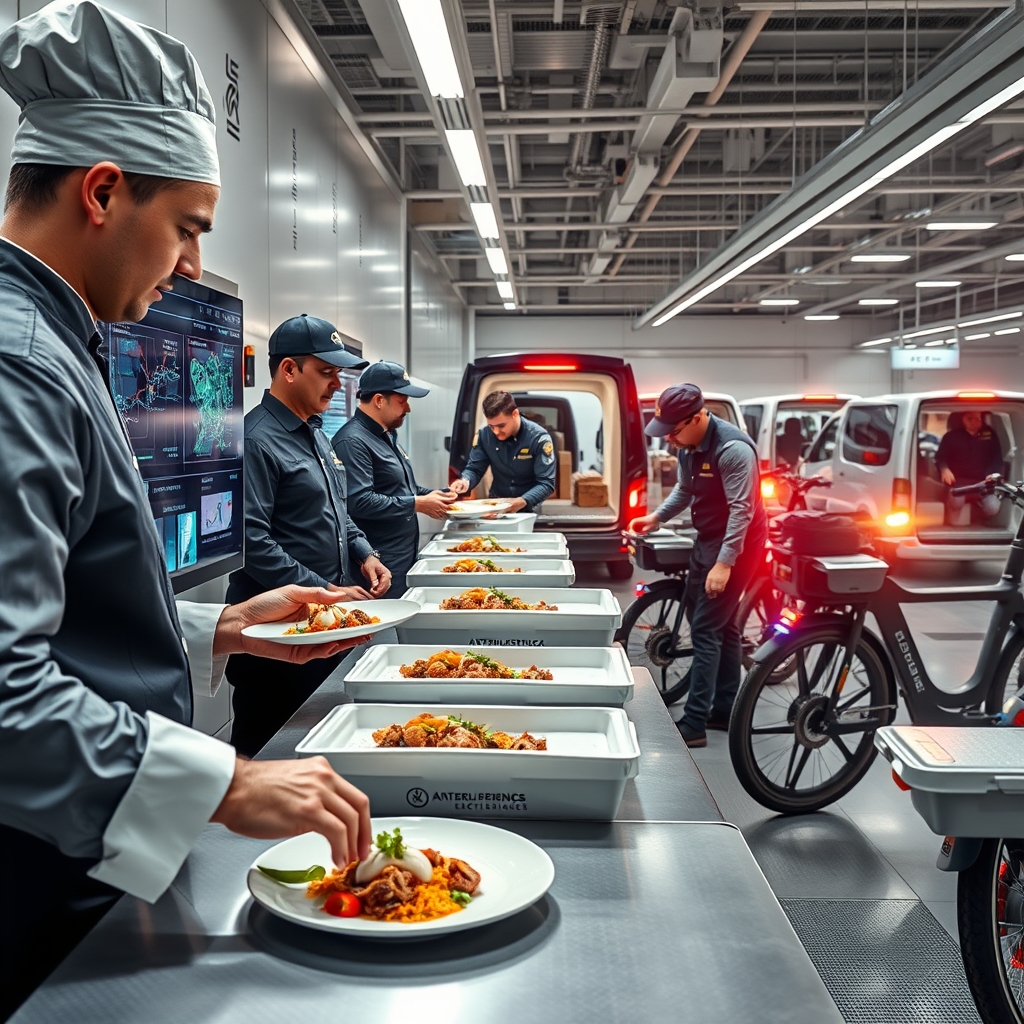
The modern catering industry is no longer just about food—it is about the orchestration of an experience, where every sensory detail is calibrated with scientific precision. The rise of on-demand services, cloud kitchens, and express delivery has transformed catering from a static offering into a dynamic, logistically intensive operation. Yet, the true differentiator lies not in the kitchen or the menu, but in the last mile—the critical juncture where culinary artistry collides with the cold, unyielding demands of logistics. This is where catering services either ascend to mastery or falter into mediocrity.
The Sensory Paradox of On-Demand Catering
Food is inherently perishable, not just in its physical state but in its sensory integrity. Temperature, texture, aroma, and presentation are all variables that degrade the moment a dish leaves the kitchen. The challenge for catering services is to preserve these qualities while navigating the complexities of pickup, transit, and delivery. Corporate catering, event catering, and home catering services all face the same paradox: how to deliver a product that feels freshly prepared, even when it has traveled miles in a delivery vehicle.
The answer lies in what can be termed sensory logistics—a discipline that merges culinary science with supply chain engineering. For instance, the use of insulated, temperature-controlled packaging is no longer a luxury but a necessity. Yet, even this is just the baseline. The most advanced catering operations now employ real-time monitoring systems that track not just location, but humidity, vibration, and even the angle at which a container is held during transit. These data points are not mere novelties; they are the difference between a dish that arrives as intended and one that arrives compromised.
The Cloud Kitchen Advantage: Speed Without Sacrifice
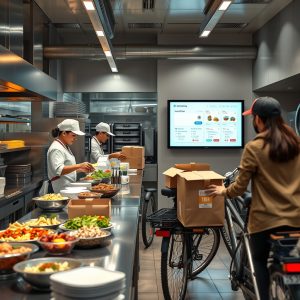
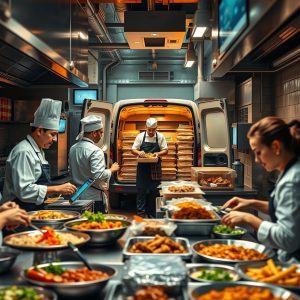
Cloud kitchens have emerged as the backbone of modern catering logistics, enabling businesses to operate without the overhead of a traditional brick-and-mortar restaurant. These virtual kitchens are optimized for efficiency, with workflows designed to minimize handling time and maximize output. However, their true power lies in their ability to decentralize production, placing kitchens closer to delivery zones and reducing the distance—and thus the risk—of the last mile.
For catering services, this model offers a dual advantage. First, it allows for hyper-localized menus, where dishes can be tailored to regional preferences without the logistical nightmare of transporting ingredients across long distances. Second, it enables a level of scalability that was previously unattainable. A cloud kitchen can fulfill orders for a corporate lunch, a private event, and a meal delivery service simultaneously, all while maintaining the same standards of quality and consistency. The result is a catering operation that is not just fast, but predictably fast—a critical factor in an industry where timing is everything.
The Human Element: Where Logistics Meets Customer Service Excellence
No amount of technology can fully replace the human touch in catering. The last mile is not just a logistical challenge; it is a moment of truth where the customer’s perception of the service is solidified. This is why the most successful catering businesses invest heavily in training their delivery personnel to act as ambassadors of the brand. A driver who arrives late is a failure; a driver who arrives on time but with a dismissive attitude is a disaster.
Customer service excellence in catering extends beyond punctuality. It encompasses the ability to anticipate needs—whether that means providing utensils for a drop-off catering order or adjusting a delivery route in real-time to avoid traffic delays. It also involves transparency, such as providing customers with live tracking updates or proactive communication if an order is delayed. In an era where on-demand services have conditioned consumers to expect instant gratification, the ability to manage expectations is just as important as the ability to meet them.
The Retail Shop Dilemma: Adapting Small Business Services for the On-Demand Era
While large catering operations and cloud kitchens dominate the conversation, small businesses—particularly local retail shops and food service providers—face a unique set of challenges. For these businesses, the shift toward on-demand catering and delivery services is not just an opportunity but an existential imperative. The question is no longer whether to offer pickup and delivery, but how to do so without eroding profit margins or compromising quality.
The solution lies in strategic partnerships and micro-logistics. Small businesses can leverage third-party delivery platforms to handle the last mile, but this comes with its own set of trade-offs, including high commission fees and a loss of control over the customer experience. Alternatively, they can invest in their own delivery infrastructure, which requires capital and expertise but offers greater long-term flexibility. The middle ground—hybrid models that combine in-house delivery for local orders with third-party services for longer distances—is increasingly becoming the preferred approach for businesses that want to scale without losing their identity.
The Future of Catering: Beyond the Last Mile
The next frontier in catering logistics is not just about perfecting the last mile, but about reimagining it entirely. Advances in automation, such as autonomous delivery vehicles and drone technology, promise to further reduce delivery times and costs. Meanwhile, artificial intelligence is being used to optimize routes, predict demand, and even personalize menus based on customer preferences. These innovations are not just incremental improvements; they represent a fundamental shift in how catering services operate.
Yet, for all the technological advancements, the core principle of catering remains unchanged: it is a business built on trust. Customers do not just want their food delivered on time; they want to trust that it will arrive exactly as promised—every time. This trust is not earned through flashy apps or cutting-edge packaging, but through the relentless execution of a simple yet profound idea: that the last mile is not an afterthought, but the defining moment of the entire experience. The catering services that understand this will not just survive in the on-demand era—they will thrive, setting new standards for what it means to deliver not just food, but excellence.