The Frictionless Palate: How On-Demand Catering Logistics Are Redefining the Economics of Culinary Trust
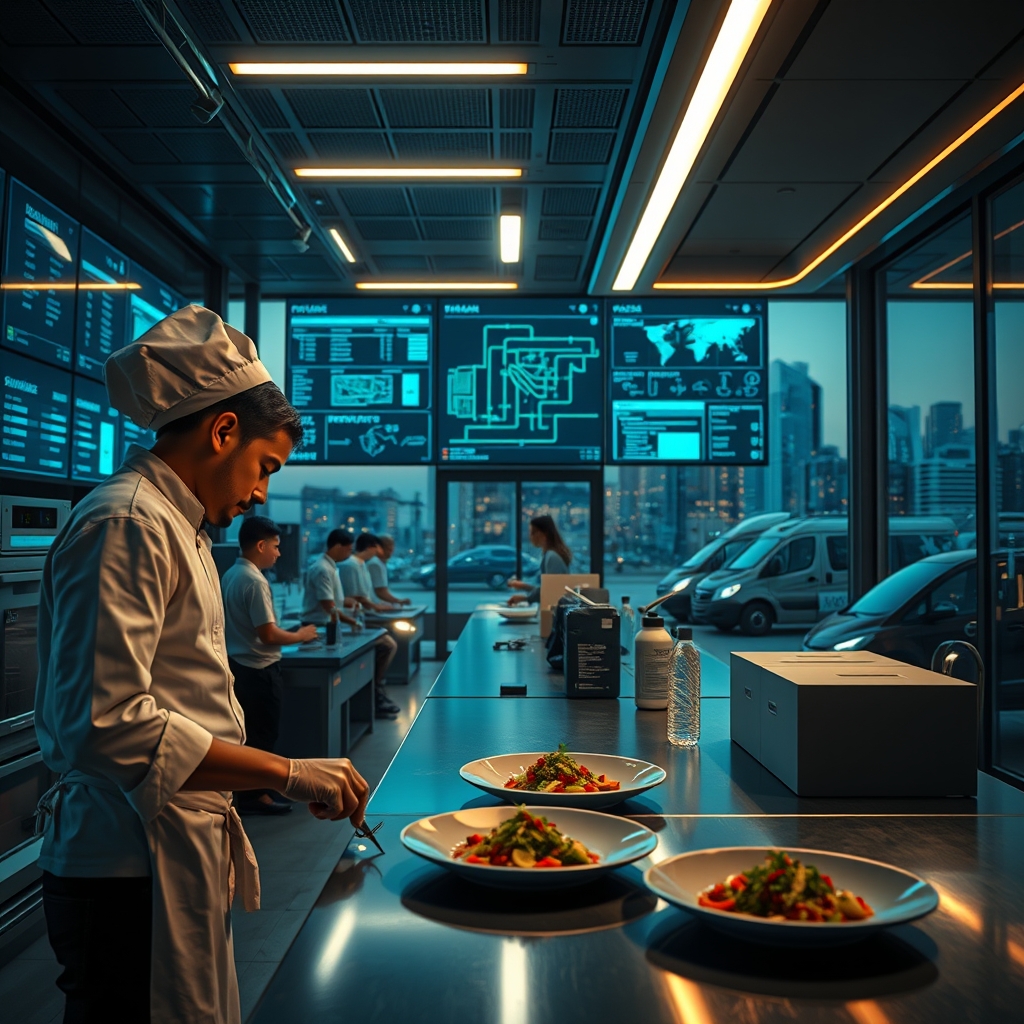
The modern catering industry is no longer defined by the grandeur of banquet halls or the meticulous timing of plated service. Instead, it thrives in the silent efficiency of unseen logistics—a ballet of algorithms, micro-fulfillment centers, and last-mile precision that transforms a meal from a mere transaction into an act of trust. The shift from traditional catering to on-demand, delivery-centric models has not just altered how food reaches the consumer; it has redefined the very economics of culinary expectation. The question is no longer whether a dish can be prepared, but whether it can be delivered with the same integrity as it left the kitchen.
The Illusion of Instantaneity
On-demand catering operates under the illusion of instantaneity, a carefully constructed mirage that masks the complexity of its underlying logistics. Customers expect meals to arrive within minutes of ordering, yet the reality is a labyrinth of real-time inventory management, route optimization, and temperature-controlled transit. The frictionless experience they perceive is the result of relentless operational alchemy—where cloud kitchens, predictive analytics, and hyper-local delivery networks converge to eliminate delays. The challenge for catering businesses is not just speed, but the preservation of sensory integrity: ensuring that a seared scallop remains crisp, a soufflé stays risen, and a delicate sauce doesn’t separate en route.
This illusion is sustained by a paradox: the more seamless the experience, the more invisible the logistics must become. Customers do not see the fleet of drivers recalibrating routes in real-time, nor the AI-driven demand forecasting that ensures the right ingredients are stocked before an order is even placed. What they experience is the end result—a meal that arrives as if by magic, reinforcing the perception that convenience is not just a service, but an inherent right.
The Economics of Sensory Sacrifice
The trade-off between speed and quality is the unspoken tension at the heart of on-demand catering. Traditional catering prioritizes presentation, timing, and the theatricality of service—elements that are inherently difficult to replicate in a delivery model. Yet, the modern consumer is willing to sacrifice some sensory grandeur for the sake of convenience, provided the core experience remains intact. The economics of this compromise are stark: businesses that fail to maintain consistency risk eroding trust, while those that master the balance between efficiency and excellence gain a competitive edge.
Consider the rise of drop-off catering, where the absence of on-site staff shifts the burden of execution onto the logistics chain. A corporate lunch delivered to an office must arrive not just on time, but in a state that reflects the brand’s promise. The packaging becomes the new plating; the unboxing experience, the new tableside service. Businesses that treat these elements as afterthoughts do so at their peril. The most successful catering services are those that recognize delivery is not an add-on, but the primary interface between brand and consumer.
The Role of Micro-Fulfillment in Scaling Trust
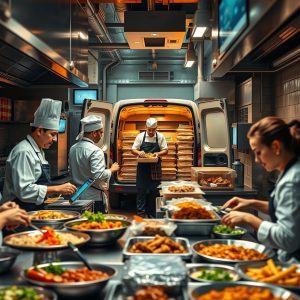
The scalability of on-demand catering hinges on micro-fulfillment—a decentralized network of small, strategically located kitchens that reduce delivery times and operational bottlenecks. Unlike traditional catering hubs, which rely on centralized production, micro-fulfillment centers allow businesses to respond to demand spikes with agility. This model is particularly effective in urban environments, where proximity to customers can mean the difference between a lukewarm meal and a perfectly timed delivery.
However, micro-fulfillment is not without its challenges. The fragmentation of production across multiple locations introduces complexity in quality control, inventory synchronization, and staff training. The solution lies in technology: IoT-enabled kitchen equipment that monitors cooking parameters, AI-driven order batching that optimizes workflow, and blockchain-based tracking that ensures transparency from kitchen to doorstep. The businesses that thrive in this space are those that treat logistics not as a cost center, but as a strategic asset.
The Customer as the Final Mile
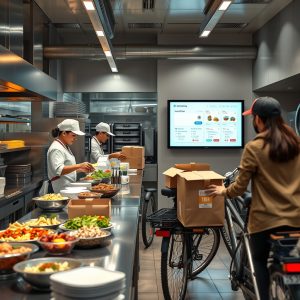
The last mile of catering delivery is no longer the sole domain of the driver—it is a shared responsibility between the business and the customer. The rise of pickup-and-delivery hybrids, where consumers opt for self-service collection, reflects a broader shift in the dynamics of convenience. For some, the ability to retrieve an order at their convenience is preferable to waiting for a delivery window. For others, the act of picking up a meal becomes part of a larger ritual—an opportunity to inspect the packaging, verify the order, and engage with the brand in a tactile way.
This shift has profound implications for customer service. Businesses must now design experiences that accommodate both delivery and pickup with equal care. A poorly lit pickup counter, a disorganized order retrieval process, or a lack of clear signage can undermine even the most meticulously prepared meal. The most forward-thinking catering services are those that treat the final mile as an extension of the dining experience, where every touchpoint—from the digital interface to the physical handoff—reinforces trust.
The Unseen Cost of Convenience
The economics of on-demand catering are not just about revenue; they are about the hidden costs of maintaining the illusion of effortlessness. Every failed delivery, every lukewarm meal, every miscommunication erodes the fragile trust that businesses work so hard to build. The most successful operators recognize that logistics is not just a means to an end, but the foundation of their brand’s reputation. They invest in redundancy—backup drivers, contingency kitchens, real-time customer support—not because these measures are profitable in the short term, but because they are essential to long-term survival.
The future of catering lies not in the elimination of friction, but in its mastery. The businesses that will dominate the next decade are those that understand that convenience is not a product, but a promise—one that must be kept, meal after meal, without fail. The plate may be disposable, but the trust it carries is not. And in an industry where the last mile is the only mile that matters, that trust is the most valuable currency of all.