The Last Mile Liturgy: How Catering Services Are Sacralizing the Art of Frictionless Delivery
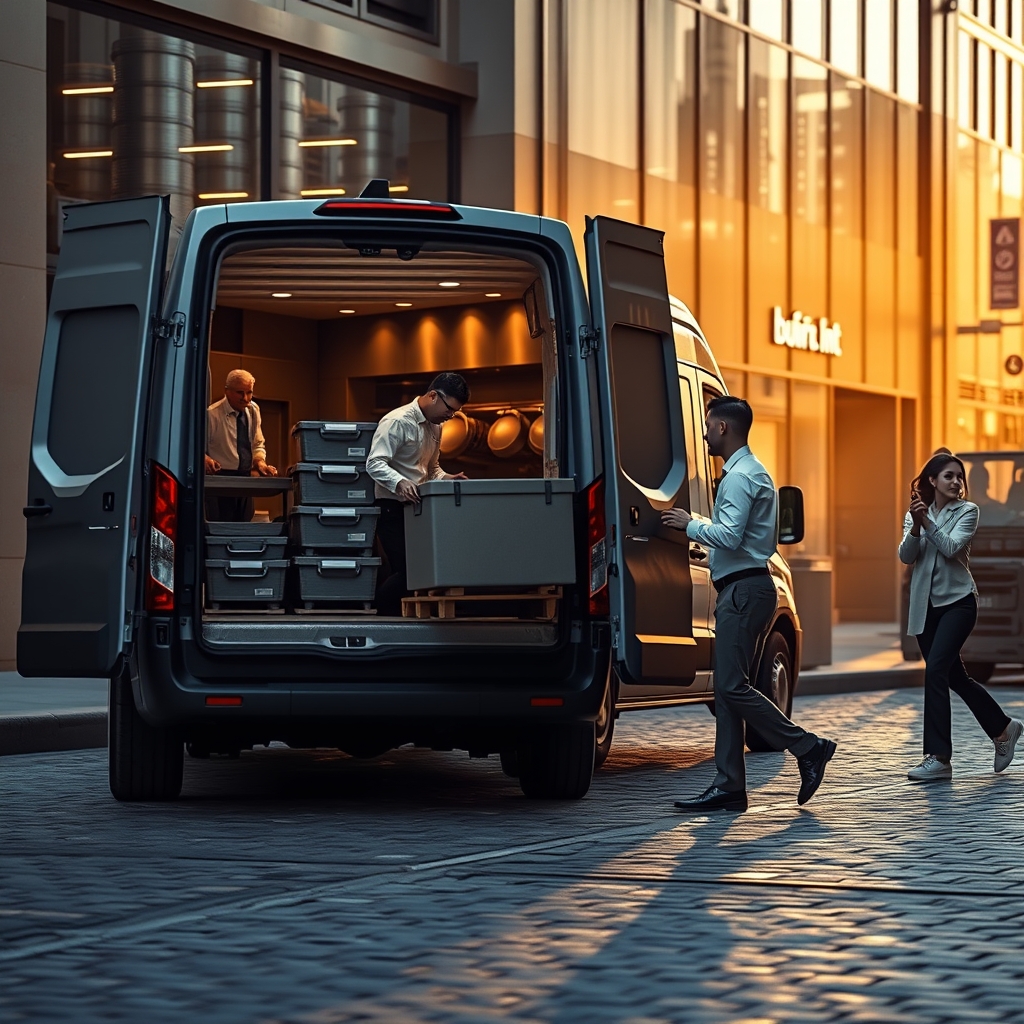
The modern catering industry is no longer defined by the quality of food alone. It is the seamless intersection of culinary craftsmanship and logistical precision that now dictates success. The rise of on-demand services, cloud kitchens, and hyper-local delivery networks has transformed catering from a transactional exchange into a ritual of convenience—one where the last mile is not just a logistical challenge but a sacred covenant between provider and consumer. The question is no longer whether food can be delivered, but how well the experience can be choreographed to feel effortless, almost magical.
The Illusion of Effortlessness
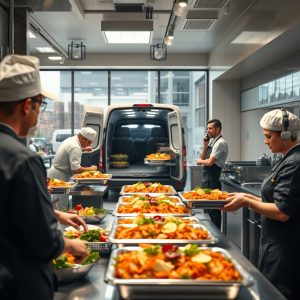
At the heart of this transformation lies the illusion of effortlessness—a carefully constructed facade where every potential friction point is smoothed over before the customer even perceives it. Corporate catering, for instance, no longer operates on the assumption that clients will tolerate delays or mismanagement. Instead, it thrives on the expectation of flawless execution, where meals arrive not just on time but in a state that suggests they were prepared moments before delivery. This is the domain of drop-off catering, where the absence of a server is compensated by an almost theatrical presentation: insulated containers that maintain temperature, portioned servings that eliminate waste, and packaging that communicates luxury even in its disposability.
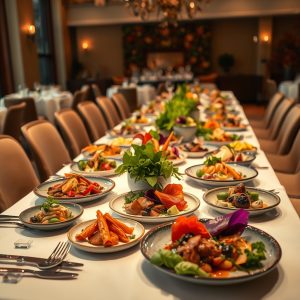
The same principles apply to event catering, though the stakes are higher. A wedding or corporate gala is not merely a meal but a performance, and the logistics behind it must be invisible. The most successful catering services are those that treat delivery as an extension of the culinary experience, where the unboxing—or unbagging—becomes part of the event’s narrative. This requires more than just punctuality; it demands an understanding of sensory psychology, where the first visual and olfactory impressions set the tone for the entire meal.
The Cloud Kitchen Conundrum
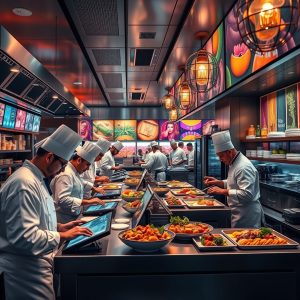
The proliferation of cloud kitchens has further complicated the logistics landscape. These ghost operations, devoid of storefronts or dining spaces, exist solely to fulfill online catering orders with maximum efficiency. Yet their success hinges on a paradox: the more invisible they become, the more their logistical prowess must shine. A cloud kitchen’s entire reputation rests on its ability to deliver restaurant-quality food without the restaurant’s overhead—or its charm. This has given rise to a new breed of catering delivery services that specialize in the art of the unseen handoff, where meals transition from kitchen to customer without a single misstep.
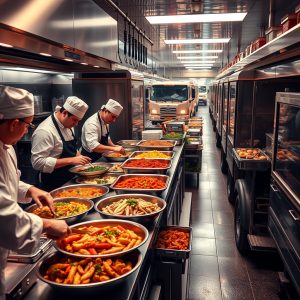
The challenge for these businesses is twofold. First, they must maintain the integrity of the food during transit, ensuring that textures, temperatures, and plating remain intact. Second, they must do so at scale, handling hundreds of orders simultaneously without sacrificing consistency. The solution lies in micro-logistics: the optimization of every variable, from delivery routes to packaging materials, to create a system that feels bespoke even when it is mass-produced. This is where data becomes indispensable. Predictive algorithms now determine the most efficient delivery windows, while real-time tracking ensures that customers are never left wondering where their order is—or why it hasn’t arrived.
The Customer as Co-Conspirator
Yet for all the technological advancements, the most critical variable remains the customer. The modern consumer is not a passive recipient but an active participant in the delivery ritual, one who expects transparency, control, and immediacy. Online catering orders are no longer a novelty but a baseline expectation, and the platforms that facilitate them must be as intuitive as they are reliable. A single misclick or delayed notification can shatter the illusion of effortlessness, turning a seamless experience into a logistical nightmare.
This is where customer service excellence becomes non-negotiable. The best catering delivery services don’t just deliver food; they deliver peace of mind. They anticipate problems before they arise, offering proactive updates and solutions rather than reactive apologies. A delayed order is not a failure if the customer is informed in advance and given options—whether it’s a discount, a replacement, or simply the assurance that the issue is being resolved. In this way, logistics and customer service become indistinguishable, two sides of the same coin.
The Retailization of Catering
The lines between catering, retail, and food service are blurring. Small businesses that once relied on foot traffic now depend on pickup and delivery services to survive, while traditional caterers are expanding into meal delivery and express services to capture new markets. This retailization of catering has created a hyper-competitive landscape where differentiation is key. The winners are those who understand that convenience is not just about speed but about the entire customer journey—from the moment an order is placed to the moment the last plate is cleared.
Local shop delivery, for example, is no longer just about moving products from point A to point B. It’s about creating a sense of community, where customers feel connected to the businesses they support. This requires a level of personalization that goes beyond generic marketing. It means remembering a customer’s preferences, offering tailored recommendations, and ensuring that every interaction feels human, even when it’s automated. The most successful small business services are those that leverage technology without losing their soul, using data to enhance rather than replace the personal touch.
The Future of the Last Mile
The last mile will always be the most critical—and the most unpredictable—part of the catering delivery process. Traffic, weather, and human error are inevitable, but the best services are those that turn these variables into opportunities rather than obstacles. Express delivery services, for instance, are redefining what it means to be fast, offering same-day or even same-hour delivery for corporate lunches and last-minute events. Meanwhile, home catering services are elevating the concept of convenience, bringing restaurant-quality meals to private residences with the same attention to detail as a high-end event.
The next frontier is not just about getting food from point A to point B but about reimagining what that journey can be. Autonomous delivery vehicles, drone drop-offs, and AI-driven logistics are no longer the stuff of science fiction but tangible possibilities. Yet even as technology advances, the fundamental principles remain the same: reliability, consistency, and the ability to make the customer feel like the most important part of the equation. The last mile is not just a logistical challenge; it is the final act in a performance where the stakes are nothing less than customer loyalty. And in an industry where competition is fierce and expectations are higher than ever, that loyalty is the only currency that matters.
The catering services that thrive in this new era will be those that recognize delivery as an art form—one that requires as much creativity, precision, and passion as the food itself. The last mile is no longer just a distance to be covered; it is a promise to be kept, a ritual to be perfected, and a testament to the idea that in the age of on-demand everything, the most valuable commodity is not speed but trust. And trust, once earned, is the one thing that cannot be delivered on demand.