The Invisible Handshake: How Customer Service Excellence Redefines Catering Logistics
The modern catering industry is no longer just about food—it is about the seamless fusion of culinary artistry and logistical precision. The rise of on-demand services, cloud kitchens, and express delivery has transformed catering from a static, event-bound service into a dynamic, customer-driven ecosystem. Yet, amid this evolution, one element remains non-negotiable: customer service excellence. It is the invisible handshake that turns a one-time order into a lasting relationship, and its absence can unravel even the most meticulously planned logistics.
The Illusion of Convenience
Convenience is the cornerstone of today’s catering landscape. Online catering orders, pickup and delivery services, and drop-off catering have made it effortless for customers to access high-quality meals without leaving their homes or offices. But convenience is not merely about speed or accessibility—it is about the perception of effortlessness. A late delivery, a missing item, or an unresponsive support team shatters this illusion instantly. The modern customer does not just expect their food on time; they expect the entire experience to be frictionless, from the moment they click “order” to the second the last plate is cleared.
This is where the intersection of logistics and customer service becomes critical. A well-oiled delivery system—whether for corporate catering, event catering, or home meal delivery—relies on real-time tracking, transparent communication, and adaptive problem-solving. The best catering businesses do not just deliver food; they deliver confidence. They anticipate delays, proactively update customers, and resolve issues before they escalate. In an era where a single negative review can deter hundreds of potential clients, excellence in service is not a luxury—it is a survival strategy.
The Human Factor in a Digital World
The digitization of catering services has introduced unprecedented efficiency, but it has also created a paradox: the more automated the process, the more human touch matters. Online catering orders and cloud kitchen operations streamline production, but they cannot replace the nuance of human interaction. A customer who receives a perfectly prepared meal but feels ignored by a faceless support system will not return. Conversely, a business that combines technological efficiency with genuine empathy—personalized follow-ups, thoughtful gestures, or even a handwritten note—creates a lasting impression.
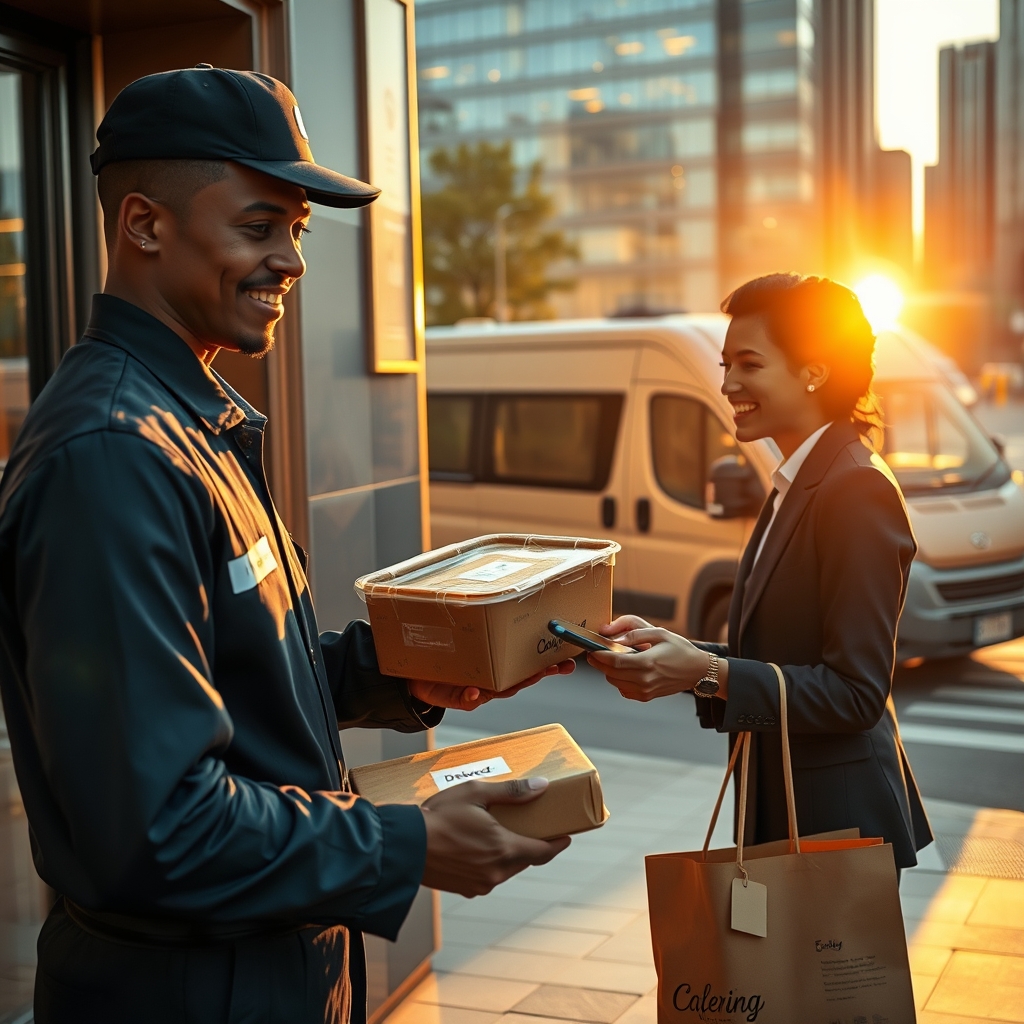
This human factor extends beyond customer interactions. It influences how catering businesses manage their logistics, from the way drivers handle food during transit to how they engage with clients upon delivery. A driver who arrives with a smile, confirms the order details, and ensures everything is in place does more than complete a transaction—they reinforce trust. In the competitive world of food service, where margins are thin and loyalty is fleeting, these small moments of connection are what differentiate a good business from a great one.
The Retail Shop Paradox
Local shop delivery and small business catering services face a unique challenge: they must compete with the scale of corporate catering giants while retaining the charm of a neighborhood establishment. The solution lies in leveraging their agility. Unlike large chains, small businesses can offer hyper-localized service—knowing their customers by name, tailoring menus to community preferences, and providing flexible delivery options that big players cannot match. This is not just about food; it is about fostering a sense of belonging.
However, this advantage is only as strong as the logistics supporting it. A local catering business that promises same-day delivery but fails to meet deadlines due to poor route planning or understaffing will quickly lose credibility. The key is to balance personalization with professionalism. Investing in reliable delivery management systems, training staff in customer service excellence, and maintaining open lines of communication can turn a small catering operation into a community staple.
The Cloud Kitchen Conundrum
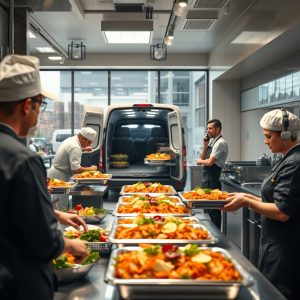
Cloud kitchens have revolutionized the catering industry by eliminating the need for physical dining spaces, allowing businesses to focus solely on food production and delivery. Yet, this model presents its own set of challenges. Without a storefront, customer interactions are limited to digital channels, making it harder to build brand loyalty. The absence of face-to-face engagement means that every touchpoint—from the website’s user experience to the packaging’s presentation—must be flawless.
For cloud kitchens, customer service excellence is not just about resolving complaints; it is about creating an experience that compensates for the lack of physical presence. This could mean offering virtual tastings, personalized menu recommendations, or even partnering with local businesses to provide pickup locations that add a human element to the transaction. The goal is to make customers feel seen, even when the business operates behind the scenes.
The Logistics of Trust
At its core, the catering industry is built on trust. Customers trust businesses to deliver safe, high-quality food on time. They trust that their dietary restrictions will be respected, that their orders will be accurate, and that any issues will be resolved swiftly. This trust is not given—it is earned through consistent, reliable service. And while logistics ensure that the food arrives, it is customer service that ensures the customer returns.
The most successful catering businesses understand that logistics and customer service are two sides of the same coin. A flawless delivery system is meaningless if the customer feels undervalued. Conversely, exceptional service cannot compensate for chronic logistical failures. The future of catering lies in businesses that can harmonize these elements—where every delivery is not just a transaction, but an opportunity to reinforce trust, loyalty, and the promise of an experience worth repeating.
The catering industry’s next frontier is not about faster delivery or cheaper meals—it is about deeper connections. The businesses that thrive will be those that recognize customer service excellence not as an afterthought, but as the foundation upon which all logistics are built. In a world where convenience is king, the real differentiator is not what you deliver, but how you make the customer feel when it arrives.