The Last Mile Liturgy: How Catering Delivery Services Are Sacralizing Speed, Scale, and Sensory Satisfaction
The modern catering delivery service is no longer a mere conduit between kitchen and consumer; it is a liturgical rite, a choreographed sacrament of speed, scale, and sensory satisfaction. Every order is a vow, every delivery a communion, and every satisfied customer a convert to the new gospel of on-demand nourishment. The stakes are high, the margins thin, and the expectations higher still. In this landscape, the last mile is not just a logistical hurdle—it is the altar upon which the future of food service is being consecrated.
The Tyranny of the Last Mile
The last mile is where promises are kept or broken, where the alchemy of preparation meets the crucible of real-world execution. For catering services, this final stretch is a gauntlet of variables: traffic snarls, weather delays, misread addresses, and the ever-present specter of human error. Yet, it is also the moment of truth, the instant when a meticulously crafted meal is either elevated to an experience or reduced to a transaction. The tyranny of the last mile lies in its unpredictability, but its redemption is found in the systems designed to tame it.
Corporate catering, in particular, has become a proving ground for these systems. The stakes are amplified by the scale of orders—dozens, if not hundreds, of meals delivered simultaneously to a single location. Here, the margin for error is razor-thin. A single delayed or mishandled delivery can cascade into a reputational crisis, eroding trust in a service that prides itself on precision. The solution? A fusion of micro-logistics and macro-strategy, where route optimization algorithms, real-time tracking, and contingency planning converge to create a seamless handoff. The goal is not just to deliver food, but to deliver certainty.
The Cloud Kitchen Conundrum
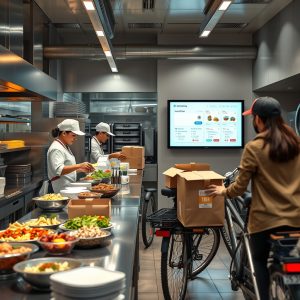
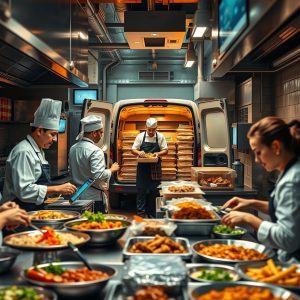
At the heart of this evolution is the rise of the cloud kitchen—a ghostly, hyper-efficient engine of culinary production. These facilities, unburdened by the trappings of dine-in service, are optimized for one thing: output. They are the backbone of the on-demand catering revolution, enabling businesses to scale rapidly without the overhead of traditional brick-and-mortar operations. Yet, their success hinges on a paradox: the more efficient the kitchen, the more complex the delivery challenge becomes.
Cloud kitchens thrive on volume, but volume is a double-edged sword. A single kitchen may service hundreds of orders daily, each with its own unique delivery window, dietary restriction, and customer expectation. The logistics of coordinating these orders—ensuring that meals arrive hot, fresh, and intact—require a level of orchestration that borders on the symphonic. This is where the marriage of technology and human oversight becomes critical. Automated dispatch systems, AI-driven route planning, and real-time customer updates are no longer luxuries; they are necessities. The cloud kitchen is a marvel of modern efficiency, but its true test lies in the last mile.
The Sensory Imperative
Speed and scale are meaningless without sensory satisfaction. A meal delivered on time but lacking in quality is a hollow victory. This is where the art of catering delivery transcends mere logistics and enters the realm of experience design. The best services understand that every touchpoint—from the packaging to the presentation, from the temperature of the food to the courtesy of the driver—contributes to the overall perception of value. In an era where online reviews can make or break a business, the sensory imperative is non-negotiable.
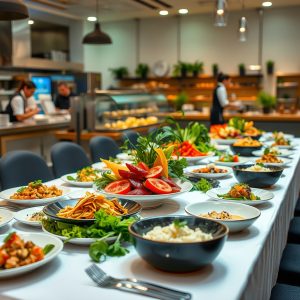
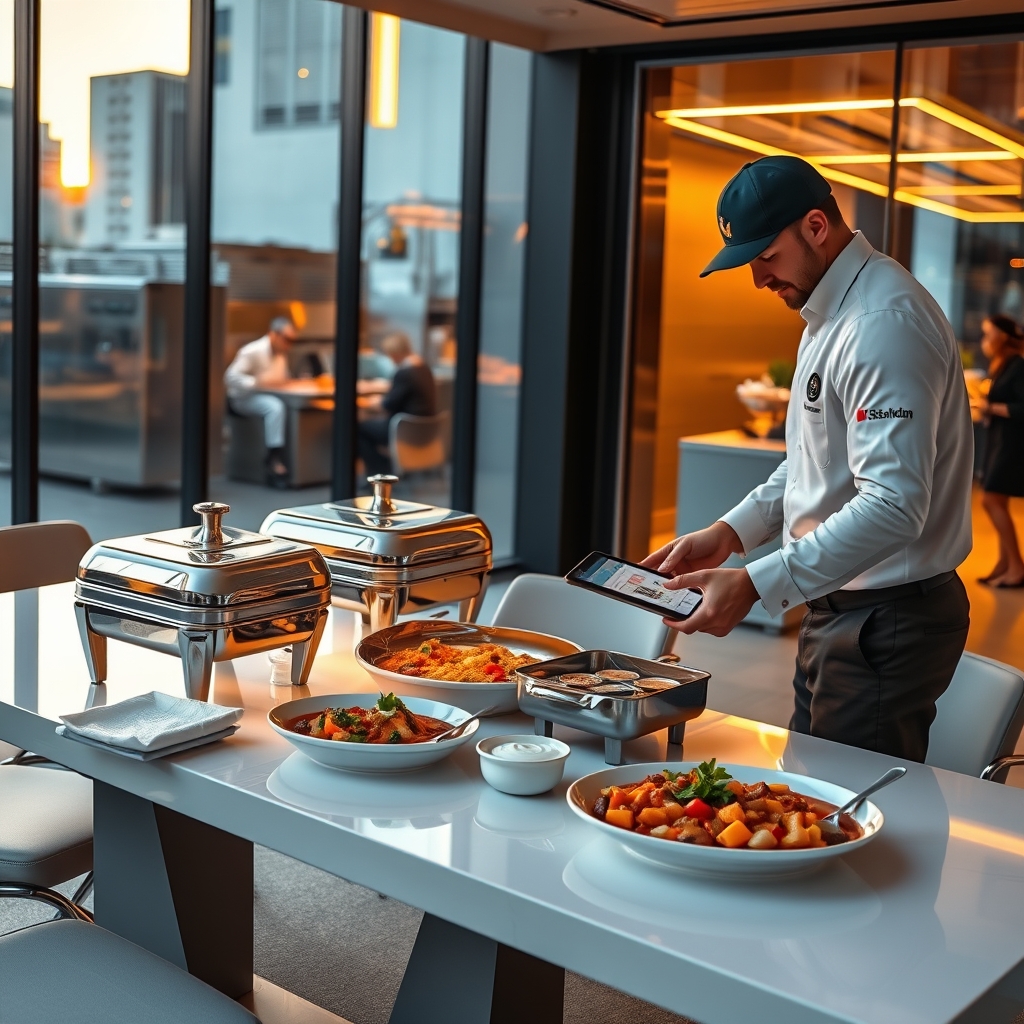
Drop-off catering, in particular, has emerged as a masterclass in this discipline. Unlike traditional delivery, where the interaction is fleeting, drop-off catering often involves a more deliberate handoff. The driver is not just a courier but an ambassador, responsible for ensuring that the meal is presented with care. This might mean setting up a buffet, arranging chafing dishes, or even providing brief instructions to the host. The goal is to create a moment of delight, a small but meaningful gesture that elevates the service from functional to exceptional. In this context, the last mile is not just a logistical challenge; it is a canvas for creativity.
The Customer as Co-Creator
The most successful catering delivery services recognize that the customer is not a passive recipient but an active participant in the experience. Online catering orders, for instance, are no longer static transactions but dynamic interactions. Customers expect real-time updates, customization options, and the ability to track their orders with the precision of a GPS-guided missile. This shift has forced businesses to rethink their approach to customer service, moving from a reactive model to a proactive one.
Take, for example, the rise of express delivery services in the catering space. These services, often operating within tight windows of 30 to 60 minutes, cater to the impulse-driven demands of modern consumers. To pull this off, businesses must integrate their ordering, production, and delivery systems into a single, seamless workflow. The result is a level of convenience that was unthinkable a decade ago, but it comes with a caveat: the faster the service, the higher the stakes. A single misstep—a delayed order, a missing item, a lukewarm meal—can undo months of goodwill in an instant. This is why the best services invest heavily in training, technology, and redundancy, ensuring that every order is treated as a mission-critical operation.
The Local Advantage
Amid the rise of global delivery platforms and cloud kitchens, there is a quiet resurgence of localism in the catering industry. Small businesses, with their deep roots in their communities, are leveraging their hyper-local knowledge to compete with larger, more impersonal services. The advantage is twofold: first, local businesses can offer a level of personalization that is difficult for national chains to replicate. Second, they can optimize their delivery routes based on intimate knowledge of their neighborhoods, reducing transit times and improving efficiency.
This local advantage is particularly evident in the realm of home catering services. Unlike corporate or event catering, which often involves large, standardized orders, home catering is inherently personal. Customers are not just ordering food; they are inviting a service into their most private spaces. This requires a level of trust that can only be built through consistent, high-quality interactions. Local businesses, with their focus on customer service excellence, are uniquely positioned to meet this need. They understand that the last mile is not just about delivering food; it is about delivering an experience that feels bespoke, intimate, and deeply human.
The catering delivery service of the future will not be defined by its ability to move food from point A to point B, but by its capacity to transform that journey into something sacred. It will be a service that understands the liturgy of the last mile—the rituals of speed, the sacraments of scale, and the communion of sensory satisfaction. In this new era, logistics is not just a means to an end; it is the very essence of the experience. The businesses that thrive will be those that recognize this truth and embrace the challenge of turning every delivery into a moment of reverence.