The Last Mile Liturgy: How Catering Services Are Weaponizing Data to Outmaneuver the Chaos of On-Demand Delivery
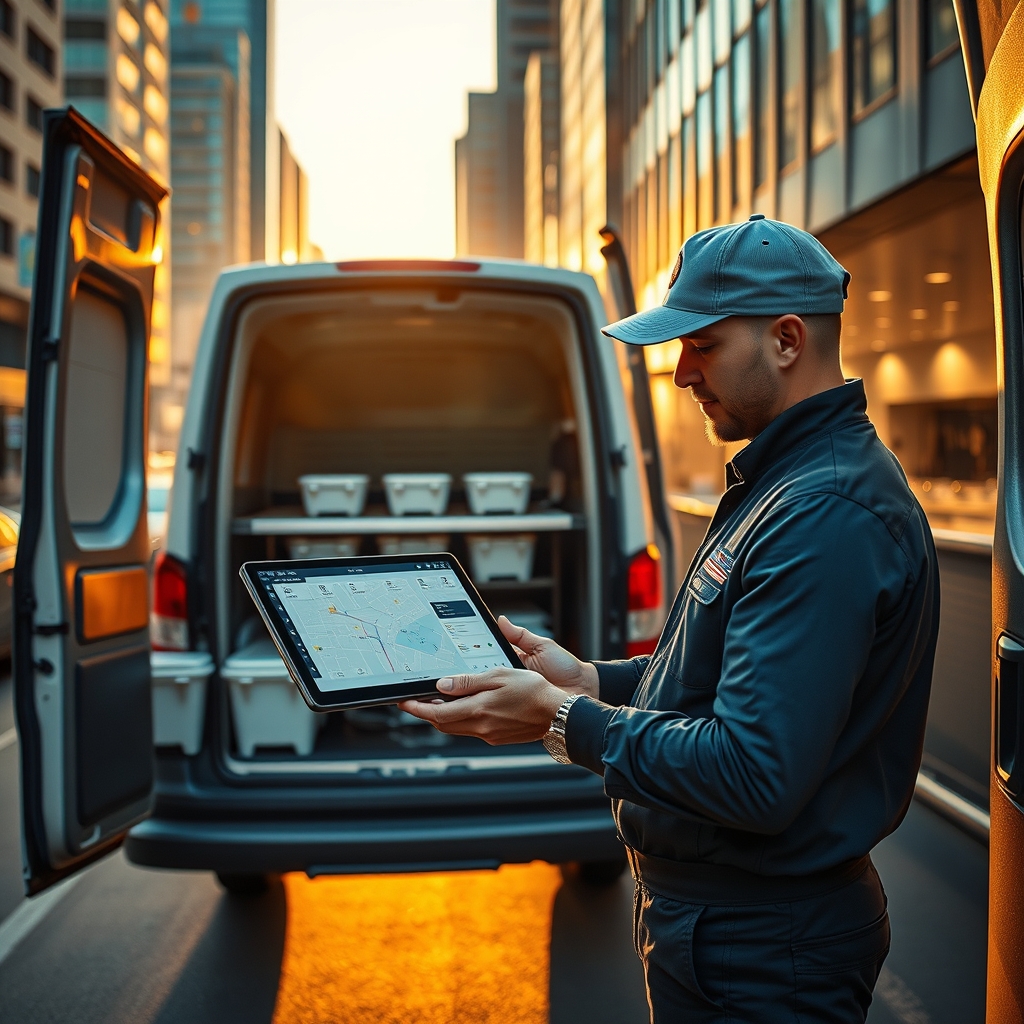
The modern catering industry is no longer defined by the quality of its canapés or the elegance of its chafing dishes. The true battleground has shifted to the last mile—a chaotic, unpredictable stretch where logistics, customer expectations, and operational precision collide. The most successful catering services today aren’t just serving food; they’re wielding data like a scalpel, dissecting inefficiencies and reshaping the delivery experience into something almost surgical in its precision. This isn’t about luck or brute-force effort; it’s about weaponizing information to turn the last mile from a liability into a competitive advantage.
The Data Delusion: Why Intuition No Longer Cuts It
For decades, catering businesses operated on gut instinct—experienced managers predicting demand, drivers relying on memory for routes, and kitchen staff estimating prep times based on past events. This approach worked in an era of predictable schedules and forgiving customers. Today, the on-demand economy has obliterated that luxury. A corporate lunch order placed at 10:30 AM for a 12:30 PM delivery doesn’t just require speed; it demands a level of predictability that human intuition alone can’t provide. The difference between a seamless delivery and a logistical nightmare often hinges on a single variable: data.
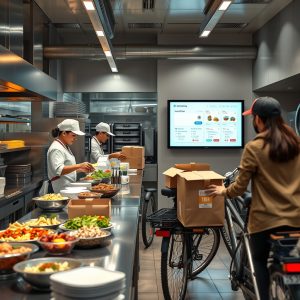
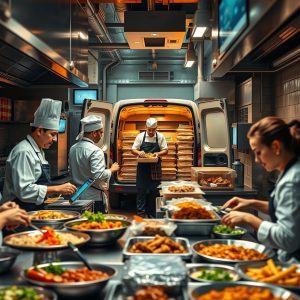
Consider the rise of cloud kitchens, which have stripped catering down to its most efficient form. Without the overhead of a dine-in space, these operations thrive on volume and velocity, but their success is entirely dependent on real-time data. Every order, every delay, every traffic snarl is logged, analyzed, and fed back into the system to refine the next delivery. The best cloud kitchens don’t just react to demand; they anticipate it, using predictive algorithms to adjust staffing, inventory, and routing before the customer even clicks “confirm order.” This isn’t just efficiency—it’s a form of logistical warfare, where data is the ammunition.
The Last Mile as a Data Minefield
The last mile is where most catering services hemorrhage money and reputation. A delayed delivery, a cold meal, or a missing utensil can erase months of brand-building in an instant. Yet, this is also where data becomes most valuable. The most advanced catering delivery services now treat the last mile as a minefield of variables—traffic patterns, weather conditions, driver performance, even the idiosyncrasies of individual delivery locations—and they’re using data to navigate it with near-perfect precision.
Take, for example, the integration of AI-driven routing software. Traditional GPS might get a driver from point A to point B, but it doesn’t account for the nuances of catering deliveries: the need for a parking spot close to the venue, the time it takes to unload large orders, or the fact that a corporate office building might have a loading dock that’s only accessible at certain hours. Data-driven routing systems, however, can factor in these variables, adjusting routes in real time to avoid bottlenecks and ensure on-time arrivals. Some services even use historical data to predict which customers are likely to tip poorly or which venues have a history of last-minute changes, allowing them to prioritize orders accordingly.
The Customer Isn’t Always Right—But Data Is
Customer service excellence in catering has long been synonymous with bending over backward to accommodate every whim. While this approach may win short-term praise, it’s a recipe for operational chaos. The most successful catering services today are those that use data to set—and enforce—realistic expectations. By analyzing patterns in customer behavior, they can identify which requests are worth accommodating and which are simply unrealistic. For instance, if data shows that 90% of last-minute changes to orders result in delays, a catering service might implement a strict cutoff time for modifications, backed by the evidence to justify it.
This data-driven approach extends to pricing as well. Dynamic pricing models, borrowed from the airline and ride-sharing industries, are increasingly common in catering. By analyzing demand spikes, traffic conditions, and even local events, catering services can adjust prices in real time to balance profitability with customer satisfaction. A corporate lunch order placed during a major conference might cost more than the same order on a slow Tuesday, but customers are often willing to pay a premium for the assurance of reliability. Data doesn’t just make this possible; it makes it fair.
The Human Factor: Why Data Alone Isn’t Enough
For all its power, data is only as good as the people who interpret it. The most advanced catering services understand that technology is a tool, not a replacement for human judgment. A driver might follow the most efficient route, but if they’re rude to the client or fail to double-check the order, the entire delivery falls apart. Similarly, a kitchen might use predictive algorithms to prep meals, but if the staff doesn’t execute with precision, the data is meaningless.
This is where the concept of “customer service excellence” takes on a new dimension. It’s no longer just about being polite or accommodating; it’s about using data to empower employees to make better decisions. For example, a catering service might use data to identify which drivers have the highest customer satisfaction ratings and assign them to the most high-profile deliveries. Or, it might analyze customer feedback to pinpoint recurring issues—like lukewarm food or missing condiments—and implement targeted training to address them. Data doesn’t replace human interaction; it enhances it, turning every touchpoint into an opportunity to exceed expectations.
The Future of Catering: A Data-Driven Ecosystem
The next frontier for catering services isn’t just about delivering food faster or cheaper. It’s about creating a seamless, end-to-end ecosystem where data flows freely between the kitchen, the delivery team, and the customer. Imagine a world where a corporate client places an order online, and the system instantly cross-references their past preferences, dietary restrictions, and even the weather forecast to suggest the perfect menu. The kitchen receives the order with prep times optimized based on real-time capacity, while the delivery team gets a route that accounts for traffic, parking, and the client’s specific delivery instructions. The entire process is transparent, with the customer receiving updates at every stage, from the moment the order is confirmed to the second it arrives at their door.
This level of integration isn’t a pipe dream; it’s already happening in pockets of the industry. The catering services that thrive in the coming years will be those that embrace this data-driven ecosystem, using it to eliminate friction, reduce waste, and deliver an experience that feels almost effortless. The last mile will always be a challenge, but with the right data, it can become a competitive advantage—one that turns chaos into control and customers into loyal advocates.
The catering industry’s future isn’t written in recipes or spreadsheets; it’s coded in data. The services that recognize this—and weaponize it effectively—won’t just survive the on-demand revolution; they’ll dominate it. The last mile isn’t just a logistical hurdle; it’s a proving ground, and data is the key to crossing it unscathed.