The Last Mile Unmasked: How Catering Services Are Exploiting Logistics to Command Customer Devotion
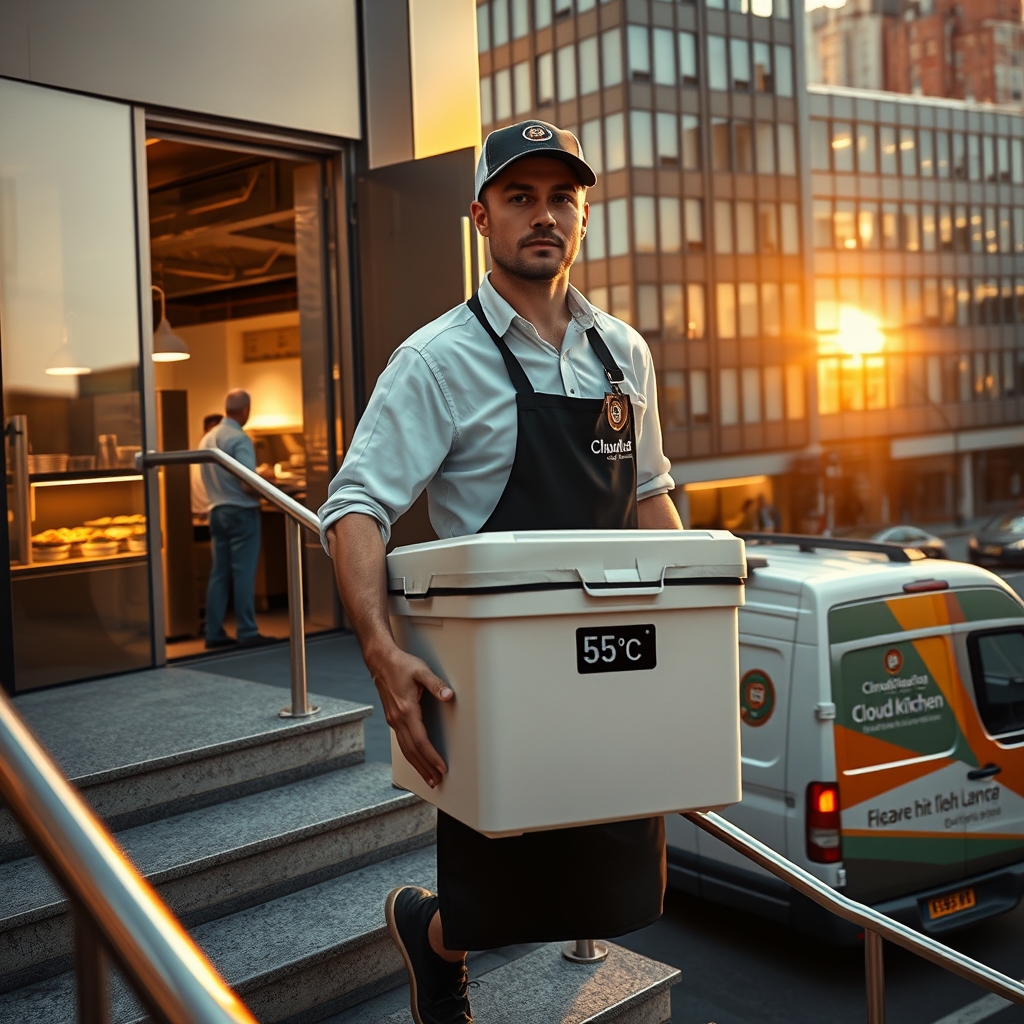
The modern catering industry is no longer just about food—it’s about the invisible machinery that delivers it. Behind every seamless corporate lunch, every flawless event spread, and every late-night home delivery lies a meticulously engineered logistics system that has become the true differentiator in a crowded market. The question is no longer whether caterers can cook; it’s whether they can deliver—literally and figuratively—on the promise of convenience, quality, and consistency. And those who master this balance are not just feeding clients; they’re commanding their loyalty.
The Illusion of Effortlessness
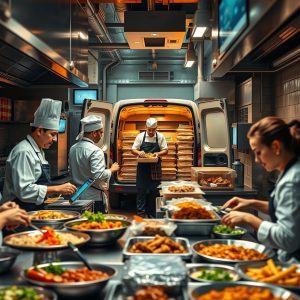
Walk into any high-stakes corporate event or scroll through an online catering order, and the experience feels effortless. A few taps on a screen, a confirmation email, and within hours, a perfectly arranged spread arrives at the doorstep. But this illusion of simplicity is a carefully constructed facade. Behind it lies a labyrinth of micro-decisions: route optimizations, temperature-controlled packaging, real-time driver tracking, and contingency plans for traffic, weather, or last-minute order changes. The best catering services don’t just manage logistics—they weaponize it, turning potential friction points into opportunities to impress.
Consider the rise of drop-off catering, a segment that has exploded in popularity as businesses and individuals seek high-quality food without the overhead of on-site staff. The challenge here isn’t just preparing the food; it’s ensuring that a buffet arrives at 11:45 AM sharp, still at the ideal temperature, with every garnish intact. This requires more than a well-insulated delivery bag. It demands predictive algorithms that account for preparation time, travel distance, and even the likelihood of a client’s office being on a high floor with slow elevators. The caterers who succeed in this space aren’t just chefs; they’re logisticians with culinary expertise.
The Cloud Kitchen Conundrum
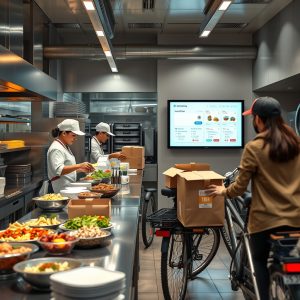
The emergence of cloud kitchens has further complicated the catering logistics landscape. These delivery-only operations, unburdened by the costs of physical storefronts, have lowered the barrier to entry for new players. But they’ve also introduced a new set of challenges. Without a retail presence, cloud kitchens must rely entirely on their logistics partners—or their own delivery fleets—to maintain brand integrity. A single late delivery or a lukewarm meal can erode trust in a way that a brick-and-mortar restaurant might survive, simply because there’s no in-person experience to offset the failure.
This is where the concept of micro-logistics comes into play. Cloud kitchens and catering services alike are now investing in hyper-localized delivery networks, often partnering with third-party logistics providers or building their own fleets to ensure control over the last mile. The goal isn’t just speed; it’s precision. A corporate catering order for 50 people doesn’t just need to arrive on time—it needs to arrive in the right sequence, with the right utensils, and the right setup instructions. Miss one detail, and the entire experience unravels.
The Customer Service Paradox
In an industry where the product is perishable and the delivery window is often measured in minutes, customer service excellence isn’t just a nice-to-have—it’s a survival mechanism. The best catering services understand that logistics and customer service are two sides of the same coin. A driver who arrives late isn’t just a logistical failure; they’re a brand ambassador who has just undermined months of marketing efforts. Conversely, a driver who goes the extra mile—literally or figuratively—can turn a routine delivery into a memorable experience that secures repeat business.
This is why leading catering services are now embedding customer service into their logistics operations. Real-time tracking isn’t just for the client’s peace of mind; it’s a tool for the caterer to proactively manage expectations. If a delay is inevitable, the system triggers an automated message to the client, along with an estimated new arrival time and a discount code for their next order. This isn’t just damage control; it’s a strategic move to reframe the narrative. The client isn’t left wondering where their food is—they’re reassured that the caterer is in control, even when things go wrong.
The Retail Shop Dilemma
For traditional catering businesses with physical retail spaces, the rise of on-demand delivery has created a new set of tensions. Should they double down on their brick-and-mortar presence, leveraging it as a differentiator in a sea of cloud kitchens? Or should they pivot toward a hybrid model, using their physical location as a pickup hub while also offering delivery? The answer lies in understanding the unique value of each channel.
Retail shops that embrace delivery often find themselves in a logistical arms race. They must compete with pure-play delivery services that have optimized their operations for speed and efficiency. But they also have an advantage: the ability to offer a tactile, in-person experience that can’t be replicated online. The key is to integrate these channels seamlessly. A client who orders online should be able to pick up their order in-store without friction, and vice versa. The logistics of this integration—shared inventory systems, unified order management, and consistent branding—are complex, but the payoff is a customer experience that feels cohesive, regardless of how the order is placed.
The Last Mile as a Brand Statement
The final stretch of a catering delivery—the last mile—is where brands either cement their reputation or risk irrelevance. This is the moment when the client’s expectations collide with reality. A perfectly cooked meal can be ruined by a careless driver, while a mediocre dish can be elevated by an exceptional delivery experience. The best catering services recognize that the last mile isn’t just a logistical challenge; it’s a branding opportunity.
This is why some caterers are now treating their delivery vehicles as mobile billboards, complete with branded packaging, uniforms, and even scent marketing. The goal is to create a multisensory experience that begins the moment the delivery arrives. A driver who greets the client by name, offers to set up the food, and provides a handwritten note from the chef isn’t just delivering a meal—they’re delivering an experience. And in a market where convenience is commoditized, experience is the ultimate differentiator.
The catering industry’s obsession with logistics isn’t just about efficiency; it’s about survival. In a world where customers expect their food to arrive faster, hotter, and more reliably than ever before, the companies that thrive will be those that treat logistics not as a cost center, but as a competitive weapon. The last mile isn’t just the final step in the delivery process—it’s the first step in building a lasting relationship with the customer. And in an industry where loyalty is hard-won and easily lost, that’s a step no caterer can afford to overlook.