The Last Mile Liturgy: How Home Catering Services Are Redefining the Economics of Intimacy and Convenience
The modern food service landscape is no longer defined solely by the quality of the meal on the plate. Instead, the battleground has shifted to the invisible infrastructure that delivers that meal—especially when the destination is not a corporate boardroom or a grand event hall, but the most personal of spaces: the home. Home catering services, once a niche luxury, have evolved into a critical segment of the food service industry, driven by a confluence of consumer demand for convenience, the rise of on-demand logistics, and the unrelenting pressure to deliver not just food, but an experience. The economics of this shift are as much about intimacy as they are about efficiency, and the businesses that thrive are those that recognize the delicate balance between the two.
The Illusion of Simplicity: Why Home Catering Is Harder Than It Looks
At first glance, home catering appears to be a simpler proposition than corporate or event catering. There are no sprawling venues to navigate, no complex seating arrangements to accommodate, and no armies of staff to coordinate. Yet, the challenges are deceptively complex. The home is an unpredictable environment—kitchens vary in size and equipment, dietary restrictions multiply, and the expectations for personalization are exponentially higher. A corporate client may tolerate a slight delay or a minor deviation from the menu, but a family hosting a dinner party or a couple celebrating an anniversary will not. The margin for error is razor-thin, and the stakes are emotional, not just transactional.
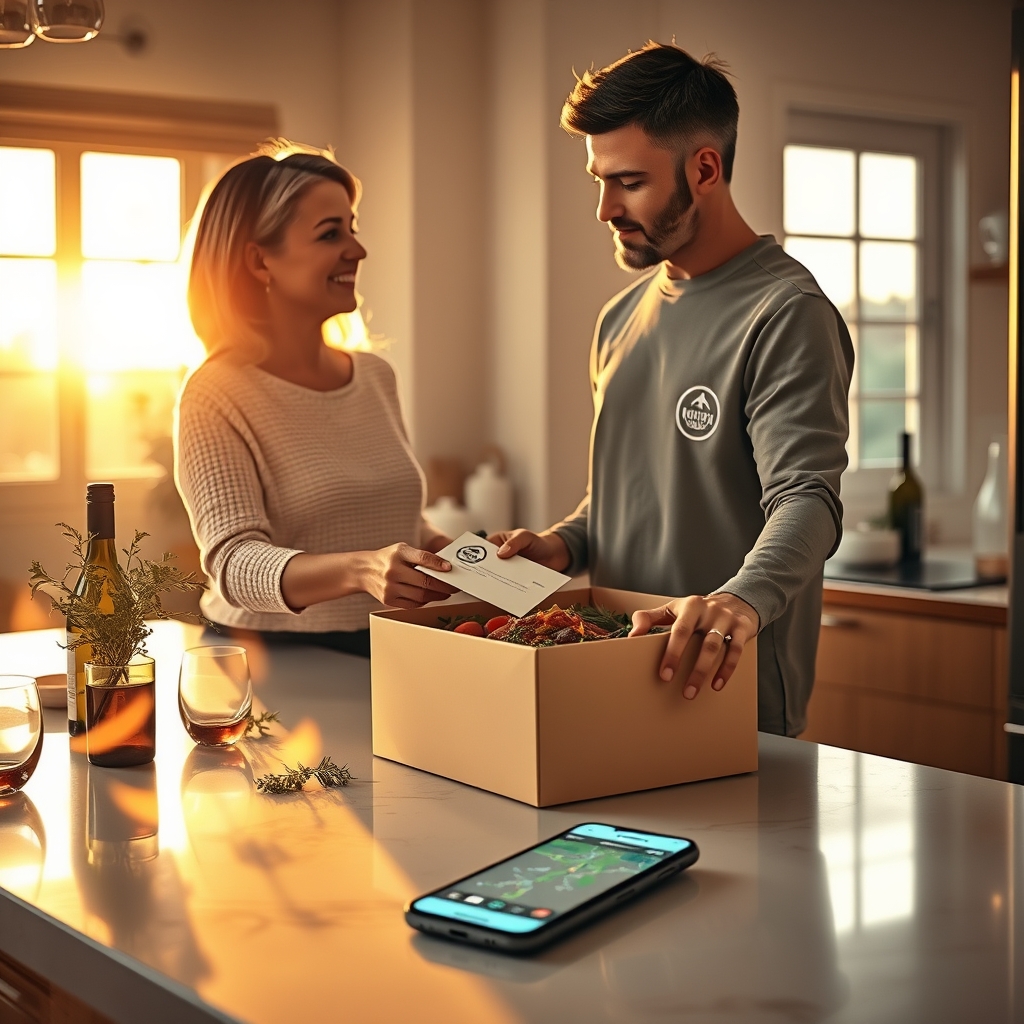
This is where the logistics of home catering diverge from its corporate and event counterparts. The last mile is not just a physical distance; it is a psychological one. The caterer must anticipate not only the logistical hurdles—traffic, parking, building access—but also the unspoken needs of the customer. Will the food arrive at the right temperature? Will the presentation survive the journey? Will the delivery person navigate the home with the right blend of professionalism and warmth? These questions are not ancillary; they are central to the service’s value proposition. Fail here, and the entire experience collapses, no matter how exquisite the meal.
The Rise of the Hybrid Model: Cloud Kitchens and the New Home Catering Economy
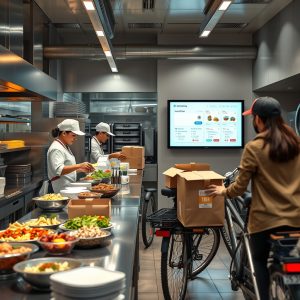
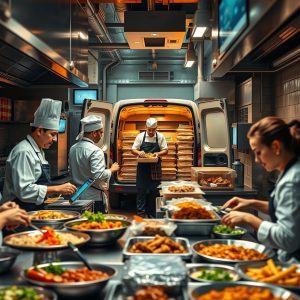
The traditional catering model, built around large kitchens and dedicated staff, is ill-suited to the demands of home catering. Enter the cloud kitchen—a model that has revolutionized the food service industry by decoupling production from presentation. For home catering services, cloud kitchens offer a lifeline: the ability to scale rapidly, experiment with menus, and fulfill orders with a level of efficiency that would be impossible in a brick-and-mortar setting. But the cloud kitchen is only half the equation. The other half is the logistics network that bridges the gap between the kitchen and the customer’s doorstep.
This hybrid model—cloud kitchens paired with hyper-local delivery networks—has given rise to a new breed of catering services that operate with the precision of a logistics company and the creativity of a culinary studio. Companies like Goldbelly and local players leveraging platforms like Uber Eats or DoorDash have demonstrated that home catering can be both scalable and intimate. The key lies in treating the last mile not as an afterthought, but as the defining feature of the service. This means investing in temperature-controlled packaging, real-time tracking, and delivery personnel trained to act as brand ambassadors. It means designing menus that travel well, not just taste good. And it means leveraging data to predict demand, optimize routes, and personalize the experience in ways that feel organic, not algorithmic.
The Personalization Paradox: How Data Drives Intimacy
In an era where customers expect every interaction to feel bespoke, home catering services face a paradox: how to deliver personalization at scale without sacrificing the warmth of human connection. The answer lies in data—but not the kind of data that reduces customers to mere points on a graph. The most successful home catering services use data to anticipate needs, not just respond to them. They track not only past orders, but also the context behind them: a customer who orders a gluten-free meal for a dinner party may also need disposable serveware; a family celebrating a birthday might appreciate a handwritten note or a small dessert upgrade. These touches are not gimmicks; they are the difference between a transaction and a relationship.
Yet, the challenge is to ensure that personalization does not cross into intrusion. The line between thoughtful and creepy is thin, and home catering services must tread carefully. The goal is not to know the customer better than they know themselves, but to create moments of delight that feel effortless. This requires a deep understanding of the customer’s journey—from the first click on a website to the moment the food is unpacked in their kitchen—and a willingness to adapt in real time. It also requires a human touch, even in a digital-first world. A chatbot can handle order modifications, but it takes a person to sense when a customer is stressed and offer reassurance.
The Last Mile as a Competitive Moat
In the crowded food service industry, differentiation is everything. For home catering services, the last mile is not just a logistical challenge; it is a competitive moat. The companies that dominate this space will be those that treat the last mile as a canvas for innovation, not a hurdle to overcome. This means rethinking every aspect of the delivery experience, from the packaging that keeps food fresh to the communication that keeps customers informed. It means investing in technology that enables real-time adjustments, like rerouting a driver to avoid traffic or alerting a customer to a delay before they even notice it. And it means recognizing that the last mile is not the end of the journey, but the beginning of the next one.
Consider the rise of express delivery services in the home catering space. Companies like Caviar and Postmates have demonstrated that speed is not just a luxury; it is an expectation. But speed alone is not enough. The most successful services combine speed with transparency, giving customers visibility into every step of the process. This builds trust, which in turn fosters loyalty. In an industry where repeat business is the lifeblood of growth, loyalty is the ultimate currency. And loyalty is not built on the quality of the food alone, but on the reliability of the experience.
The Unseen Costs of Convenience
For all its benefits, the home catering model is not without its trade-offs. The pressure to deliver faster, cheaper, and more personalized experiences has led to a commodification of labor, with delivery personnel often treated as interchangeable cogs in a machine. This is a dangerous path. The last mile is only as strong as the people who execute it, and the companies that prioritize efficiency over empathy will ultimately pay the price in customer churn and reputational damage. The challenge, then, is to build a model that values both speed and humanity—a model that recognizes that the person delivering the food is as much a part of the experience as the chef who prepared it.
The economics of home catering are not just about the cost of ingredients or the price of delivery. They are about the cost of trust. Every delayed order, every cold meal, every impersonal interaction erodes that trust, and once lost, it is nearly impossible to regain. The businesses that succeed in this space will be those that understand that the last mile is not just a logistical challenge, but a test of their commitment to the customer. They will invest in the people, processes, and technology that make the last mile seamless, not because it is easy, but because it is necessary. And in doing so, they will redefine what it means to deliver not just food, but an experience—one that begins long before the meal arrives and lingers long after it is gone.
The home catering revolution is not just about bringing restaurant-quality food into the home. It is about reimagining the very nature of hospitality in an on-demand world. The companies that thrive will be those that recognize that the last mile is not a barrier to overcome, but an opportunity to connect. In an era where convenience is king, the real differentiator is not speed or price, but the ability to make the customer feel seen, valued, and understood. That is the alchemy of home catering, and it is what will separate the leaders from the laggards in the years to come.