The Unseen Symphony: How Catering Logistics Orchestrate the Economics of Immediate Gratification
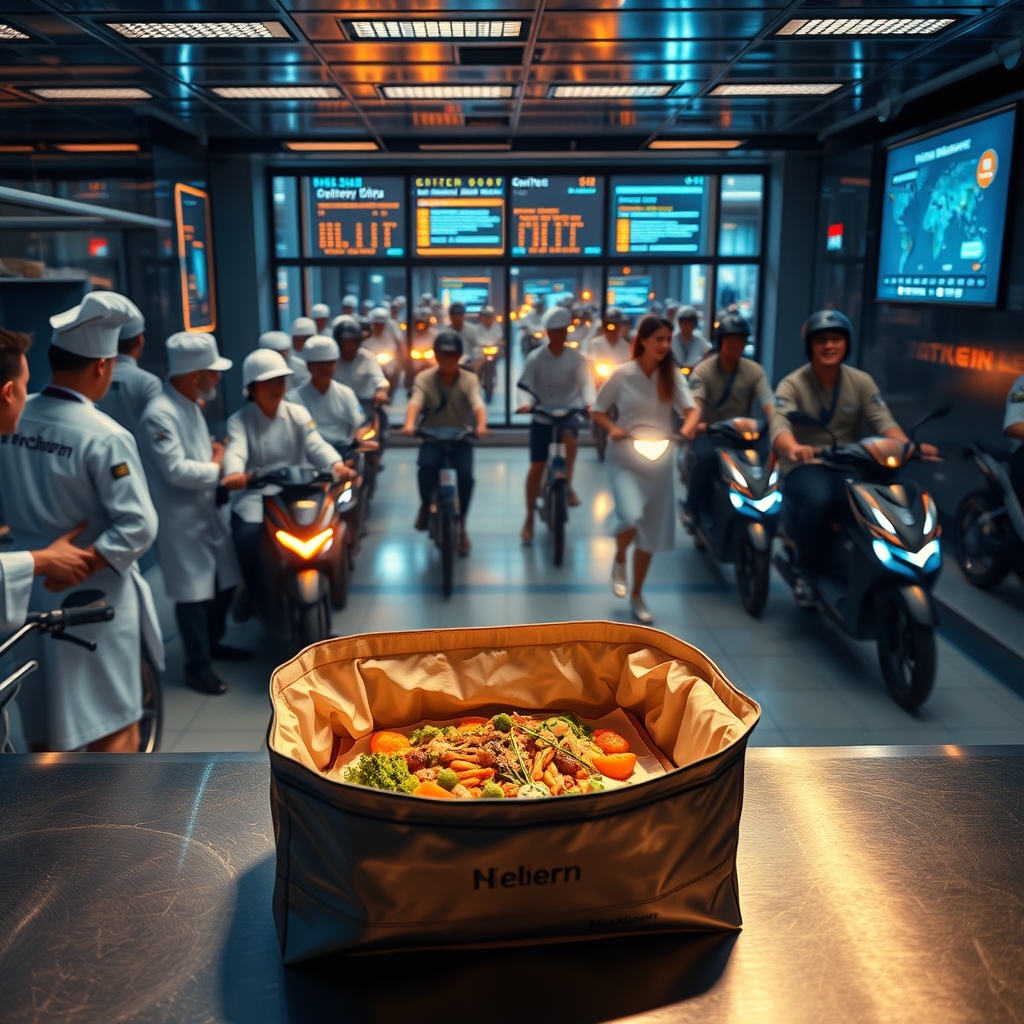
The modern catering industry is no longer just about food—it is about the invisible architecture that delivers it. Behind every seamless corporate lunch, every flawless event spread, and every on-demand meal arriving at a doorstep lies a logistical ecosystem so precise it borders on the orchestral. This is not hyperbole; it is the new reality of food service, where the economics of immediate gratification are dictated not by culinary skill alone, but by the silent efficiency of pickup, delivery, and last-mile execution.
The Illusion of Spontaneity
Customers do not see the algorithms predicting their orders before they place them. They do not witness the micro-fulfillment centers humming in the background, nor the real-time route optimizations that shave minutes off delivery windows. What they experience is the illusion of spontaneity—a perfectly timed meal, a corporate spread arriving just as the meeting begins, a private dinner materializing without a hitch. This illusion is the product of a logistical symphony, where every note must be played with precision, or the entire performance collapses into chaos.
The catering industry has long operated under the assumption that quality alone would suffice. Yet in an era where convenience is the ultimate currency, even the most exquisite dish is rendered worthless if it arrives late, cold, or compromised. The shift from traditional catering to on-demand and drop-off services has forced businesses to rethink their operational DNA. The question is no longer whether the food is good, but whether it can be delivered at the exact moment of desire.
The Last Mile as the Ultimate Litmus Test
The last mile is where most catering services either triumph or falter. It is the final, most unpredictable leg of the journey, where traffic, weather, and human error conspire to disrupt even the most meticulously planned delivery. Yet, it is also where the most innovative businesses are gaining a competitive edge. By leveraging hyper-local logistics, predictive analytics, and dynamic routing, catering services are turning the last mile from a liability into an asset.
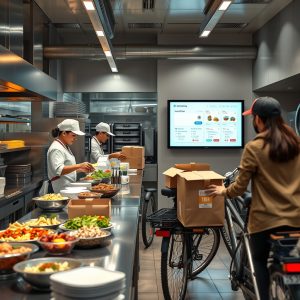
Consider the rise of cloud kitchens—facilities designed solely for delivery, with no dine-in option. These kitchens are not just cost-effective; they are logistical powerhouses, strategically positioned to minimize delivery times and maximize coverage. When paired with express delivery services, they create a feedback loop of efficiency: faster preparation, faster dispatch, faster gratification. The result is a service that feels almost prescient, as if the meal arrives not because of logistics, but because of magic.
The Psychology of the Unseen Handoff
There is a psychological dimension to the unseen handoff—the moment when a meal transitions from the caterer’s control to the customer’s possession. This is where trust is either reinforced or eroded. A late delivery, a missing item, or a lukewarm dish does more than disappoint; it fractures the illusion of effortless convenience. Conversely, a flawless handoff—whether through pickup, drop-off, or doorstep delivery—reinforces the perception of reliability, turning a one-time customer into a repeat client.
This is why customer service excellence is no longer a nicety but a necessity. In an industry where the product is perishable and the stakes are immediate, every interaction must be frictionless. The best catering services understand this implicitly. They invest in real-time tracking, transparent communication, and contingency planning not because it is trendy, but because it is the only way to maintain the illusion of spontaneity in a world where every delay is a betrayal of trust.
The Economics of Sensory Integrity
Speed alone is not enough. The food must arrive in the same condition it left the kitchen—hot, fresh, and visually intact. This is where the economics of sensory integrity come into play. Catering services are now engineering packaging solutions that preserve temperature, texture, and presentation, ensuring that the first bite is as perfect as the last. The investment in high-quality, insulated containers and tamper-proof seals is not just about aesthetics; it is about preserving the value of the meal itself.
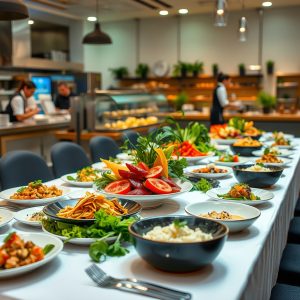
For corporate catering, this is particularly critical. A poorly presented spread can undermine the perceived professionalism of an event, while a meticulously arranged delivery can elevate it. The same principle applies to home catering services, where the arrival of a meal is often part of a larger experience—a celebration, a gathering, or a moment of indulgence. The logistics of sensory integrity are what transform a simple delivery into an unforgettable event.
The Future of Catering: A Logistical Arms Race
The catering industry is in the midst of a logistical arms race, where the winners will not be those with the best food, but those with the most resilient, adaptive, and customer-centric delivery systems. The rise of on-demand services has accelerated this shift, forcing businesses to either innovate or become obsolete. Those that succeed will be the ones that treat logistics not as a back-office function, but as the core of their value proposition.
This is not to say that culinary excellence is irrelevant. Rather, it is to acknowledge that in the modern food service landscape, the plate is only as good as the logistics that deliver it. The unseen symphony of pickup, delivery, and last-mile execution is what transforms a meal from a product into an experience. And in an economy where convenience is king, the businesses that master this symphony will command not just market share, but customer devotion.
The most successful catering services will be those that recognize a fundamental truth: the last mile is not just a logistical challenge—it is the final, most critical act of customer service. It is where promises are kept or broken, where trust is earned or lost, and where the economics of immediate gratification are either fulfilled or betrayed. The businesses that understand this will not just survive the on-demand revolution—they will define it.