The Last Mile Liturgy: How Hyper-Local Catering Logistics Are Redefining the Economics of Trust

The modern catering industry is no longer defined by the quality of the food alone. It is shaped by the invisible architecture of trust—logistics, timing, and the unspoken contract between provider and consumer. In an era where on-demand services dominate, the last mile of delivery has become the battleground where reputations are forged or fractured. The economics of trust in catering are no longer about the meal itself but about the precision with which it arrives—intact, timely, and exceeding expectations.
The Illusion of Simplicity
To the consumer, ordering catering appears effortless: a few taps on an app, a confirmation email, and the food arrives as promised. Yet behind this seamless experience lies a labyrinth of micro-decisions—route optimization, temperature control, packaging integrity, and real-time communication. The illusion of simplicity is the most sophisticated product of modern catering logistics. It is not enough to deliver food; the service must anticipate delays, adapt to traffic, and ensure that the sensory experience remains uncompromised upon arrival.
This is where the economics of trust diverge from traditional service models. A restaurant can recover from a single bad dish, but a catering service cannot afford a single failed delivery. The stakes are higher because the context is different—corporate events, weddings, and high-profile gatherings demand perfection. A delayed or mishandled order doesn’t just disappoint; it erodes the foundational trust that justifies premium pricing.
The Hyper-Local Advantage
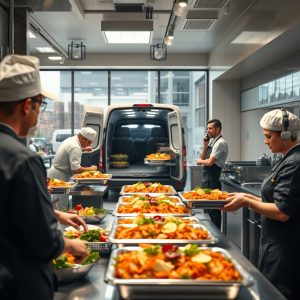
The rise of hyper-local catering services has redefined the last mile from a logistical challenge into a competitive advantage. Unlike national delivery platforms that treat food as a commodity, hyper-local caterers operate within a constrained radius, allowing for tighter control over quality and timing. This proximity enables real-time adjustments—rerouting drivers, preempting delays, and even personalizing last-minute requests without sacrificing efficiency.
For small businesses and cloud kitchens, hyper-local logistics are not just a strategy but a survival mechanism. The ability to promise and deliver within a 30-minute window is no longer a luxury; it is the baseline expectation. This shift has forced catering services to invest in micro-fulfillment centers, predictive analytics, and AI-driven route optimization. The result? A service that doesn’t just meet expectations but anticipates them, turning logistics into a silent brand ambassador.
The Psychology of the Unseen
What makes the last mile so critical is its psychological weight. Consumers don’t remember the food as much as they remember how it made them feel—and that feeling is shaped by the delivery experience. Was the order accurate? Was the packaging pristine? Did the driver arrive with a smile, or was it a rushed handoff? These micro-interactions accumulate into a perception of reliability, which in turn justifies repeat business and word-of-mouth referrals.
This is why the most successful catering services treat logistics as an extension of customer service. Every touchpoint—from the online ordering interface to the final handoff—must reinforce the perception of effortless precision. The driver is not just a courier; they are the final ambassador of the brand, tasked with ensuring that the last mile feels like the first step of a lasting relationship rather than the end of a transaction.
The Cost of Convenience
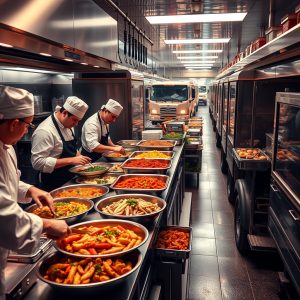
The economics of trust in catering are not without their trade-offs. The pressure to deliver faster, cheaper, and with greater customization has forced businesses to rethink their operational models. Cloud kitchens, for instance, have emerged as a cost-effective solution, allowing caterers to bypass traditional retail spaces and focus solely on production and delivery. Yet this model introduces new vulnerabilities—dependence on third-party logistics, thinner profit margins, and the risk of commoditization.
For traditional catering businesses, the challenge is different. They must balance the artistry of food preparation with the cold efficiency of logistics. This requires a cultural shift—one where chefs and drivers operate as equals in the service chain. The most innovative caterers are those who have dismantled the silos between kitchen and delivery, creating a unified workflow where every role is accountable for the final customer experience.
The Future of Frictionless Delivery
The next frontier in catering logistics is not just about speed but about eliminating friction entirely. This means leveraging technology to predict demand, automate inventory, and personalize delivery windows. It means using data to understand not just what customers order but how they prefer to receive it—whether through express delivery, scheduled drop-off, or even self-pickup with curated packaging.
Yet technology alone cannot build trust. The human element remains irreplaceable. The best catering services understand that logistics are not just about moving food from point A to point B but about moving emotions—creating moments of delight, surprise, and satisfaction. The last mile is where the brand’s promise is either fulfilled or broken, and in an industry where reputation is currency, there is no room for error.
The catering industry’s future belongs to those who recognize that logistics are not a back-office function but the front line of customer experience. The last mile is no longer a logistical hurdle; it is the stage where trust is performed, where brands prove their worth not through words but through the silent precision of execution. In this economy of trust, the most valuable asset is not the food itself but the unshakable confidence that it will arrive exactly as promised—every time.