The Frictionless Feast: How Small Business Catering Services Are Redefining On-Demand Logistics and Customer Expectations

The modern catering landscape is no longer defined by white-tablecloth elegance or sprawling buffet lines. Instead, it is shaped by the quiet efficiency of logistics, the precision of on-demand systems, and the unrelenting demand for frictionless service. Small business catering services, once relegated to the sidelines of the food industry, have emerged as the vanguard of this transformation. Their success hinges not on grand gestures, but on the mastery of micro-logistics—where every minute, every mile, and every customer interaction is optimized for speed, reliability, and seamless execution.
The Rise of the Hyper-Local Catering Ecosystem
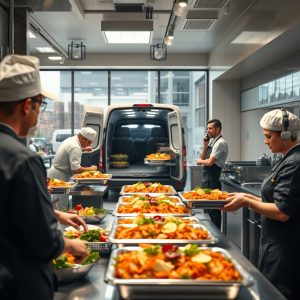
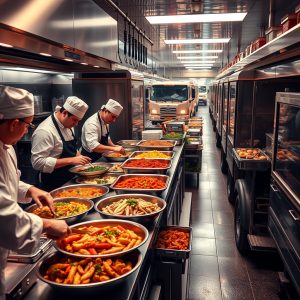
The traditional catering model relied on scale: large kitchens, bulk orders, and centralized production. But the rise of hyper-local catering has dismantled this paradigm. Small businesses, often operating from cloud kitchens or repurposed retail spaces, now dominate the on-demand catering market by leveraging proximity. A corporate lunch order placed at 10 AM for a 12 PM delivery no longer requires a 50-mile round trip from a distant commissary. Instead, it is fulfilled by a nearby kitchen, reducing transit time, minimizing spoilage risk, and ensuring peak freshness.
This shift has been accelerated by the proliferation of pickup and delivery services. Platforms like Uber Eats, DoorDash, and local logistics providers have democratized access to catering logistics, allowing small businesses to compete with established players without the overhead of a dedicated fleet. The result? A more agile, responsive catering ecosystem where orders are fulfilled in hours—not days—and where last-minute requests are met with the same precision as pre-planned events.
The Logistics of Last-Minute Luxury
The most significant disruption in modern catering is the expectation of immediacy. Corporate clients, event planners, and even individual consumers now demand same-day or next-hour catering with the same nonchalance as ordering a ride-share. This has forced small business catering services to rethink their logistics from the ground up. The old model—where orders were batched, routes were pre-planned, and deliveries were scheduled in rigid windows—is obsolete. In its place, a dynamic, real-time system has emerged, where AI-driven routing, predictive inventory management, and on-demand driver networks ensure that every order arrives on time, every time.
Consider the case of a mid-sized tech company hosting an impromptu client meeting. In the past, they might have settled for pizza or sandwich platters from a nearby deli. Today, they can place an order with a local catering service at 9 AM for a 10:30 AM delivery of gourmet boxed lunches, complete with artisanal bread, locally sourced proteins, and compostable packaging. The difference? A logistics infrastructure that treats catering as a just-in-time service, not a logistical afterthought.
The Customer Service Paradox: Less Interaction, More Satisfaction
In an era where customer service is often equated with constant communication, the most successful catering businesses are those that minimize friction without sacrificing personalization. The paradox of modern catering is that the less a customer has to think about the process, the more satisfied they are. This is achieved through a combination of automation, transparency, and proactive problem-solving.
Online catering orders, for example, are no longer static forms but dynamic interfaces that adapt in real time. A client selecting a menu for 20 people might see a warning if they attempt to order a dish with a 48-hour lead time, or an upsell suggestion for a premium beverage pairing. Behind the scenes, inventory systems automatically adjust, drivers are dispatched based on traffic patterns, and delivery windows are optimized to the minute. The result is a service that feels effortless—because it is.
The Role of Drop-Off Catering in the On-Demand Economy
Drop-off catering, once seen as a budget-friendly alternative to full-service events, has become the backbone of the on-demand catering industry. Its appeal lies in its simplicity: no servers, no setup, no cleanup—just food, delivered. But this simplicity belies a complex logistical dance. The challenge for small business catering services is to ensure that drop-off orders arrive not just on time, but in a state that reflects the quality of the food itself. This means investing in temperature-controlled packaging, tamper-evident seals, and delivery vehicles equipped with real-time tracking.
The most innovative catering businesses are taking this a step further by treating drop-off catering as an extension of their brand. A well-presented drop-off order—complete with branded packaging, clear reheating instructions, and a handwritten note—can leave a lasting impression, turning a one-time client into a repeat customer. In an industry where word-of-mouth and online reviews can make or break a business, these small touches are not just nice-to-haves; they are essential.
The Future of Catering: From Meal Delivery to Micro-Logistics Networks
The next frontier for small business catering services is the integration of micro-logistics networks. Imagine a world where a single catering order triggers a cascade of automated processes: a cloud kitchen receives the order, a local farmer is notified to deliver fresh herbs, a driver is dispatched from a nearby hub, and the client receives a real-time ETA with a live tracking link. This is not science fiction; it is the direction in which the industry is headed.
For small businesses, the key to thriving in this environment is specialization. Rather than attempting to compete with national chains on scale, they are focusing on niche markets—corporate catering for remote teams, meal delivery for busy families, or express catering for last-minute events. By leveraging local knowledge, flexible logistics, and a deep understanding of their customers’ needs, these businesses are not just surviving; they are setting the standard for what catering can and should be.
The most successful catering services of the future will be those that recognize logistics not as a cost center, but as a competitive advantage. In an industry where the difference between a five-star review and a one-star complaint often comes down to a single late delivery or a lukewarm entrée, the ability to execute flawlessly is no longer optional. It is the price of entry. And for small businesses willing to embrace the challenge, the rewards are substantial: loyal customers, repeat business, and a reputation for excellence that no amount of marketing can buy. The frictionless feast is here, and those who master its logistics will define the next era of catering.