The Frictionless Frontier: How Cloud Kitchens and On-Demand Logistics Are Redefining Catering Delivery
The modern catering landscape is no longer defined by white-tablecloth banquets or sprawling buffet lines. Instead, it thrives in the silent efficiency of cloud kitchens and the relentless precision of on-demand logistics. This shift isn’t merely a response to changing consumer habits—it’s a fundamental reengineering of how food moves from preparation to plate, particularly in the realms of corporate catering, event catering, and home meal delivery. The question isn’t whether this transformation is happening, but how businesses can leverage it to outpace competitors and meet the exacting standards of today’s customers.
The Cloud Kitchen Catalyst
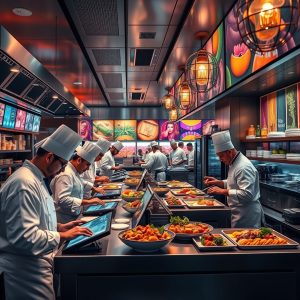
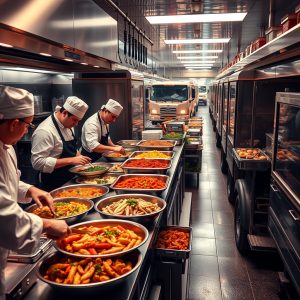
At the heart of this evolution lies the cloud kitchen—a concept that strips away the traditional restaurant’s front-of-house operations to focus solely on production. For catering services, this model offers unparalleled scalability. Without the overhead of dining spaces or waitstaff, cloud kitchens can pivot rapidly to meet demand, whether it’s a last-minute corporate lunch for 50 or a weekend wedding for 200. The efficiency isn’t just operational; it’s financial. Lower fixed costs mean higher margins, allowing businesses to reinvest in quality ingredients, technology, or even expansion without the burden of brick-and-mortar constraints.
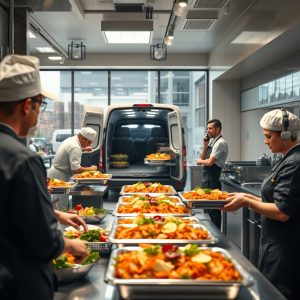
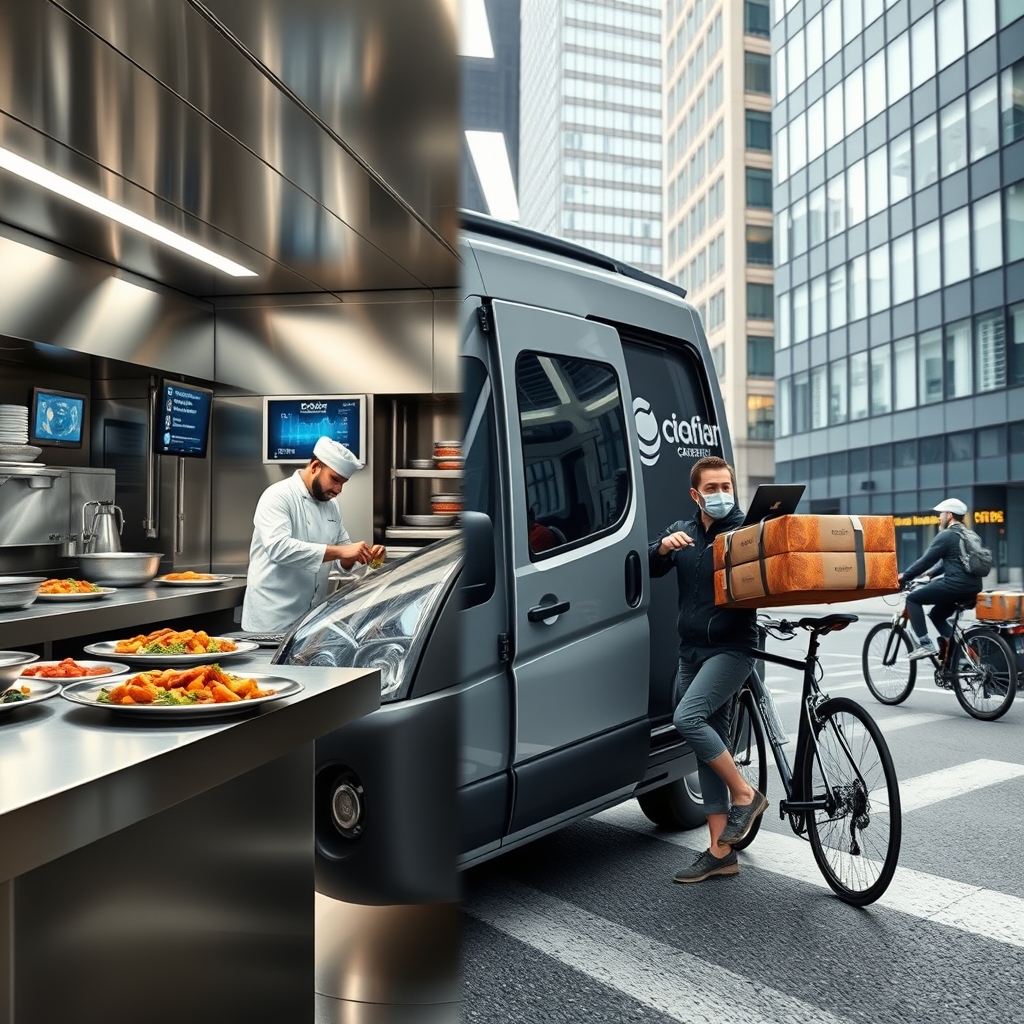
Yet, the cloud kitchen’s true power lies in its symbiosis with on-demand logistics. Traditional catering often grappled with the unpredictability of event timelines or the logistical nightmare of coordinating multiple deliveries. Cloud kitchens, however, are built for speed. By integrating with third-party delivery platforms or developing proprietary logistics networks, they can turn around orders in hours—or even minutes. This agility is particularly critical for corporate catering, where delays aren’t just inconvenient; they’re disruptive to workflows and client relationships.
The Logistics Labyrinth
If cloud kitchens are the engine of this new catering paradigm, logistics are the transmission. The rise of pickup and delivery services has dismantled the old guard of catering, where clients were forced to adapt to the business’s schedule rather than the other way around. Today, the expectation is seamless: order online, track in real-time, and receive at the exact moment of need. This isn’t just convenience; it’s a non-negotiable standard.
For catering businesses, this means mastering the art of micro-logistics. It’s no longer enough to deliver food on time; it must arrive at the perfect temperature, with presentation intact, and accompanied by the right utensils, condiments, or setup instructions. The logistics chain must account for variables like traffic patterns, weather delays, or last-minute guest count changes. Companies that fail to optimize this process risk more than dissatisfied customers—they risk irrelevance in a market where competitors are already solving these problems with AI-driven route planning and IoT-enabled delivery containers.
The Customer-Centric Imperative
The final piece of this puzzle is customer service excellence—a term that’s often bandied about but rarely executed with precision. In the context of on-demand catering, excellence isn’t about smiling faces or polite phone manners. It’s about anticipating needs before they’re voiced. For example, a corporate client ordering lunch for a team meeting doesn’t just want sandwiches; they want dietary restrictions automatically flagged, portion sizes adjusted for productivity (no one works well on an empty stomach or a food coma), and delivery timed to the minute the meeting starts.
This level of service requires data. Cloud kitchens and catering platforms must collect and analyze order histories, feedback, and even behavioral patterns to predict preferences. A client who orders gluten-free options 80% of the time shouldn’t have to specify it every time. A company that frequently hosts all-day workshops should receive suggestions for snack rotations or hydration stations. The businesses that thrive will be those that treat customer service not as a department, but as a data-driven discipline.
The Retail Ripple Effect
The impact of this shift extends beyond catering into the broader food service ecosystem. Retail shops, local bakeries, and even grocery stores are adopting elements of the cloud kitchen model to offer catering or meal delivery services. The lines between these sectors are blurring, creating both opportunities and challenges. A local deli, for instance, can now compete with national catering chains by leveraging its existing kitchen infrastructure and local brand recognition. However, this also means that catering businesses must differentiate themselves not just on food quality, but on the entire experience—from ordering to delivery to post-event follow-up.
For small businesses, this presents a unique advantage. While large catering companies may have the resources to invest in cutting-edge logistics, smaller players can offer hyper-local expertise and personalized service that algorithms can’t replicate. The key is to combine the efficiency of on-demand systems with the authenticity of a local brand. A family-owned Italian restaurant, for example, can use a cloud kitchen to scale its catering operations while maintaining the storytelling and customization that sets it apart from corporate competitors.
The Future of Frictionless Feeding
The next frontier in catering delivery isn’t just about speed or convenience—it’s about invisibility. The best logistics systems are those that operate so seamlessly that the customer doesn’t even notice them. Imagine a scenario where a corporate event planner schedules a catered lunch, and the food arrives not just on time, but with the setup already handled, the leftovers discreetly removed, and the client billed automatically through a pre-approved system. The logistics, the service, the payment—all frictionless.
This level of integration requires a holistic approach. Cloud kitchens must partner with logistics providers that understand the nuances of food delivery, from temperature control to presentation. Technology platforms must be intuitive enough for clients to use without training, yet robust enough to handle the complexities of large-scale orders. And above all, the human element must remain central. Even in a world of algorithms and automation, the businesses that stand out will be those that remember catering is ultimately about people—feeding them, delighting them, and making their lives easier in the process.
The catering industry is no longer just about food; it’s about systems. The businesses that recognize this—and act on it—will define the next era of hospitality, where the only thing customers need to worry about is whether to go for the chicken or the fish.