The Frictionless Table: How On-Demand Catering Logistics Are Reshaping Customer Trust and Culinary Expectations
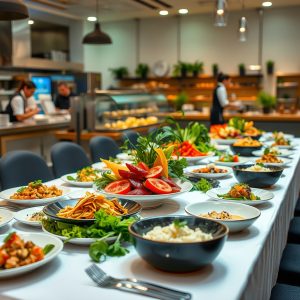
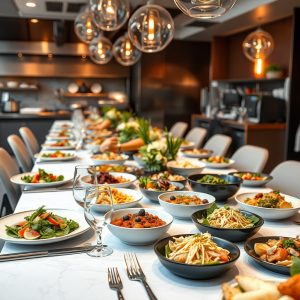
The modern catering industry is no longer defined by the quality of its food alone. What separates the exceptional from the expendable is the invisible infrastructure that delivers it—logistics that operate with surgical precision, anticipating needs before they arise, and resolving friction before it registers as inconvenience. This is the era of the frictionless table, where the success of a catering service hinges not just on what arrives on the plate, but how it arrives there.
The Illusion of Effortlessness
Customers do not see the orchestration behind a seamless catering delivery—the route optimizations, the temperature-controlled packaging, the real-time tracking that ensures a meal arrives at the precise moment it is needed. What they experience is effortlessness, a sense that the service has read their mind. This illusion is not accidental; it is the result of a deliberate dismantling of operational inefficiencies, where every second of delay, every degree of temperature fluctuation, and every miscommunication is treated as a system failure.
Corporate catering, in particular, has become a proving ground for this philosophy. A delayed lunch for a boardroom meeting is not merely an inconvenience—it is a disruption to productivity, a breach of trust. The best catering services understand this and have reengineered their logistics to function as an extension of the client’s own operations. The meal is not just delivered; it is integrated into the rhythm of the workday, arriving as if summoned by thought rather than order.
The Micro-Logistics Revolution
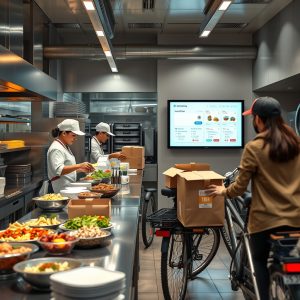
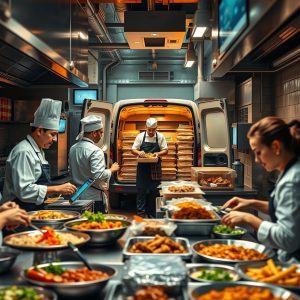
The rise of cloud kitchens and on-demand food service businesses has accelerated the need for micro-logistics—hyper-localized, data-driven delivery systems that prioritize speed without sacrificing quality. Unlike traditional catering, which often relied on bulk preparation and scheduled drop-offs, modern services must accommodate last-minute changes, fluctuating demand, and the expectation of near-instant fulfillment. This shift has forced catering providers to adopt agile logistics models, where delivery routes are recalculated in real time, and inventory is managed with surgical precision.
For small business catering services, this presents both a challenge and an opportunity. The challenge lies in competing with larger, tech-driven operations that can afford sophisticated logistics software. The opportunity, however, is in leveraging local knowledge—understanding traffic patterns, client preferences, and neighborhood dynamics in ways that algorithms cannot. The most successful small catering businesses are those that combine the efficiency of on-demand logistics with the personalization of a local shop, creating a hybrid model that feels both cutting-edge and deeply human.
The Psychology of the Last Mile
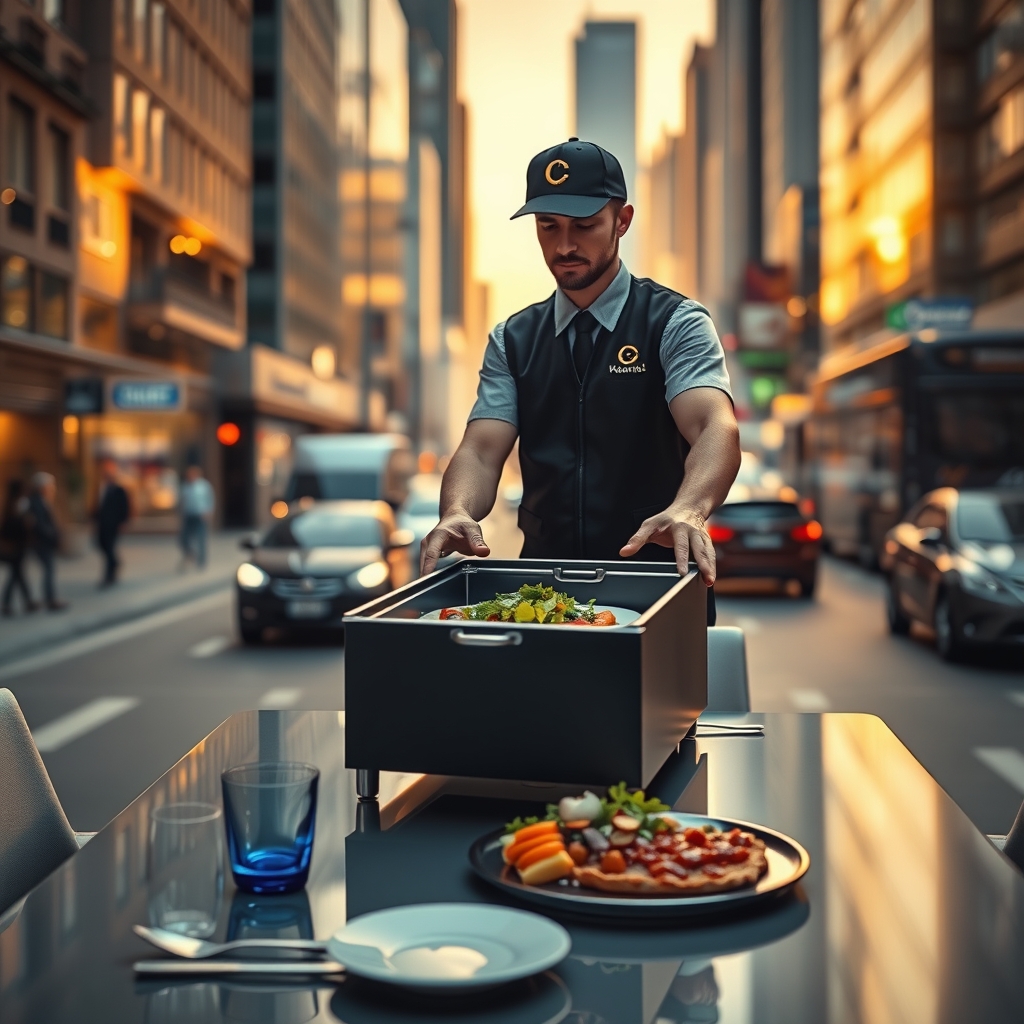
The final stretch of delivery—the last mile—is where customer trust is either solidified or shattered. It is not enough for the food to arrive on time; it must arrive in a state that exceeds expectations. This means packaging that preserves temperature, presentation that feels intentional, and a handoff that is executed with the same care as the meal’s preparation. The best catering services treat the last mile as a performance, where every detail—from the driver’s uniform to the placement of the delivery—reinforces the perception of excellence.
Express delivery services have raised the stakes further, conditioning customers to expect not just speed, but near-flawless execution. A meal that arrives five minutes late is no longer acceptable; it must arrive precisely when promised, in perfect condition, with no room for error. This has forced catering businesses to adopt a zero-defect mentality, where logistics are not just optimized for efficiency, but for absolute reliability. The result is a service that feels less like a transaction and more like a guarantee—a promise that the customer’s time, trust, and expectations will not be wasted.
The Human Factor in a Digital World
Despite the increasing reliance on automation and AI-driven logistics, the most successful catering services recognize that technology alone cannot build customer loyalty. The human element—whether in the form of a knowledgeable customer service representative, a driver who double-checks an order before departure, or a chef who personally ensures a dish meets exacting standards—remains irreplaceable. The best services use technology to enhance, rather than replace, human interaction, creating a seamless experience that feels both highly efficient and deeply personal.
This balance is particularly critical in event catering, where the stakes are highest. A wedding, a corporate gala, or a high-profile social gathering demands not just flawless execution, but an understanding of the emotional weight behind the event. The catering service that succeeds is the one that treats logistics as a form of hospitality, where every decision—from the timing of the delivery to the presentation of the food—is made with the client’s experience in mind.
The Future of Catering Logistics: Beyond the Plate
The next frontier in catering logistics is not just about delivering food faster or more efficiently; it is about redefining what delivery means. The most innovative services are already experimenting with predictive ordering, where AI anticipates a client’s needs before they place an order, and dynamic pricing models that adjust in real time based on demand. Others are exploring the potential of drone deliveries, autonomous vehicles, and even robotic kitchens that prepare meals en route to their destination.
Yet, for all the advancements in technology, the core principle of catering logistics remains unchanged: the customer’s experience is paramount. The services that thrive will be those that recognize logistics as more than a means to an end, but as an integral part of the culinary experience. The frictionless table is not just a goal; it is the new standard, and those who fail to meet it will find themselves left behind in an industry where convenience, precision, and trust are no longer luxuries, but expectations.
The most successful catering businesses are not just delivering meals—they are delivering certainty. In a world where time is the ultimate currency, the ability to guarantee a flawless experience, every time, is what separates the exceptional from the expendable. The logistics behind the plate are no longer invisible; they are the foundation upon which customer loyalty is built, and the silent promise that defines the future of the industry.