The Last Mile Paradox: How Catering Services Balance Speed, Scarcity, and Sensory Integrity in the Age of Instant Gratification
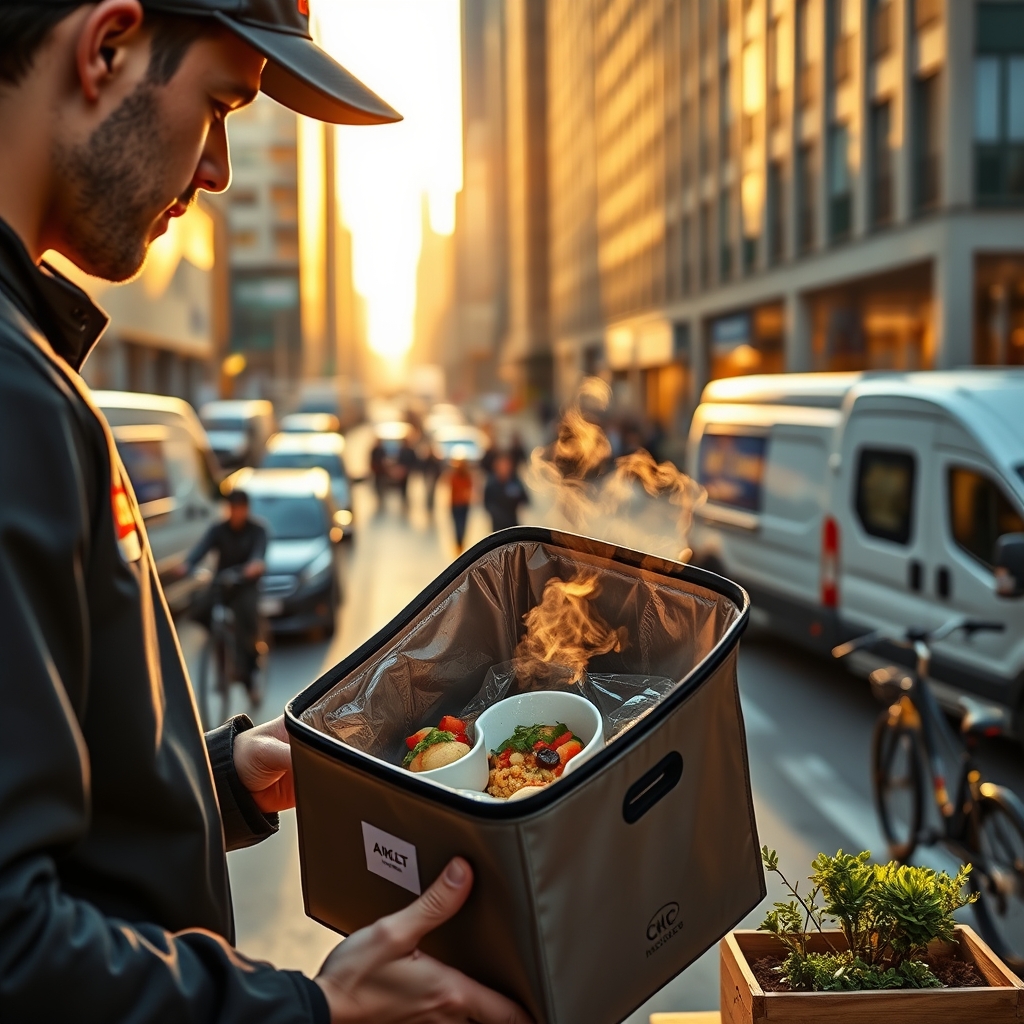
The modern catering industry is caught in a paradox: the more it accelerates, the more it risks diluting the very essence of what makes food memorable. Speed is no longer a luxury—it’s an expectation, a non-negotiable demand from customers who order with the tap of a finger and expect their meals to arrive not just promptly, but perfectly. Yet, in this race against the clock, something fragile is often lost: the sensory integrity of the food itself. The challenge for catering services today isn’t just about delivering meals faster; it’s about preserving the soul of the dish in transit, ensuring that the last mile doesn’t become the weakest link in the culinary chain.
The Illusion of Infinite Scalability
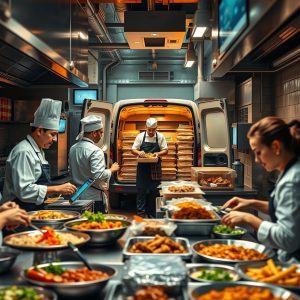
Cloud kitchens and on-demand logistics have promised a world where catering services can scale infinitely, where a single kitchen can serve hundreds of customers across a city without ever opening its doors to the public. The efficiency is undeniable—lower overhead, streamlined operations, and the ability to pivot menus based on real-time data. But scalability comes at a cost. When food is prepared in bulk, packaged in disposable containers, and rushed through a labyrinth of delivery routes, the risk of sensory degradation is real. A dish that arrives lukewarm, with soggy textures or muted flavors, is a dish that fails, no matter how quickly it was delivered.
The illusion of infinite scalability is just that—an illusion. True scalability in catering isn’t about volume; it’s about consistency. It’s about ensuring that the fifth meal delivered in an hour tastes just as vibrant as the first. This requires more than just efficient logistics; it demands a rethinking of how food is prepared, packaged, and transported. Some catering services are experimenting with temperature-controlled delivery bags, vacuum-sealed containers, and even modular meal components that are assembled on-site to preserve freshness. These innovations are steps in the right direction, but they also highlight the tension between speed and quality that defines the industry today.
The Tyranny of the Last Mile
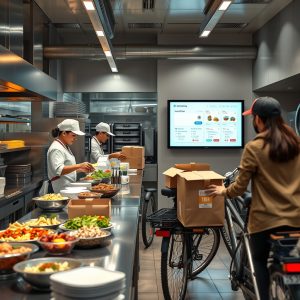
The last mile is where catering services either succeed or fail. It’s the final, critical handoff between the kitchen and the customer, and it’s fraught with variables: traffic, weather, human error, and the unpredictable nature of urban environments. For corporate catering and event catering, the stakes are even higher. A delayed delivery to a boardroom meeting or a wedding reception isn’t just an inconvenience—it’s a disruption that can tarnish a brand’s reputation. Yet, the last mile is also where customer expectations are most rigid. Customers don’t care about the logistical hurdles; they care about their food arriving on time, intact, and at the right temperature.
This is where the concept of “micro-logistics” comes into play. Unlike traditional logistics, which focuses on moving large volumes of goods from point A to point B, micro-logistics is about precision. It’s about optimizing routes, minimizing handling, and ensuring that every meal is treated as a unique entity, not just another package in a delivery van. Some catering services are adopting AI-driven route optimization tools, while others are investing in dedicated delivery fleets to maintain control over the last mile. The goal is to turn the last mile from a liability into a competitive advantage, a seamless extension of the customer experience.
The Human Factor in a Digital World
For all the talk of algorithms, automation, and on-demand services, the catering industry remains deeply human. The best catering services understand that technology is a tool, not a replacement for the human touch. A well-timed phone call to confirm an order, a handwritten note included with a delivery, or a driver who takes the extra minute to ensure a meal is presented perfectly—these small gestures elevate the experience from transactional to memorable. In an era where customer service excellence is often reduced to chatbots and automated responses, the catering industry has an opportunity to stand out by prioritizing the human element.
This is particularly true for home catering services and small business catering, where personalization is a key differentiator. Customers aren’t just ordering food; they’re ordering an experience, a break from the routine, or a way to celebrate a special occasion. When a catering service gets it right, it’s not just delivering a meal—it’s delivering joy. The challenge is to scale this level of personalization without losing the authenticity that makes it special. Some services are turning to CRM systems to track customer preferences, while others are training their staff to anticipate needs before they’re expressed. The goal is to make every interaction feel bespoke, even in a world of mass production.
The Future of Catering: Beyond the Plate
The next frontier for catering services isn’t just about what’s on the plate—it’s about what happens before and after the meal arrives. The rise of retail shop services and local shop delivery has blurred the lines between catering and other forms of food service, creating new opportunities for innovation. For example, some catering businesses are partnering with local retailers to offer curated meal kits, where customers can pick up pre-portioned ingredients and prepare restaurant-quality dishes at home. Others are expanding into subscription-based models, delivering weekly meals to busy professionals or families. These hybrid models allow catering services to diversify their revenue streams while staying true to their core competency: delivering high-quality food.
At the same time, the industry is grappling with the environmental impact of its operations. Disposable packaging, single-use plastics, and food waste are all pressing concerns, and customers are increasingly holding catering services accountable. Some businesses are responding by adopting sustainable packaging, compostable containers, and even carbon-neutral delivery options. Others are exploring circular economy models, where packaging is returned, cleaned, and reused. These efforts aren’t just good for the planet—they’re good for business, as customers are more likely to support brands that align with their values.
The catering industry is at a crossroads, where the demands of speed, scalability, and sensory integrity are colliding with the realities of logistics, customer expectations, and environmental responsibility. The services that thrive will be those that recognize the last mile isn’t just a logistical challenge—it’s a sensory one. It’s about ensuring that the food that arrives at the customer’s door is as vibrant, flavorful, and satisfying as the moment it left the kitchen. In this age of instant gratification, the true measure of success isn’t just how fast you can deliver, but how well you can preserve the magic of the meal, one delivery at a time.