The Ghost Kitchen Paradigm: How Cloud Logistics Are Rewriting Corporate Catering
The traditional chafing dish is an artifact of a bygone culinary era. For decades, the food catering business relied on a bloated, resource-heavy model characterized by excessive staffing, complex on-site setups, and unpredictable execution. Today, that archaic system is being systematically dismantled by a far more ruthless and efficient competitor: the cloud kitchen business. Driven by the relentless demands of modern corporate catering and the expectation of instant gratification, the food service industry is undergoing a structural realignment. We are witnessing the pivot from hospitality-first operations to logistics-driven meal delivery services, where the quality of the algorithm is just as critical as the quality of the ingredients.
The Inefficiency of the Legacy Catering Model
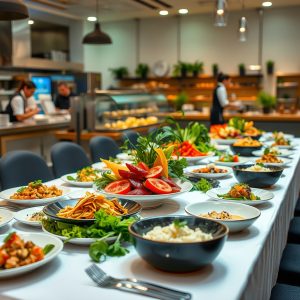
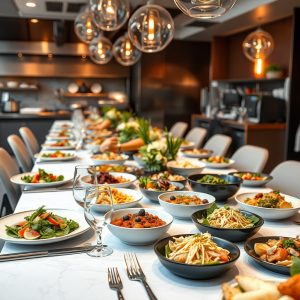
Event catering has historically operated on a model of high margins and even higher overhead. Traditional caterers approach corporate and private events as bespoke projects, requiring extensive consultation, customized logistics, and an army of temporary staff. This approach is inherently flawed when scale and speed are the primary objectives. The reliance on manual coordination for every phase—from menu selection and client tastings to the final drop-off catering execution—introduces massive friction. Customer service excellence in this legacy framework is often a byproduct of heroic individual effort rather than systemic reliability. The process is simply too slow for the modern consumer.
Furthermore, the physical infrastructure of a traditional catering delivery service is highly capital intensive. Maintaining massive commercial kitchens, a fleet of specialized transport vehicles, and extensive front-of-house equipment creates a severe barrier to agility. When corporate clients demand an online catering order for fifty executives with a 24-hour turnaround, the legacy caterer struggles to adapt. Their operational systems are built for weddings and seasonal galas, not the rapid-fire, highly variable requirements of modern corporate environments. The overhead costs are passed down to the consumer, making the service financially inefficient for everyday business needs.
The Cloud Kitchen Paradigm
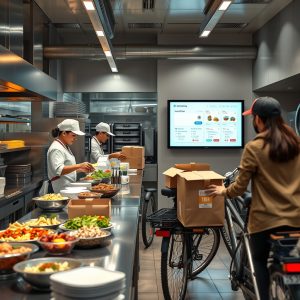
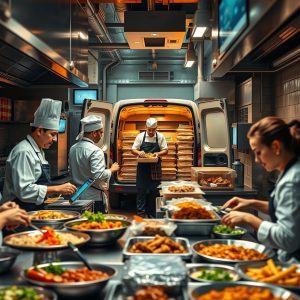
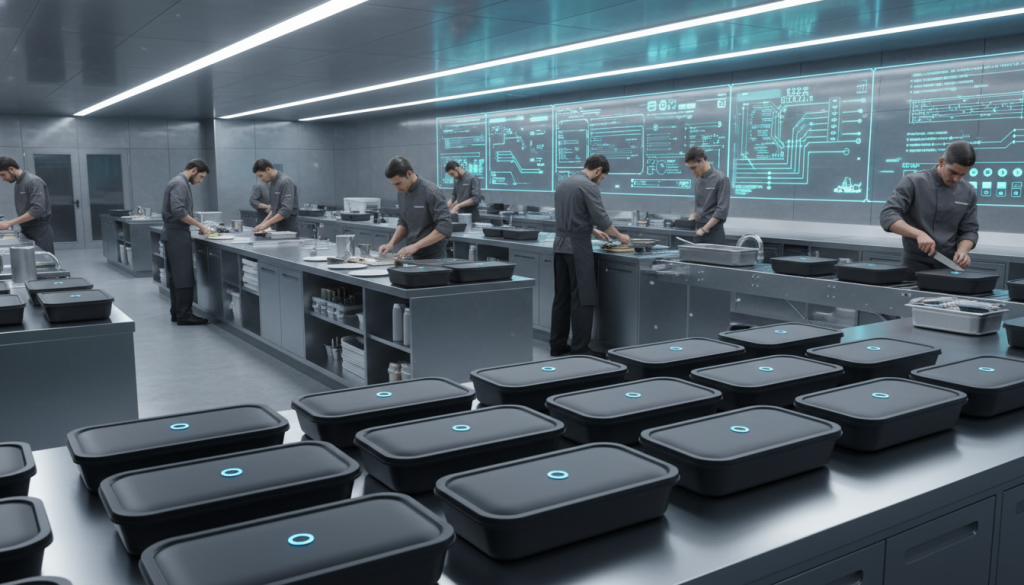
Enter the cloud kitchen business. Stripped of retail shop services, dining rooms, and front-of-house staff, these facilities are optimized for one singular purpose: maximum culinary output. By operating in low-rent industrial zones rather than premium commercial real estate, cloud kitchens redirect their capital into highly efficient production lines and robust technological integrations. They are the automated factories of the modern food service business, designed to process high volumes of online catering orders with mechanical precision. Inventory is managed by predictive AI, and preparation times are tracked down to the second.
This operational leanness allows cloud kitchens to dominate the corporate catering sector. They offer a streamlined pickup and delivery service that completely bypasses the logistical nightmares of full-scale event setups. Instead of deploying a team of waiters, bartenders, and chefs, these businesses execute flawless drop-off catering. The food arrives in temperature-controlled, aesthetically pleasing, and structurally engineered packaging, ready for immediate consumption. It is a highly sanitized, highly efficient transaction that prioritizes absolute convenience over traditional ceremony.
Redefining the Logistics Service Business
To understand the success of the modern meal delivery service, one must view it not as a culinary enterprise, but as a hardcore logistics service business. The integration of on-demand services has fundamentally altered consumer expectations across all demographics. Clients no longer tolerate ambiguous delivery windows or cold food. They expect the exact same express delivery service and real-time GPS tracking from their food pickup service as they do from major global e-commerce platforms.
Consequently, successful catering delivery services are heavily investing in dynamic routing algorithms and sophisticated fleet management software. The coordination of a local shop delivery or a large-scale corporate lunch is dictated by real-time traffic patterns, kitchen preparation times, and courier availability. The margin of error is virtually nonexistent. A delivery delay of fifteen minutes can ruin a corporate board presentation, making logistical precision the ultimate metric of customer service excellence. The packaging itself must be engineered to maintain thermal integrity during transit, ensuring that the product arrives exactly as the chef intended.
The Democratization of Small Business Services
Interestingly, this technological arms race is not exclusive to massive corporate conglomerates. Small business services are rapidly adopting scalable SaaS platforms that allow them to compete on a surprisingly level playing field. Independent home catering service operators and local food retail shops can now leverage third-party logistics networks to offer highly competitive pickup and delivery services. This democratization of logistics means that the barrier to entry has shifted from raw financial capital to operational intelligence and digital marketing prowess.
The modern consumer demands absolute optionality and zero friction. Whether it is a quick food pickup service for an impromptu team meeting or a comprehensive drop-off catering package for a multi-day corporate conference, the interface remains exactly the same: a clean digital menu, a seamless online catering order, and a guaranteed delivery time. The physical interaction between the business and the client is minimized, replaced entirely by a frictionless digital handshake that leaves no room for human error.
The trajectory of the food catering business is clear and entirely irreversible. The romanticized vision of the bustling, chaotic catering kitchen is being systematically replaced by the sterile, data-driven efficiency of the cloud model. As corporate catering and private events increasingly prioritize reliability, speed, and exactitude over traditional hospitality, the operators who survive will be those who master the digital supply chain. The future of food service does not belong to the chef with the most elaborate menu, but to the operational architect who can deliver it flawlessly, on time, without a single wasted movement.