The Unseen Engine: How Micro-Logistics Power the Future of Catering Delivery Services
The modern catering industry is no longer defined by the grandeur of buffet tables or the opulence of plated dinners. Instead, its beating heart lies in the unseen mechanics of micro-logistics—a complex, often invisible network that ensures a meal arrives at the right place, at the right time, and in the right condition. This shift is not merely operational; it is existential. The rise of on-demand services, the relentless demand for convenience, and the erosion of traditional dining norms have forced catering businesses to rethink their entire value proposition. At the center of this transformation is the delivery ecosystem, where precision, speed, and adaptability are no longer luxuries but necessities.
The Myth of the Last Mile
The term “last mile” has been romanticized in logistics discourse, often portrayed as the final, heroic sprint to the customer’s doorstep. In reality, it is a minefield of inefficiencies—traffic snarls, unpredictable weather, miscommunication, and the ever-present risk of human error. For catering delivery services, the last mile is not just a logistical challenge; it is a reputational one. A delayed or mishandled order doesn’t just inconvenience the customer; it erodes trust in an industry where reliability is the only currency that matters.
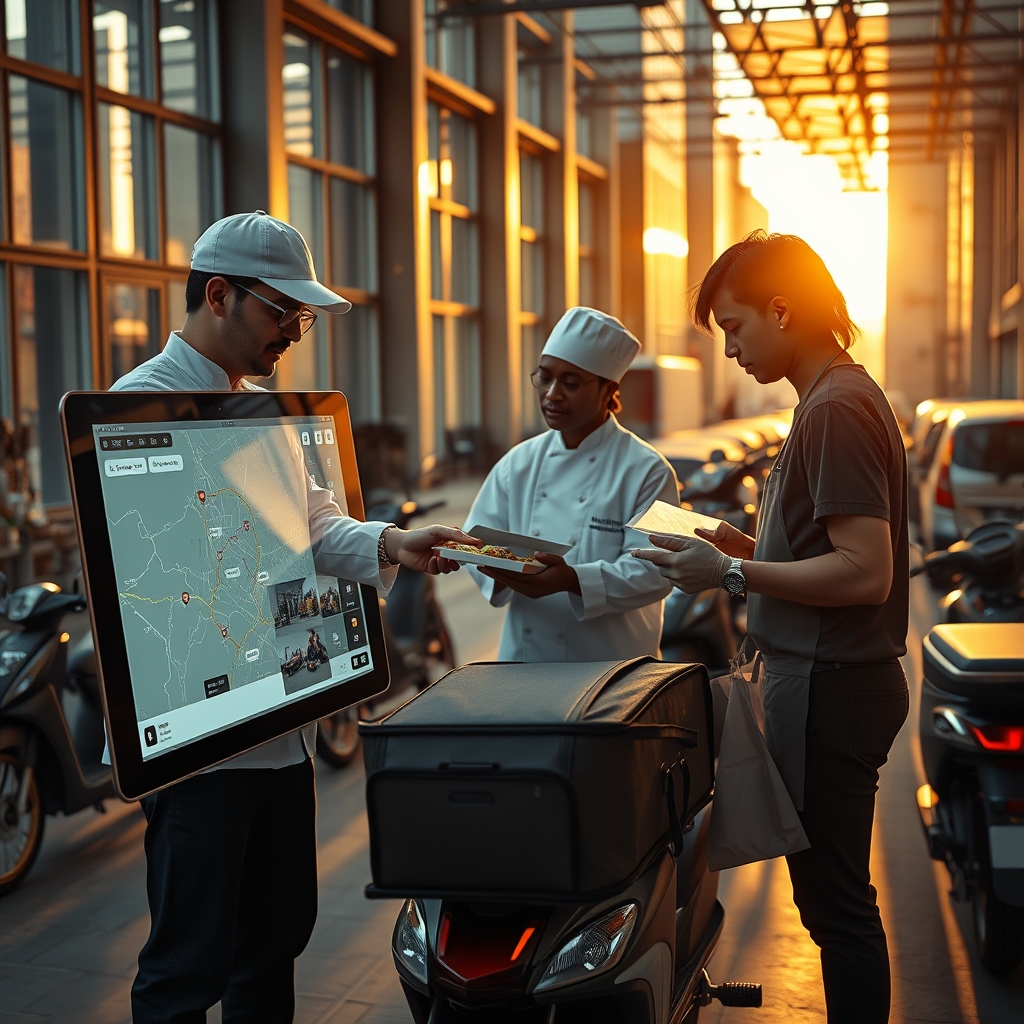
Yet, the solution isn’t merely faster drivers or more vehicles. The real innovation lies in predictive logistics—systems that anticipate delays before they happen, reroute deliveries in real time, and adjust expectations dynamically. Companies like Uber Eats and DoorDash have set a new standard by integrating AI-driven route optimization, but catering services operate on a different scale. A single corporate lunch order might involve dozens of individually packaged meals, each with specific dietary restrictions, temperature requirements, and presentation standards. The last mile, in this context, is less about speed and more about orchestration.
The Cloud Kitchen Conundrum
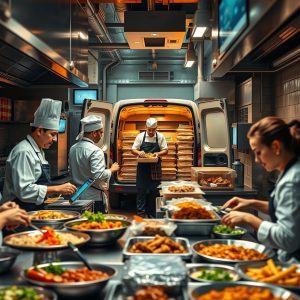
The proliferation of cloud kitchens—commercial cooking spaces designed exclusively for delivery—has further complicated the catering logistics landscape. On the surface, they offer a tantalizing proposition: lower overhead, higher efficiency, and the ability to scale rapidly. But beneath the veneer of innovation lies a harsh truth: cloud kitchens are only as good as their delivery networks. Without a robust, responsive logistics infrastructure, they are little more than expensive ghost towns.
For catering businesses, the cloud kitchen model presents both an opportunity and a threat. On one hand, it allows them to expand their reach without the burden of physical storefronts. On the other, it forces them into direct competition with delivery-first brands that have mastered the art of speed and convenience. The key differentiator? Customer service excellence. A cloud kitchen might churn out meals at scale, but a catering service that can guarantee freshness, customization, and white-glove delivery will always command a premium.
The Pickup Paradox
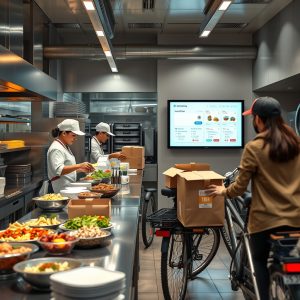
While delivery dominates the conversation, pickup services remain a critical, often overlooked component of the catering ecosystem. For small businesses and local retailers, offering a seamless pickup experience can be a lifeline—reducing delivery costs while maintaining control over the final product. Yet, the pickup model is not without its pitfalls. Long wait times, disorganized order management, and poor communication can turn a convenient service into a frustrating ordeal.
The most successful catering businesses treat pickup as an extension of their delivery operations, not an afterthought. Digital order tracking, clear pickup instructions, and dedicated staff for order fulfillment are no longer optional; they are baseline expectations. The rise of express pickup services—where customers can retrieve their orders within minutes of placement—has further raised the stakes. In this environment, efficiency is not just a competitive advantage; it is a survival mechanism.
The Human Factor in a Digital World
For all the talk of algorithms, automation, and AI, the catering industry remains stubbornly human. A meal is more than just sustenance; it is an experience, a gesture of hospitality, a moment of connection. The best catering services understand this implicitly. They recognize that behind every online order, every corporate lunch delivery, every last-minute event catering request, there is a person—someone who is hungry, stressed, or celebrating, and who expects more than just food on a plate.
This is where customer service excellence becomes the ultimate differentiator. A well-timed follow-up call, a handwritten note, or a small complimentary item can transform a transaction into a relationship. In an era where reviews and ratings dictate success, the human touch is not a relic of the past; it is the future. The most successful catering businesses are those that leverage technology to enhance—not replace—human interaction. They use data to anticipate needs, automation to streamline operations, and personalization to create moments that matter.
The Retail Revolution
The lines between catering, retail, and food service are blurring. Local shops, once confined to brick-and-mortar sales, are now venturing into delivery and pickup services, while catering businesses are expanding into meal kits, subscription services, and even retail products. This convergence is not accidental; it is a response to shifting consumer behavior. Today’s customers want flexibility—they want to order a single meal for tonight, a catered spread for tomorrow, and a week’s worth of groceries delivered the day after.
For small businesses, this presents both a challenge and an opportunity. The challenge lies in managing multiple service models without diluting quality or brand identity. The opportunity? The ability to meet customers wherever they are, in whatever format they prefer. The most agile businesses are those that treat their logistics infrastructure as a modular system—one that can adapt to delivery, pickup, or in-store experiences with equal ease.
The catering industry’s future will not be decided by who can cook the best meal, but by who can deliver it with the most precision, care, and adaptability. The unseen engine of micro-logistics is what powers this evolution, turning the mundane act of moving food from point A to point B into a competitive advantage. Those who master it will not just survive; they will redefine what it means to serve.