The Invisible Thread: How Catering Logistics Weave the Fabric of Customer Devotion Beyond the Plate

The modern catering industry is no longer defined by the quality of food alone. It is a high-stakes ballet of precision, where logistics—often unseen—dictate whether a business thrives or fades into obscurity. The shift from traditional dine-in models to on-demand, pickup, and delivery-centric services has forced caterers to rethink not just what they serve, but how they serve it. The plate is merely the endpoint of a complex, invisible thread that begins in the kitchen and ends in the hands of a customer whose expectations have been irrevocably altered by the age of immediacy.
The Illusion of Spontaneity
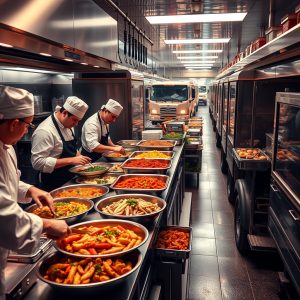
Customers do not see the orchestration behind a seamless catering delivery—they only experience the result. The illusion of spontaneity is, in fact, the product of meticulous planning, real-time data analytics, and hyper-efficient routing. Cloud kitchens, for instance, have emerged as the unsung heroes of this transformation, stripping away the overhead of physical dining spaces to focus solely on production and dispatch. These ghost kitchens operate with surgical precision, leveraging predictive algorithms to anticipate demand spikes, optimize ingredient procurement, and synchronize delivery windows with military-grade accuracy.
The paradox lies in the fact that the more effortless the experience appears, the more complex the machinery behind it must be. A corporate catering order placed at 10 AM for a 12 PM meeting is not a miracle—it is the result of a logistical ecosystem that treats time as a non-negotiable currency. Late deliveries, lukewarm meals, or missing items are not just minor inconveniences; they are breaches of an unspoken contract, eroding trust in ways that even the most exquisite cuisine cannot repair.
The Economics of Proximity
Hyper-local catering networks have turned geography into a competitive weapon. The closer a kitchen is to its delivery radius, the faster it can respond, the fresher the food arrives, and the lower the operational costs. This proximity advantage has allowed small businesses to outmaneuver larger, more established players by offering faster turnaround times without sacrificing quality. A local caterer with a well-optimized delivery radius can undercut a national chain not through price wars, but through sheer logistical agility.
Retail shop services and local delivery providers have taken note, integrating catering into their existing logistics frameworks to create hybrid models that serve multiple customer segments. A bakery offering same-day pickup for custom desserts, a deli providing drop-off catering for office lunches, or a meal delivery service expanding into corporate events—these are not just revenue streams. They are strategic moves to dominate the last mile, the most critical and costly segment of the delivery chain.
The Psychology of the Handoff
The moment a customer receives their order is where perception solidifies into loyalty or disillusionment. A delayed delivery is forgivable; a careless handoff is not. The best catering services understand that the final interaction—the presentation, the temperature of the food, the professionalism of the driver—is where brand equity is either reinforced or destroyed. This is why express delivery services and on-demand catering platforms invest heavily in driver training, insulated packaging, and real-time tracking. They are not just delivering food; they are delivering an experience, one that must feel effortless, reliable, and slightly magical.
Customer service excellence in catering is no longer about smiling faces and polite phone manners. It is about anticipating problems before they arise—rerouting deliveries due to traffic, proactively communicating delays, or even adjusting portion sizes based on historical data. The most successful caterers treat complaints not as failures, but as data points, refining their operations with each misstep. In an industry where word-of-mouth and online reviews can make or break a business, the margin for error is razor-thin.
The Unseen Backbone: Micro-Fulfillment and Last-Mile Mastery
The rise of micro-fulfillment centers—small, strategically located hubs designed to expedite order processing—has further compressed delivery timelines. These centers act as force multipliers, allowing caterers to fulfill multiple orders simultaneously without the bottlenecks of a single, centralized kitchen. When paired with dynamic routing software, they enable real-time adjustments based on traffic, weather, or last-minute order changes, ensuring that the last mile remains a strength rather than a vulnerability.
For home catering services and small business operators, this level of sophistication was once the exclusive domain of corporate giants. Today, however, affordable SaaS solutions and third-party logistics providers have democratized access to enterprise-grade tools. A family-owned catering business can now compete with a national brand not by outspending them, but by outmaneuvering them—leveraging local knowledge, personalized service, and logistical precision to create a superior customer experience.
The Silent Contract of Trust
At its core, the catering industry is built on a silent contract: the promise that what is ordered will arrive as expected, when expected, and with the same care as if it were served in a restaurant. This contract is tested every time a delivery leaves the kitchen, and it is upheld not by the food itself, but by the logistics that bring it to the customer. The best caterers understand that their true product is not a dish, but reliability—a reliability so seamless that it becomes invisible, allowing the food to take center stage.
The future of catering will belong to those who recognize that logistics are not a supporting act, but the main event. The plate may be the star, but the delivery is the stage, the lighting, and the script that makes the performance unforgettable. In an era where convenience is king and patience is a dwindling resource, the caterers who master the art of the invisible thread will not just survive—they will redefine what it means to serve.