The Last Mile Liturgy: How Catering Services Are Weaponizing Logistics to Redefine the Economics of Sensory Fulfillment
The modern catering industry is no longer just about food—it is about the orchestration of an experience. Every plate delivered, every meal picked up, every corporate spread arranged is a calculated move in a larger game of sensory fulfillment. The battleground? The last mile. The weapon? Logistics, sharpened to a razor’s edge of precision, speed, and psychological acuity. What was once a mere functional necessity has now become the defining factor in whether a catering business thrives or fades into obscurity. The economics of this shift are not just about efficiency; they are about the alchemy of turning constraints into competitive advantages, where every delayed delivery, every misplaced order, every lukewarm dish is not just a failure but a betrayal of customer trust.
The Illusion of Seamlessness
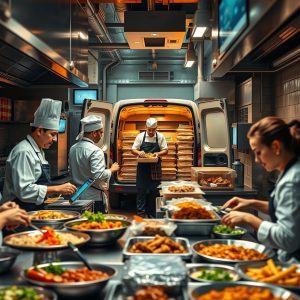
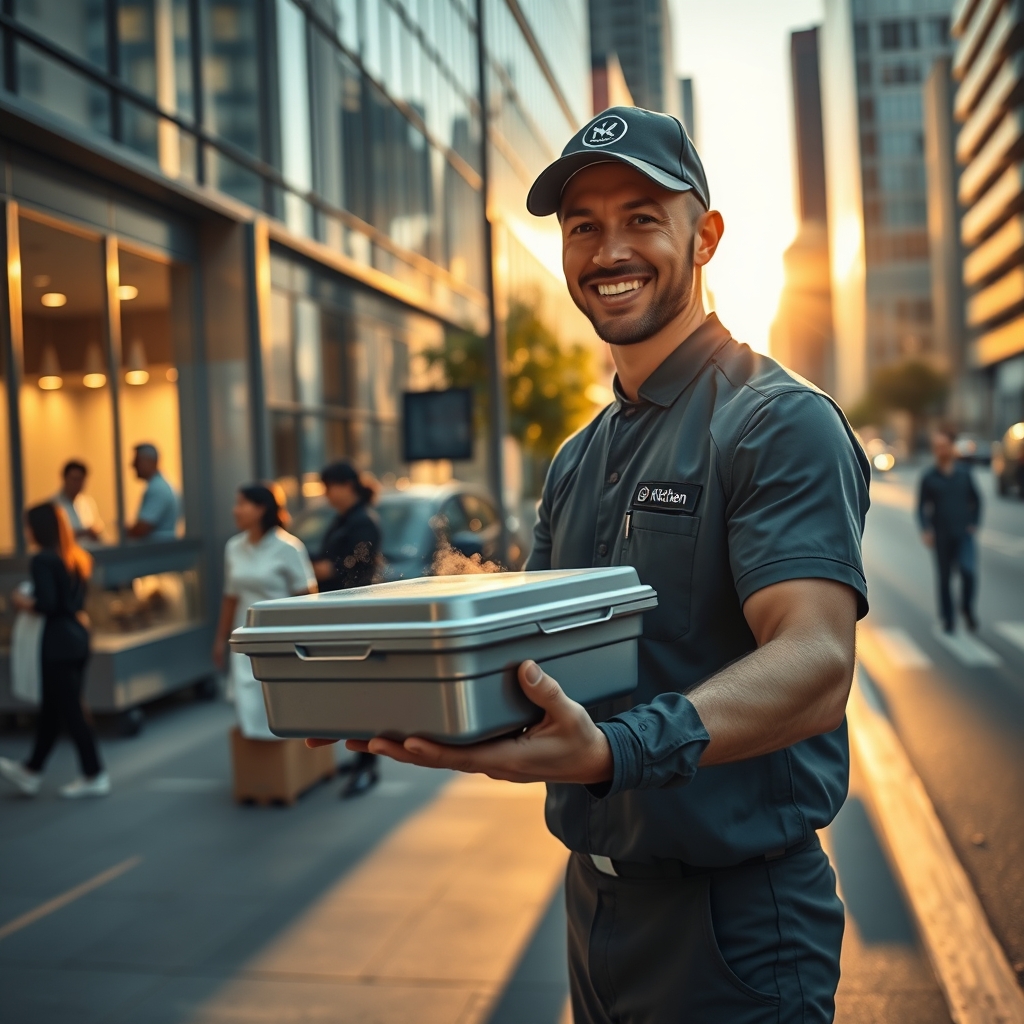
Customers do not see the backend chaos—the inventory management systems, the route optimizations, the real-time tracking, the temperature-controlled packaging. What they perceive is the end result: a meal that arrives on time, at the right temperature, in pristine condition, with the promise of an experience that feels effortless. This illusion of seamlessness is not accidental; it is engineered. The most successful catering services understand that logistics is not just a support function but the very foundation of their brand. A corporate lunch delivered late is not just a logistical failure—it is a disruption to workflow, a breach of professional trust. A wedding spread that arrives cold is not just a temperature issue—it is a violation of a couple’s most cherished day. The last mile is where perception is forged, and perception is the currency of modern catering.
The Psychology of the Last Mile
The human brain is wired to remember peaks and endings. In the context of catering, the last mile is both. It is the climax of the customer’s journey, the moment where anticipation meets reality. A delayed delivery triggers frustration; a damaged package evokes disappointment; a lukewarm meal elicits dissatisfaction. Conversely, a meal that arrives early, in perfect condition, with a handwritten note or a complimentary dessert, transforms a transaction into an experience. This is not happenstance—it is behavioral economics in action. Catering services that weaponize logistics do so by understanding that every touchpoint in the last mile is an opportunity to reinforce or erode brand loyalty. The most successful players in this space do not just deliver food; they deliver dopamine.
The Economics of Urgency and Desire
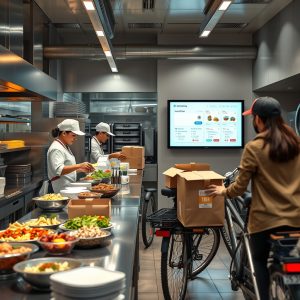
On-demand catering has redefined the economics of urgency. The expectation of instant gratification is no longer a luxury—it is a baseline. Customers want their food when they want it, how they want it, and with minimal friction. This shift has forced catering businesses to rethink their operational models. Cloud kitchens, for instance, have emerged as a direct response to this demand, stripping away the overhead of traditional brick-and-mortar restaurants to focus solely on delivery and pickup efficiency. The result? Lower costs, faster turnaround times, and the ability to scale rapidly. But this model is not without its challenges. The absence of a physical storefront means that the last mile becomes the only tangible interaction a customer has with the brand. Every delivery must be flawless, every driver must be an ambassador, every packaging choice must reinforce the brand’s identity. The economics here are brutal: one misstep, and the illusion of seamlessness shatters.
The Unseen Infrastructure of Trust
Behind every successful catering delivery is an unseen infrastructure of trust. This infrastructure is built on three pillars: reliability, transparency, and adaptability. Reliability is the bedrock—customers must trust that their order will arrive as promised, every time. Transparency is the bridge—real-time tracking, accurate ETAs, and proactive communication turn uncertainty into confidence. Adaptability is the safety net—when things go wrong (and they will), the ability to pivot, apologize, and rectify without friction is what separates the amateurs from the professionals. The most advanced catering services leverage data to anticipate problems before they occur. Predictive analytics can identify potential delays due to traffic, weather, or high demand, allowing businesses to reroute drivers or adjust expectations in real time. This level of operational sophistication is not just about avoiding failure; it is about turning potential weaknesses into strengths. A customer who receives a proactive message about a delay, followed by a discount or a complimentary item, is more likely to forgive the inconvenience—and even become a repeat customer.
The Local Advantage
While corporate catering giants dominate the landscape with their scale, hyper-local catering services are carving out a niche by weaponizing proximity. The economics of local delivery are inherently more favorable—shorter distances mean lower costs, faster turnaround times, and the ability to offer a level of personalization that larger players cannot match. A local caterer knows the neighborhood’s traffic patterns, the best routes, the preferences of repeat customers. This intimacy is a competitive advantage that cannot be replicated by algorithms alone. Moreover, local caterers can leverage their community ties to build brand loyalty. A small business that supports local farmers, sources ingredients from nearby suppliers, and employs local drivers is not just selling food—it is selling a story. In an era where customers are increasingly conscious of where their money goes, this narrative is a powerful differentiator.
The Future of Catering Logistics: Beyond the Plate
The next frontier of catering logistics is not about food—it is about data. The most forward-thinking businesses are already using AI to optimize routes, predict demand, and personalize recommendations. Machine learning algorithms can analyze past orders to suggest menu items, adjust portion sizes, or even predict when a customer is likely to reorder. This level of hyper-personalization turns catering from a transactional service into a relationship. But data alone is not enough. The human element remains irreplaceable. A driver who remembers a customer’s name, a chef who includes a handwritten note, a customer service representative who goes above and beyond—these are the moments that turn a one-time order into a lifelong customer. The future of catering logistics lies in the seamless integration of technology and humanity, where algorithms handle the operational heavy lifting, and people deliver the emotional resonance.
The last mile is no longer just a logistical challenge—it is a psychological battleground. The catering services that will dominate the future are those that understand this shift and weaponize it. They will not just deliver food; they will deliver experiences, trust, and loyalty. The economics of this new era are not about cost-cutting or efficiency alone—they are about the art of making every customer feel like the most important person in the room. And in a world where choices are endless and attention spans are fleeting, that is the only currency that truly matters.