The Last Mile Liturgy: How Hyper-Efficient Logistics Are Sacralizing the Economics of Catering Trust

The modern catering industry is no longer defined by the quality of its food alone. In an era where convenience is currency and trust is the ultimate transaction, the true battleground has shifted to the last mile—the final, often invisible stretch where logistics, psychology, and culinary execution collide. This is where the economics of catering are being rewritten, not through grand gestures of gastronomy, but through the relentless optimization of an unseen infrastructure that turns delivery into an act of devotion.
The Illusion of Spontaneity
On-demand catering has conditioned consumers to expect immediacy without compromise. A corporate lunch arrives at 12:03 PM, precisely when promised, with salads still crisp and proteins perfectly tempered. A wedding reception’s drop-off catering appears as if conjured, with no trace of the frantic coordination that preceded it. This is no accident—it is the result of a logistical alchemy that transforms constraints into perceived spontaneity. The best catering services don’t just deliver food; they deliver the illusion of effortlessness, a sleight of hand where the complexity of the operation is rendered invisible.
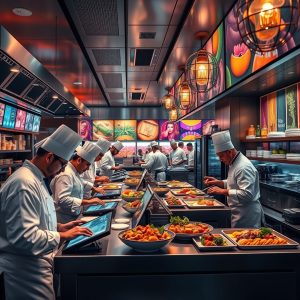
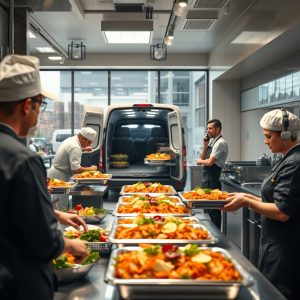
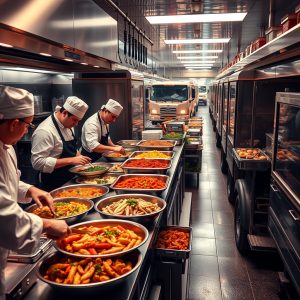
The challenge lies in maintaining this illusion at scale. Cloud kitchens, once a novelty, have become the backbone of this new economy, allowing caterers to centralize production while decentralizing delivery. By stripping away the overhead of traditional brick-and-mortar operations, these kitchens enable hyper-efficient routing, real-time inventory management, and dynamic pricing models that adapt to demand surges. Yet, the true test is not in the kitchen—it is in the handoff. A meal that leaves the facility in perfect condition can still fail if the last mile is mishandled. Temperature control, packaging integrity, and driver professionalism are not mere details; they are the final brushstrokes in a masterpiece of customer experience.
The Psychology of the Unseen
Trust in catering is not built on taste alone. It is forged in the silent contract between provider and consumer—a contract written in punctuality, presentation, and the absence of friction. When a client places an online catering order, they are not just purchasing food; they are buying certainty. Will the delivery arrive on time? Will the portions match the description? Will the food reflect the care promised in the menu? These questions linger in the mind long before the first bite, and the answers are determined by logistics, not culinary skill.
This is where customer service excellence becomes the unseen backbone of the industry. A well-trained driver who communicates delays proactively, a packaging system that preserves both temperature and aesthetics, a follow-up message ensuring satisfaction—these are the touchpoints that transform a transaction into a relationship. The most successful catering businesses understand that their product is not just the meal, but the entire experience surrounding it. In an age where reviews are currency and reputation is fragile, every interaction is an opportunity to reinforce trust or erode it.
The Weaponization of Proximity
Hyper-local logistics have emerged as the secret weapon in the catering wars. By leveraging micro-fulfillment centers and localized delivery networks, businesses can reduce transit times, minimize spoilage risks, and offer same-day services that were once the domain of fast food. This proximity is not just a logistical advantage; it is a psychological one. When a caterer can promise delivery within a 30-minute window, they are not just selling food—they are selling peace of mind. The closer the kitchen, the tighter the control over quality, and the greater the ability to respond to last-minute changes or emergencies.
Retail shop services and small business catering operations have capitalized on this trend by integrating pickup and delivery options into their models. A local bakery offering express delivery for corporate events, a specialty grocery store providing drop-off catering for private dinners—these are not just value-added services; they are lifelines in an economy where convenience is king. The key is in the execution. A pickup service that requires customers to wait in line defeats the purpose of on-demand efficiency. A delivery that arrives late or in disarray undermines the very trust it seeks to build. The last mile is where promises are kept or broken, and in catering, there are no second chances.
The Economics of Sensory Integrity
Speed and convenience are meaningless if the food arrives compromised. The last mile is a gauntlet of sensory challenges—temperature fluctuations, vibration, handling mishaps—each capable of degrading quality. The most advanced catering services have turned this challenge into an opportunity, investing in packaging innovations that maintain heat, preserve texture, and even enhance presentation upon arrival. Insulated containers, vacuum-sealed compartments, and tamper-evident seals are no longer luxuries; they are necessities in a market where expectations are set by the likes of Michelin-starred meal delivery kits.
Yet, the true differentiator is not in the packaging, but in the data. Modern catering logistics are powered by algorithms that predict traffic patterns, optimize routes, and even account for weather conditions. Real-time tracking allows customers to monitor their orders, transforming anxiety into anticipation. For corporate catering, where large orders must arrive simultaneously across multiple locations, this level of precision is non-negotiable. The economics of sensory integrity demand that every variable be controlled, because in the last mile, there is no room for error.
The Future of Frictionless Feasting
The next frontier in catering logistics is not just about faster delivery—it is about smarter delivery. Artificial intelligence is being deployed to anticipate demand, adjust pricing dynamically, and even personalize recommendations based on past orders. Machine learning models analyze customer behavior to predict when a corporate client might need a last-minute lunch order or when a wedding planner will require a tasting menu. The goal is not just to meet expectations, but to exceed them before they are even articulated.
For small businesses, this represents both a challenge and an opportunity. The barrier to entry in catering has never been lower, thanks to cloud kitchens and on-demand logistics platforms. Yet, the competition has never been fiercer. The businesses that thrive will be those that understand the last mile is not just a logistical hurdle, but a canvas for innovation. Whether through drone deliveries, autonomous vehicles, or hyper-local micro-fulfillment hubs, the future of catering lies in the ability to make the complex appear effortless. The most successful operators will not be those who simply deliver food, but those who deliver an experience—one where every detail, from the first click of an online order to the final bite, feels like a promise kept.
The catering industry’s silent revolution is not happening in the kitchen. It is happening in the back of a van, in the hands of a driver, in the algorithms that predict demand before it arises. The last mile is where trust is earned, where convenience is sacralized, and where the economics of catering are being rewritten in real time. The question is no longer whether a business can deliver food—it is whether it can deliver on the unspoken contract that defines the modern dining experience. In this new economy, the most valuable ingredient is not on the plate, but in the precision of the journey that brings it there.