The Logistics of Culinary Trust: How On-Demand Catering Services Are Redefining the Economics of Reliability
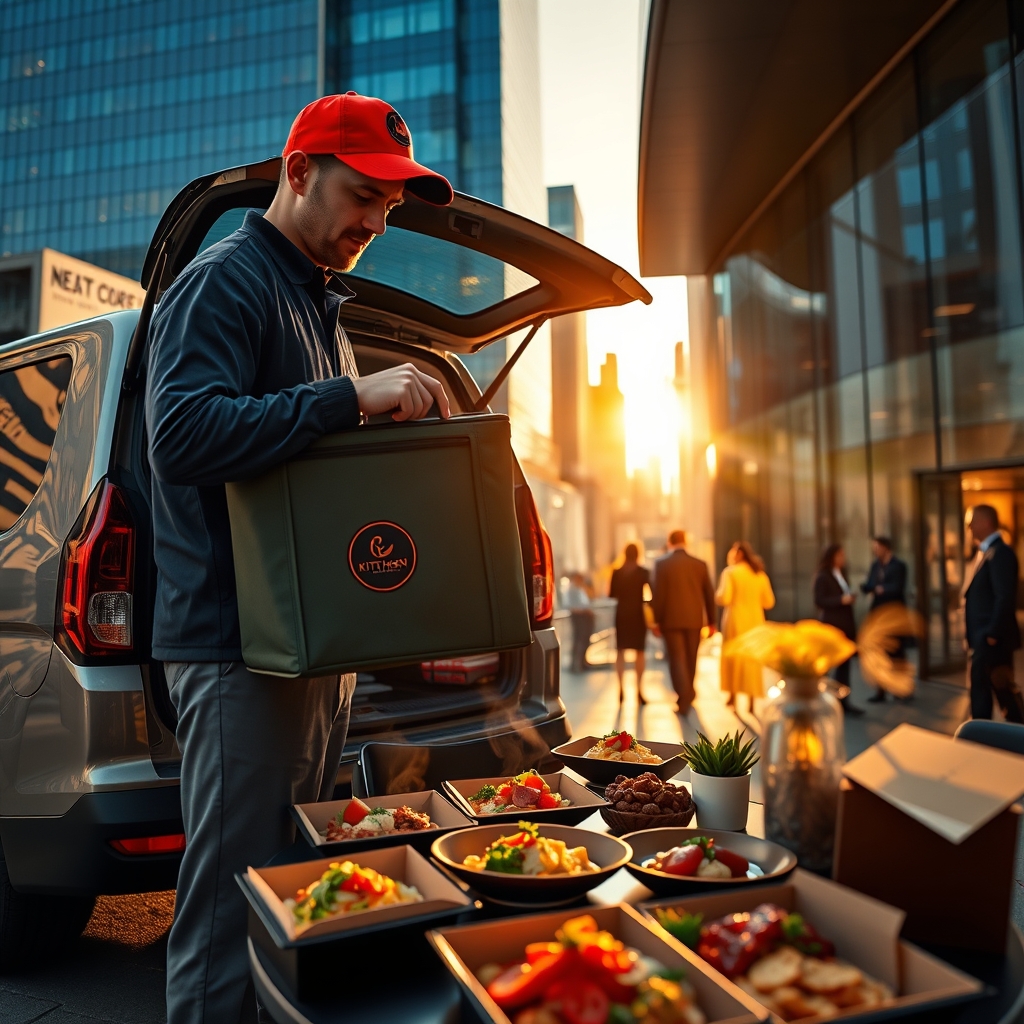
The modern food service industry is no longer just about taste—it’s about timing, precision, and the unspoken contract between provider and consumer. In an era where on-demand services dominate, catering businesses are forced to rethink their operational frameworks, not as mere facilitators of meals, but as architects of trust. The shift from traditional dine-in models to delivery-centric operations has exposed a critical truth: reliability is the new currency, and logistics is the vault that guards it.
The Illusion of Simplicity in On-Demand Catering
At first glance, the mechanics of on-demand catering appear deceptively simple: a customer places an order, the kitchen prepares it, and a delivery service ensures it arrives promptly. Yet beneath this veneer of effortlessness lies a labyrinth of variables—traffic patterns, kitchen capacity, packaging integrity, and real-time demand fluctuations—that can unravel even the most meticulously planned operation. The illusion of simplicity is shattered the moment a single order is delayed, a meal arrives cold, or a driver takes a wrong turn. These are not mere logistical hiccups; they are breaches of trust, each eroding the fragile foundation upon which customer loyalty is built.
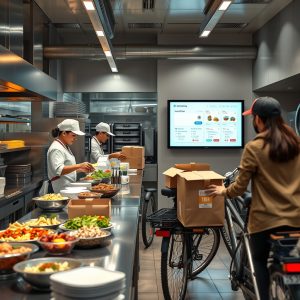
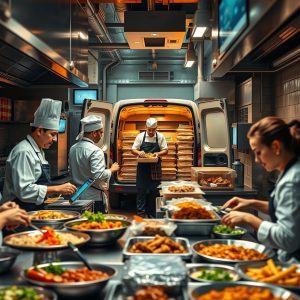
What separates the thriving catering services from the struggling ones is not just culinary skill, but the ability to weaponize logistics as a competitive advantage. Cloud kitchens, for instance, have emerged as a masterclass in efficiency, stripping away the overhead of physical dining spaces to focus solely on production and delivery. By centralizing operations in high-demand zones, these businesses minimize last-mile inefficiencies, ensuring that meals arrive not just edible, but at peak quality. The economics here are brutal: every minute saved in transit translates to higher customer retention, while every misstep compounds into reputational damage that no amount of marketing can undo.
The Last Mile: Where Trust Is Won or Lost
The term “last mile” has become a cliché in logistics discourse, but its implications for catering services are anything but overstated. This final leg of the delivery journey is where the abstract promise of a meal transforms into a tangible experience—or a disappointment. For corporate catering, where large orders hinge on punctuality, the stakes are even higher. A delayed lunch for a boardroom meeting isn’t just an inconvenience; it’s a disruption to productivity, a signal of unreliability, and a direct threat to future contracts.
To mitigate these risks, catering businesses are adopting hyper-local strategies, leveraging micro-fulfillment centers and real-time routing algorithms to turn the last mile into a controlled environment. Some have even integrated express delivery services, treating food as a time-sensitive commodity akin to medical supplies or legal documents. The message is clear: in the on-demand economy, speed is not a luxury—it’s a baseline expectation. Yet speed alone is insufficient. The true differentiator lies in consistency, the ability to deliver not just fast, but flawlessly, every single time.
The Psychology of Reliability: Why Customers Pay for Peace of Mind
Consumers don’t just purchase meals; they purchase certainty. The rise of meal delivery services and drop-off catering is rooted in this psychological truth. In a world where time is fragmented and attention spans are fleeting, the assurance of a hot, well-packaged meal arriving at a precise time is a form of modern-day alchemy. It transforms the mundane act of eating into an experience of control, a small victory in an otherwise chaotic day.
This is where customer service excellence becomes non-negotiable. A seamless online catering order system, transparent delivery tracking, and responsive support are no longer add-ons—they are the scaffolding that holds up the entire operation. Businesses that treat these elements as afterthoughts do so at their peril. The most successful catering services understand that every interaction, from the first click to the final bite, is an opportunity to reinforce trust. A single negative review, a delayed response, or a lukewarm dish can unravel months of brand-building in an instant.
The Hidden Costs of Operational Neglect
For small businesses and local catering services, the temptation to cut corners in logistics is ever-present. Why invest in premium packaging when cheaper alternatives exist? Why hire an additional driver when existing staff can multitask? The answer lies in the hidden costs of such decisions. A meal that arrives soggy due to poor packaging isn’t just a culinary failure—it’s a logistical one. A driver who is overworked and rushed isn’t just a scheduling issue—it’s a liability. These are not isolated incidents but systemic vulnerabilities that, left unchecked, will metastasize into operational collapse.
The most resilient catering businesses are those that treat logistics as a living, breathing organism, constantly evolving in response to data. They monitor delivery times with the same rigor as food safety protocols, analyze customer feedback for patterns, and adjust routes based on real-time traffic conditions. This level of precision is not a luxury; it’s a survival mechanism in an industry where margins are thin and competition is fierce.
The Future of Catering: Where Logistics and Culinary Artistry Converge
The next frontier for catering services isn’t just about faster delivery or more exotic menus—it’s about redefining what reliability means in the digital age. The businesses that will dominate are those that recognize logistics not as a back-office function, but as the backbone of customer experience. They will invest in predictive analytics to anticipate demand, in AI-driven routing to optimize deliveries, and in training programs to ensure every employee understands their role in the trust economy.
For corporate catering, this means moving beyond the transactional and into the strategic. A well-timed, impeccably presented meal isn’t just a service—it’s a statement about a company’s commitment to its employees and clients. For home catering services, it’s about transforming the intimacy of a shared meal into a seamless, stress-free experience. And for cloud kitchens, it’s about proving that efficiency and quality are not mutually exclusive, but mutually reinforcing.
The economics of catering have always been about more than food. They are about time, trust, and the unspoken pact between provider and consumer. In an era where convenience is king, the businesses that master the logistics of reliability will not just survive—they will redefine what it means to serve.