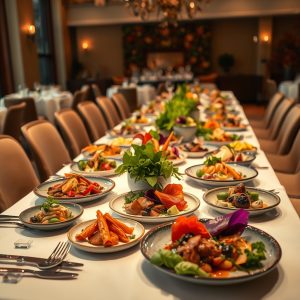
Harmonizing Taste and Responsibility: The Art of Sustainable and Sensory-Driven Event Catering

In the realm of event catering, the marriage of taste and responsibility is not just a trend, but a necessity. As the world becomes increasingly conscious of its environmental impact, the catering industry is undergoing a significant transformation. This shift is not merely about reducing waste or sourcing ethically; it’s about creating a dining experience that is as responsible as it is delightful. This article delves into the art of sustainable catering practices and sensory food presentation, exploring how they can be harmonized to create unforgettable event dining experiences.
Sustainable Catering Practices: A Necessity, Not a Choice
Sustainable catering practices are no longer a luxury, but a necessity. With the increasing awareness of climate change and the finite nature of our resources, it’s imperative for event catering services to adopt eco-friendly practices. This includes everything from sourcing ingredients locally and seasonally, to reducing food waste, and using eco-friendly packaging and utensils.
Farm-to-Table Sourcing
One of the most effective ways to practice sustainable catering is through farm-to-table sourcing. This involves sourcing ingredients directly from local farms, ensuring that the food is fresh, flavorful, and ethically produced. It also supports local farmers, reduces the carbon footprint associated with long-distance transportation, and promotes biodiversity.
Reducing Food Waste
Food waste is a significant issue in the catering industry. According to the United Nations, about one-third of all food produced globally is wasted. This not only contributes to environmental degradation but also results in the loss of valuable resources. To combat this, many catering services are adopting practices such as portion control, using leftovers creatively, and donating excess food to local charities.
Sensory Food Presentation: Elevating the Dining Experience
While sustainability is crucial, it’s equally important to create a dining experience that stimulates the senses. Sensory food presentation involves using color, texture, temperature, and aroma to create a multi-sensory experience that delights the guests.
Color and Texture
The use of vibrant colors and interesting textures can make a dish visually appealing and stimulate the sense of touch. For instance, a salad with a variety of colors and textures can be more appealing than a plain, monochromatic dish. Similarly, the use of different temperatures can create a dynamic dining experience. A cold starter can be followed by a warm main course, and then a chilled dessert.
Aroma and Flavor
The sense of smell is one of the most powerful senses, and it plays a crucial role in our perception of food. The aroma of a dish can evoke memories and emotions, making the dining experience more memorable. To enhance the aroma, catering services can use fresh, high-quality ingredients and incorporate a variety of spices and herbs.
Harmonizing Sustainability and Sensory Experience
While sustainability and sensory food presentation are two distinct aspects of event catering, they are not mutually exclusive. In fact, they can be harmonized to create a dining experience that is both responsible and delightful.
Ethical Sourcing and Sensory Food Presentation
Ethical sourcing of ingredients can enhance the sensory experience of a dish. For instance, using locally sourced, organic ingredients can result in dishes that are not only more flavorful but also more sustainable. Similarly, the use of eco-friendly packaging and utensils can enhance the sensory experience by reducing the taste and texture of the food.
Interactive Food Stations and Thematic Culinary Design
Interactive food stations and thematic culinary design can be used to create a dining experience that is both sustainable and sensory-rich. For instance, a thematic culinary design that incorporates local ingredients can create a dining experience that is not only visually appealing but also sustainable. Similarly, interactive food stations can be used to encourage guests to engage with the food, enhancing the sensory experience.
In conclusion, the art of sustainable and sensory-driven event catering is about creating a dining experience that is as responsible as it is delightful. By adopting sustainable catering practices and using sensory food presentation techniques, catering services can create unforgettable event dining experiences that leave a positive impact on both the guests and the environment. As the catering industry continues to evolve, it’s crucial to remember that the future of event catering lies in the harmony of taste and responsibility.