The Frictionless Kitchen: How Cloud Kitchens and On-Demand Logistics Are Redefining the Economics of Catering
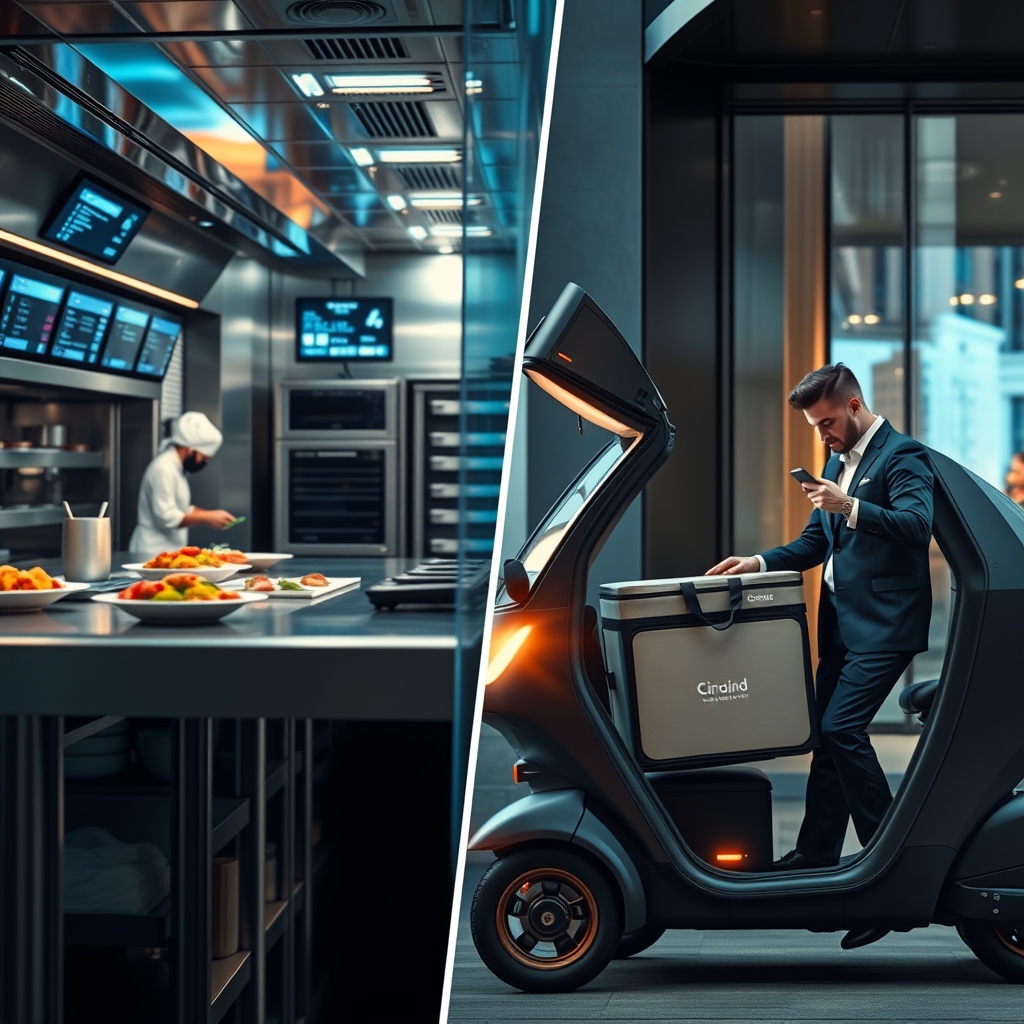
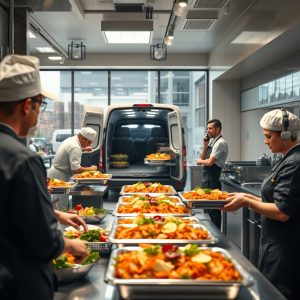
The modern catering industry is no longer bound by the constraints of brick-and-mortar kitchens or the limitations of traditional food service models. At the intersection of technology and culinary innovation, cloud kitchens have emerged as the silent disruptors, redefining how food is prepared, delivered, and experienced. These virtual kitchens, unburdened by dine-in spaces or front-of-house operations, operate with a singular focus: efficiency. Yet, their true power lies not just in their ability to streamline production but in how they integrate with on-demand logistics to create a seamless, frictionless ecosystem that caters to the ever-evolving demands of corporate clients, event planners, and individual consumers alike.
The Cloud Kitchen Advantage: Scalability Without Sacrifice
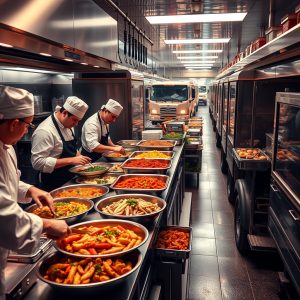
Cloud kitchens, also known as ghost kitchens or virtual kitchens, are designed for one purpose: to produce food at scale without the overhead of a traditional restaurant. By eliminating the need for physical dining spaces, these kitchens reduce operational costs by as much as 30%, according to industry estimates. This cost efficiency is not merely a financial advantage; it is a strategic one. With lower overhead, cloud kitchens can experiment with menus, pivot quickly to meet demand, and invest in technology that enhances both production and delivery. The result is a business model that is inherently agile, capable of adapting to market shifts in real time.
For catering services, this agility is transformative. Corporate catering, for instance, often requires rapid scaling—whether it’s accommodating a last-minute board meeting or a large-scale conference. Traditional caterers, constrained by physical kitchen capacity, may struggle to meet such demands without compromising quality or incurring exorbitant costs. Cloud kitchens, however, can ramp up production almost instantaneously, leveraging shared kitchen spaces and modular equipment to handle fluctuating order volumes. This scalability is not just about quantity; it’s about maintaining consistency, a non-negotiable in the catering industry where a single misstep can erode client trust.
The Logistics Layer: The Invisible Backbone of Frictionless Delivery
Yet, the true test of a cloud kitchen’s efficacy lies not in its ability to produce food but in its capacity to deliver it—intact, on time, and at the right temperature. This is where on-demand logistics come into play. The modern catering delivery service is no longer a simple point-to-point transaction; it is a complex, data-driven operation that relies on real-time routing, predictive analytics, and micro-fulfillment strategies to ensure seamless execution. The last mile, often the most chaotic and unpredictable segment of the delivery process, is now being optimized through algorithms that account for traffic patterns, weather conditions, and even the thermal integrity of the food being transported.
Consider the rise of drop-off catering, a service that has become indispensable for corporate events and private gatherings. Unlike traditional delivery, where the caterer’s responsibility ends at the doorstep, drop-off catering requires a level of precision that borders on artistry. The food must arrive not just on time but in a state that reflects the care and attention of the kitchen. This demands more than just reliable transportation; it requires a logistics infrastructure that can synchronize production, packaging, and delivery into a single, flawless operation. Cloud kitchens, with their tech-forward approach, are uniquely positioned to meet this challenge. By integrating their production systems with third-party logistics providers or in-house delivery fleets, they can ensure that every order is tracked, monitored, and optimized from the moment it leaves the kitchen to the second it reaches the client.
The Customer-Centric Imperative: Why Convenience is No Longer Optional
The shift toward cloud kitchens and on-demand logistics is not merely a response to operational efficiencies; it is a direct consequence of changing consumer expectations. Today’s clients—whether they are corporate event planners or individuals ordering a meal for a family gathering—demand convenience without compromise. They want the ability to place an order online with a few clicks, track its progress in real time, and receive it at a specified time without any hiccups. This level of service is no longer a luxury; it is the baseline expectation.
For catering businesses, this means that customer service excellence is no longer confined to the quality of the food or the professionalism of the staff. It extends to every touchpoint of the delivery experience, from the user interface of the online ordering platform to the condition of the food upon arrival. Cloud kitchens, with their emphasis on data and automation, are better equipped to meet these demands. They can leverage customer feedback to refine their menus, use predictive analytics to anticipate demand, and employ AI-driven chatbots to provide instant support. In doing so, they transform catering from a transactional service into a holistic experience—one where convenience, quality, and reliability are inextricably linked.
The Retail Revolution: How Small Businesses Are Leveraging Cloud Logistics
The impact of cloud kitchens and on-demand logistics is not limited to large-scale catering operations. Small businesses, too, are harnessing these innovations to compete in an increasingly crowded market. Local bakeries, specialty food shops, and even home-based caterers are now able to offer delivery services without the need for a dedicated fleet or a physical storefront. By partnering with cloud kitchens or third-party logistics providers, these businesses can expand their reach, reduce overhead costs, and focus on what they do best: creating exceptional food.
This democratization of logistics is particularly significant for small business catering services, which often lack the resources to invest in their own delivery infrastructure. By outsourcing the logistics layer, they can offer the same level of convenience as larger competitors, leveling the playing field in a market where customer expectations are higher than ever. Moreover, the rise of hyper-local delivery networks—where orders are fulfilled by nearby kitchens or retail shops—ensures that even the smallest businesses can provide fast, reliable service to their customers.
The Future of Catering: Where Technology Meets Tradition
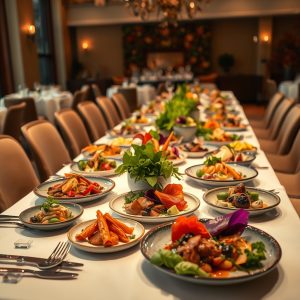
The fusion of cloud kitchens and on-demand logistics represents more than just a shift in how food is prepared and delivered; it is a fundamental reimagining of the catering industry itself. Yet, for all its technological advancements, the core principle of catering remains unchanged: the ability to deliver an experience that transcends the meal. Whether it’s a corporate lunch, a wedding reception, or a simple family dinner, the success of a catering service hinges on its ability to anticipate and exceed expectations. Cloud kitchens and on-demand logistics provide the tools to do just that, but it is the human element—the attention to detail, the commitment to quality, and the relentless pursuit of excellence—that will ultimately define the future of the industry.
The catering businesses that thrive in this new landscape will be those that recognize the symbiotic relationship between technology and tradition. They will understand that while algorithms can optimize delivery routes and data can predict demand, it is the artistry of the kitchen and the precision of the logistics that create the moments worth remembering. In an era where convenience is king, the challenge is not just to deliver food faster or cheaper, but to do so in a way that feels effortless, personal, and, above all, unforgettable.