The Last Mile Liturgy: How Drop-Off Catering and Micro-Logistics Are Redefining the Economics of Convenience
The modern catering industry is no longer defined by the grandeur of the banquet hall or the opulence of the spread. Instead, it is measured by the silent efficiency of a drop-off catering service—where the true test of excellence lies not in the spectacle of service, but in the invisible mechanics of delivery. The economics of convenience have shifted, and with it, the very foundation of how catering businesses operate. The last mile, once an afterthought, has become the battleground where customer loyalty is won or lost.
The Illusion of Simplicity in Drop-Off Catering
At first glance, drop-off catering appears deceptively simple: prepare the food, package it, and deliver it. Yet beneath this veneer of straightforwardness lies a labyrinth of logistical challenges. The margin for error is razor-thin. A delayed delivery, a compromised temperature, or a misplaced order can unravel weeks of meticulous planning. Unlike traditional event catering, where staff can adjust on-site, drop-off services operate in a vacuum—once the food leaves the kitchen, control is ceded to the logistics chain. This is where micro-logistics come into play, transforming what was once a liability into a competitive advantage.
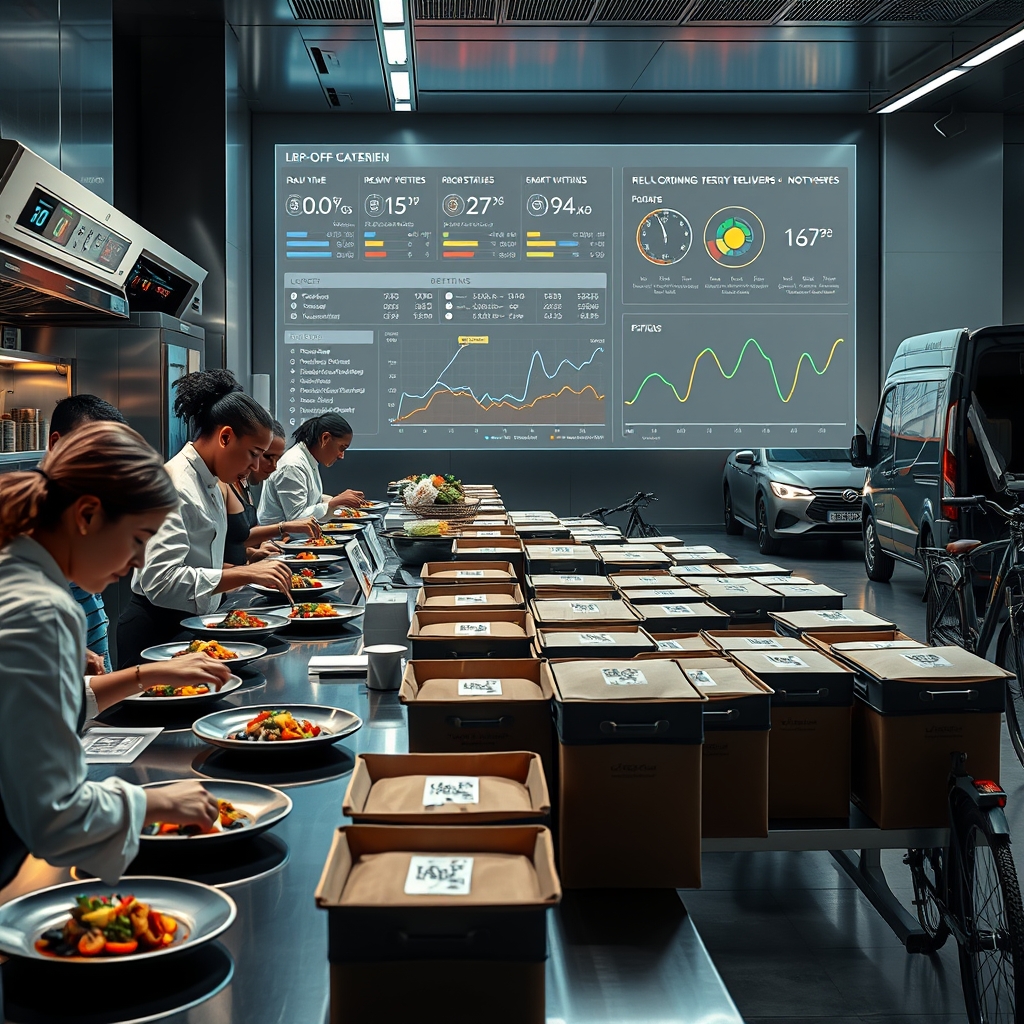
Micro-logistics—the granular optimization of delivery routes, packaging integrity, and real-time tracking—has become the unsung hero of the catering industry. It is not enough to deliver food on time; it must arrive in a state that preserves its intended experience. A lukewarm gourmet dish or a soggy salad is not just a culinary failure; it is a breach of trust. The economics of drop-off catering hinge on this precision. Every minute saved in transit, every degree maintained in temperature, and every order accurately fulfilled translates into cost savings and customer retention. The businesses that thrive are those that treat logistics not as a cost center, but as a value driver.
The Cloud Kitchen Paradox: Scalability Without Sacrifice
The rise of cloud kitchens has further complicated the economics of drop-off catering. These virtual restaurants, unburdened by the overhead of physical dining spaces, can scale rapidly—but only if their logistics infrastructure keeps pace. The paradox is stark: cloud kitchens can produce food at unprecedented volumes, yet without a robust delivery network, they risk drowning in their own efficiency. The solution lies in hybrid models that blend the agility of cloud kitchens with the reliability of dedicated logistics partners.
Consider the case of a corporate catering service operating out of a cloud kitchen. The kitchen can churn out hundreds of meals daily, but if those meals are delayed or mishandled during delivery, the entire operation collapses. The economics here are unforgiving. A single failed delivery can erode client trust, leading to canceled contracts and lost revenue. To mitigate this, successful cloud kitchens are investing in proprietary logistics platforms that integrate order management, route optimization, and real-time customer updates. The goal is not just to deliver food, but to deliver an experience—one that is seamless, predictable, and repeatable.
The Hidden Costs of Customer Expectations
The economics of drop-off catering are further strained by the relentless march of customer expectations. The on-demand economy has conditioned consumers to expect instant gratification, and catering services are no exception. A two-hour delivery window is no longer acceptable; customers now demand precision down to the minute. This shift has forced catering businesses to rethink their pricing models. The traditional approach—where delivery fees were a flat add-on—is giving way to dynamic pricing that accounts for distance, demand, and delivery urgency.
Yet, this hyper-personalization comes at a cost. Real-time route optimization, temperature-controlled packaging, and dedicated delivery personnel all require significant investment. The challenge for catering businesses is to balance these costs without passing them entirely onto the customer. The most successful operators are those that have turned logistics into a differentiator. By offering premium delivery options—such as white-glove service for high-end corporate clients or eco-friendly packaging for sustainability-conscious customers—catering services can justify higher price points while enhancing perceived value.
The Retailization of Catering Services
The lines between catering and retail are blurring, and nowhere is this more evident than in the rise of pickup and delivery services. Local shops, once confined to walk-in customers, are now competing in the catering space by offering curated meal kits, family-style platters, and even full-service event catering. This retailization of catering presents both opportunities and challenges. On one hand, it allows small businesses to tap into new revenue streams; on the other, it forces them to contend with the logistical complexities of a service they may not be equipped to handle.
The economics of this shift are compelling. A local bakery, for example, can increase its average order value by offering catering services for office meetings or private events. However, without a robust delivery infrastructure, these orders can quickly become a logistical nightmare. The solution lies in partnerships—whether with third-party delivery platforms or in-house logistics teams—that allow small businesses to scale their catering operations without overextending their resources. The key is to maintain the quality and personal touch that define local retail while meeting the demands of a catering clientele.
The Future: Logistics as a Service
The next frontier in drop-off catering is the commoditization of logistics. As the industry matures, catering businesses are increasingly outsourcing their delivery operations to specialized logistics providers. These third-party services offer more than just transportation; they provide end-to-end solutions that include order tracking, temperature monitoring, and even customer service. The economics are clear: by offloading the complexities of delivery, catering businesses can focus on what they do best—preparing exceptional food.
Yet, this outsourcing comes with its own set of risks. The more a catering business relies on external logistics, the less control it has over the customer experience. A single misstep by a third-party delivery driver can undo years of brand-building. To mitigate this, catering services are adopting a hybrid approach, where core deliveries are handled in-house while overflow or long-distance orders are outsourced. This allows businesses to maintain quality control while scaling their operations.
The economics of drop-off catering are no longer just about the food. They are about the seamless integration of preparation, packaging, and delivery—where every touchpoint is an opportunity to reinforce trust. The businesses that succeed will be those that recognize logistics not as a necessary evil, but as the cornerstone of their value proposition. In an industry where convenience is king, the last mile is not just a delivery; it is a promise. And in the relentless pursuit of customer satisfaction, that promise is everything.