The Unseen Backbone: How Micro-Fulfillment and Hyper-Local Logistics Are Redefining Catering Delivery Services
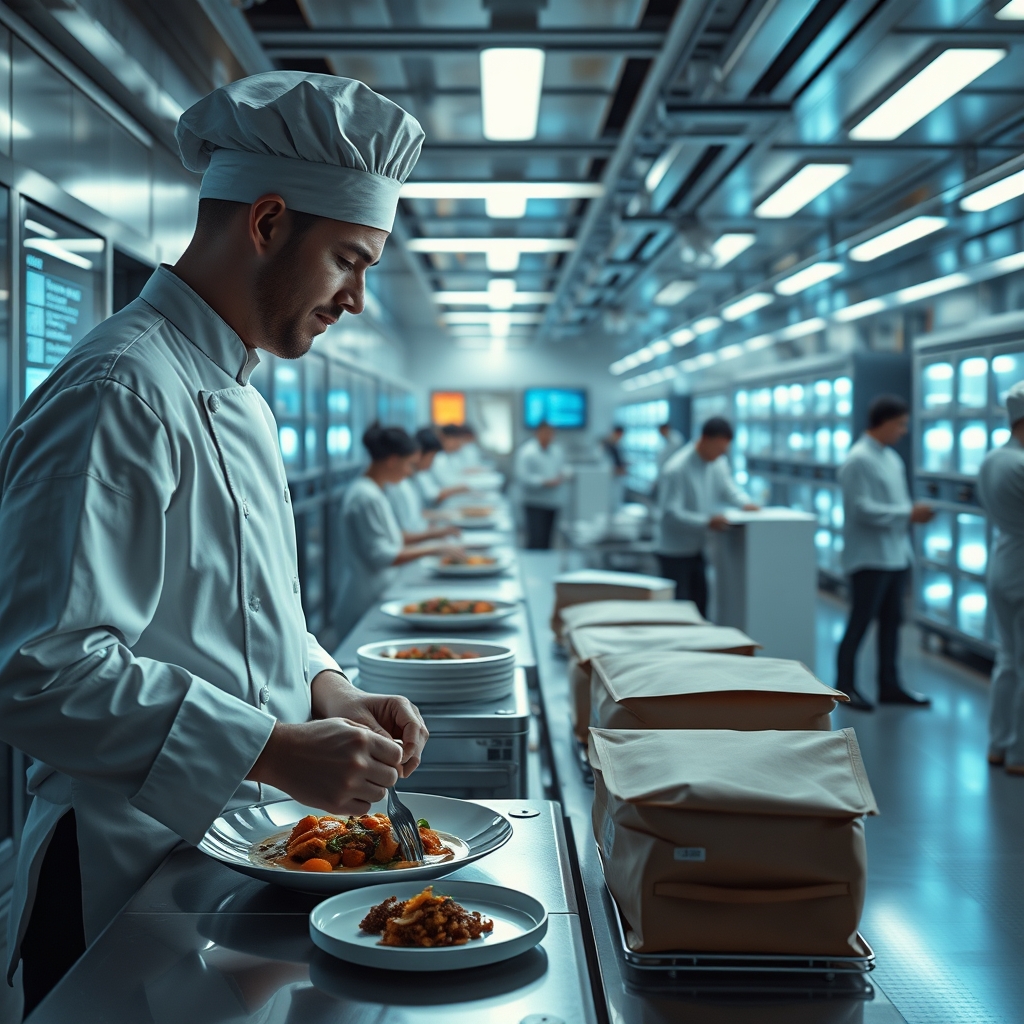
The modern catering industry is no longer defined by the grandeur of banquet halls or the opulence of plated dinners. Instead, it is shaped by the silent, relentless efficiency of micro-fulfillment centers and hyper-local logistics networks. These systems, often invisible to the end consumer, are the true architects of on-demand culinary convenience, dictating whether a meal arrives on time, at the right temperature, and with the sensory integrity that justifies its price. The shift from traditional catering models to agile, logistics-driven operations is not merely a trend—it is a fundamental reconfiguration of how food service businesses must operate to survive in an era of instant gratification.
The Rise of the Hyper-Local Hub
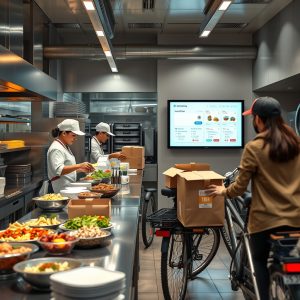
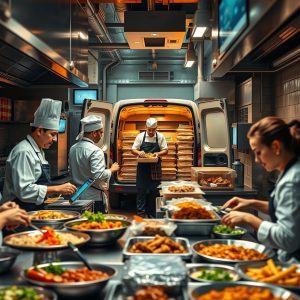
At the heart of this transformation lies the hyper-local hub—a decentralized node in the catering supply chain that prioritizes proximity over scale. Unlike traditional catering kitchens, which often centralize production in distant facilities, hyper-local hubs embed themselves within urban and suburban landscapes, reducing the distance between preparation and delivery. This model is not just about speed; it is about precision. By minimizing transit time, catering services can mitigate the risks of temperature fluctuations, texture degradation, and presentation collapse—factors that once relegated delivery to a secondary, often inferior, dining experience.
The hyper-local approach also enables catering businesses to respond dynamically to demand. Corporate luncheons, last-minute event catering, and even home meal deliveries can be fulfilled with a level of agility that centralized kitchens simply cannot match. Cloud kitchens, once seen as a cost-cutting measure for delivery-only brands, are now evolving into sophisticated micro-fulfillment centers, where data-driven demand forecasting and real-time inventory management ensure that every order is executed with surgical precision.
The Micro-Logistics Mandate
If hyper-local hubs are the nodes, then micro-logistics are the connective tissue that binds them to the customer. The term “micro-logistics” refers to the granular, often automated systems that govern the final stages of order fulfillment—from packaging and routing to last-mile delivery. In the catering industry, where margins are thin and customer expectations are high, the difference between success and failure often hinges on these unseen operational details.
Consider the complexities of a corporate catering order: a buffet spread for fifty, with dietary restrictions, timed delivery, and presentation requirements. Traditional logistics models would treat this as a single, monolithic task. Micro-logistics, however, deconstruct it into a series of optimized steps—batch preparation, temperature-controlled packaging, dynamic routing, and real-time delivery tracking. Each step is monitored, adjusted, and refined to eliminate friction. The result is not just a meal delivered on time, but an experience that reinforces the caterer’s reputation for reliability.
This level of precision is not achieved through brute force, but through technology. Route optimization algorithms, IoT-enabled temperature sensors, and AI-driven demand forecasting are no longer optional for catering businesses—they are essential. The most successful catering delivery services are those that treat logistics not as a cost center, but as a competitive differentiator.
The Customer-Centric Paradox
For all its technological sophistication, the ultimate test of any catering delivery service is its ability to deliver an experience that feels personal, even intimate. This is the customer-centric paradox: the more automated and data-driven the logistics become, the more human the interaction must feel. The challenge lies in balancing efficiency with empathy—ensuring that the speed and convenience of on-demand delivery do not come at the expense of the sensory and emotional satisfaction that defines great catering.
Take, for example, the rise of drop-off catering—a model that prioritizes seamless handoffs over traditional service. In this scenario, the caterer’s role extends beyond food preparation to include the choreography of delivery: packaging that preserves presentation, clear instructions for setup, and even follow-up to ensure satisfaction. The goal is not just to deliver food, but to deliver an experience that feels curated, even if the customer never interacts directly with the caterer.
This shift has profound implications for customer service excellence. In the past, catering was a high-touch industry, where personal relationships and face-to-face interactions were the primary drivers of loyalty. Today, those relationships are mediated by technology—online ordering platforms, automated confirmations, and real-time tracking. Yet, the expectation of excellence remains. The most successful catering businesses are those that use technology to enhance, rather than replace, the human touch.
The Ghost in the Machine
The future of catering logistics may well be defined by what is not seen. Ghost kitchens, once a niche concept, are now a cornerstone of the industry, enabling catering businesses to scale without the overhead of physical storefronts. These facilities, often located in low-rent industrial areas, are designed for one purpose: efficiency. They are the invisible engines powering the on-demand catering revolution, allowing businesses to fulfill orders with a speed and consistency that traditional kitchens cannot match.
But the ghost kitchen model is not without its challenges. Without a physical presence, these businesses must rely entirely on digital interfaces to build trust and brand loyalty. This requires a level of transparency and communication that goes beyond traditional catering. Customers must be able to track their orders in real time, receive updates on preparation and delivery, and have confidence that their food will arrive as promised. The ghost kitchen, in other words, must be anything but ghostly in its customer interactions.
The Economics of the Unseen
The shift toward micro-fulfillment and hyper-local logistics is not just a response to consumer demand—it is a strategic imperative. The economics of traditional catering are increasingly untenable in an era where customers expect restaurant-quality meals delivered to their doorsteps in under an hour. Centralized kitchens, with their high overhead and logistical inefficiencies, simply cannot compete with the agility of decentralized models.
Moreover, the rise of on-demand services has democratized access to catering. Small businesses, once priced out of the market by the high costs of traditional catering, can now leverage cloud kitchens and micro-logistics to offer competitive services. This has led to a proliferation of niche catering providers, each specializing in a specific cuisine, dietary need, or event type. The result is a more diverse and dynamic industry, but also one that is more competitive than ever.
The catering industry is at a crossroads, where the choice is no longer between scale and agility, but between obsolescence and innovation. The businesses that thrive will be those that recognize logistics not as a necessary evil, but as the foundation of their value proposition. They will invest in technology, optimize their operations, and above all, never lose sight of the fact that behind every order is a customer who expects not just a meal, but an experience. The unseen backbone of micro-fulfillment and hyper-local logistics is what makes that experience possible—but it is the human touch, however mediated by technology, that makes it memorable.