The Last Mile Liturgy: How Express Delivery and Customer Service Are Forging the Future of Catering Dominance
The modern catering industry is no longer defined solely by the quality of its cuisine or the elegance of its presentation. The battleground has shifted to the last mile—the final, critical stretch where logistics, speed, and customer service collide to determine whether a business thrives or fades into obscurity. In an era where on-demand expectations dictate consumer behavior, catering services must master the art of express delivery while maintaining an unwavering commitment to customer service excellence. This dual mandate is not just a competitive advantage; it is the foundation of survival in a market where convenience is king and patience is a relic of the past.
The Speed Paradox: Why Faster Isn’t Always Better
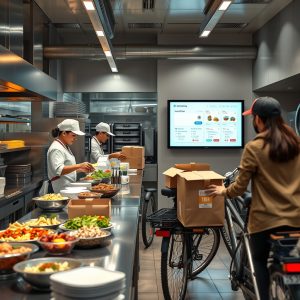
Express delivery has become the holy grail of the catering industry, with businesses racing to shave minutes off delivery times in a bid to outpace competitors. Yet, the obsession with speed often overshadows a fundamental truth: faster does not inherently mean better. The real challenge lies in balancing velocity with precision—ensuring that meals arrive not just quickly, but in impeccable condition, at the correct temperature, and with the same sensory integrity they possessed when they left the kitchen. A cold, soggy, or poorly packaged dish delivered in record time is a hollow victory, one that erodes trust and tarnishes a brand’s reputation.
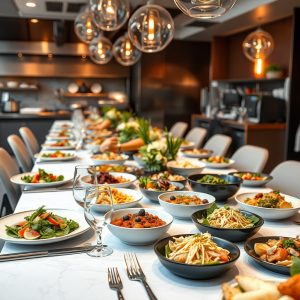
This paradox is particularly acute in corporate catering and event catering, where the stakes are higher. A delayed or mishandled order can disrupt an entire meeting, tarnish a client’s event, or worse, damage a long-term business relationship. The solution? A logistics framework that prioritizes reliability over raw speed, where predictive algorithms and real-time tracking systems work in tandem to ensure that every delivery arrives not just on time, but *right*.
The Customer Service Crucible: Where Logistics Meet Emotional Intelligence
If express delivery is the skeleton of modern catering logistics, customer service is the nervous system—transmitting signals, adapting to feedback, and ensuring that every interaction leaves a lasting impression. The best catering delivery services understand that customer service excellence is not a department; it is a culture, one that permeates every facet of the business, from the kitchen to the delivery driver’s vehicle.
Consider the role of communication in this ecosystem. A customer placing an online catering order expects transparency at every stage—confirmation of the order, real-time updates on preparation, dispatch notifications, and even post-delivery follow-ups. This level of engagement requires more than just automated emails; it demands a human touch, where customer service representatives are empowered to resolve issues proactively, anticipate needs, and turn potential failures into opportunities for loyalty-building. A driver who arrives with a smile, a handshake, and a willingness to go the extra mile (literally or figuratively) can transform a routine delivery into a memorable experience.
The Cloud Kitchen Advantage: Scalability Without Sacrifice
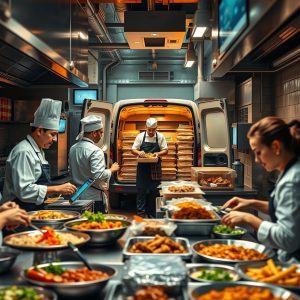
The rise of cloud kitchens has further complicated the last-mile equation. These delivery-only operations eliminate the overhead of traditional brick-and-mortar restaurants, allowing businesses to scale rapidly and focus exclusively on food quality and logistics. However, their success hinges on an often-overlooked factor: the ability to maintain consistency across hundreds or even thousands of orders. A cloud kitchen that excels in customer service does so by treating each order as a unique interaction, not just another transaction in a high-volume pipeline.
This is where data becomes a game-changer. By leveraging customer preferences, past orders, and even dietary restrictions, cloud kitchens can personalize the delivery experience in ways that traditional catering services cannot. Imagine a corporate client receiving a customized note with their order, or a repeat customer finding their favorite dish pre-selected in the online ordering system. These small touches, powered by data and executed with care, elevate the service from functional to exceptional.
The Retail Shop Delivery Revolution: Small Businesses Punching Above Their Weight
While large catering enterprises dominate the conversation, small businesses—particularly those in retail shop delivery and local catering services—are quietly redefining what it means to compete in the last mile. These businesses lack the resources of their corporate counterparts, but they make up for it with agility, hyper-local knowledge, and a deep understanding of their communities. A neighborhood deli that offers a food pickup service with a 15-minute turnaround or a family-owned catering business that hand-delivers meals with a handwritten note is not just selling food; it is selling connection.
The challenge for these businesses is scaling their operations without losing the personal touch that sets them apart. This is where partnerships with third-party logistics providers or the adoption of micro-fulfillment strategies can make a difference. By outsourcing the logistical heavy lifting, small businesses can focus on what they do best: creating exceptional food and fostering customer relationships. The key is to choose partners who align with their values—those who understand that speed is meaningless without reliability and that every delivery is an opportunity to reinforce trust.
The Drop-Off Dilemma: When Convenience Becomes a Liability
Drop-off catering, a staple of corporate events and large gatherings, presents its own set of logistical challenges. Unlike traditional delivery, where a driver interacts directly with the customer, drop-off catering often involves leaving food in a designated location with minimal oversight. This hands-off approach can lead to issues like missing items, incorrect orders, or even theft—problems that are exacerbated when the customer is not present to verify the delivery.
The solution lies in reimagining the drop-off process as an extension of customer service. This could mean requiring photo verification upon delivery, providing tamper-evident packaging, or even offering a live video feed of the drop-off for high-value orders. Some businesses are taking it a step further by integrating smart locks or secure delivery boxes into their logistics workflow, ensuring that food is not just delivered, but delivered *securely*. The goal is to eliminate friction without sacrificing accountability, turning a potential liability into a seamless, stress-free experience.
The Future of Catering: Where Technology Meets Humanity
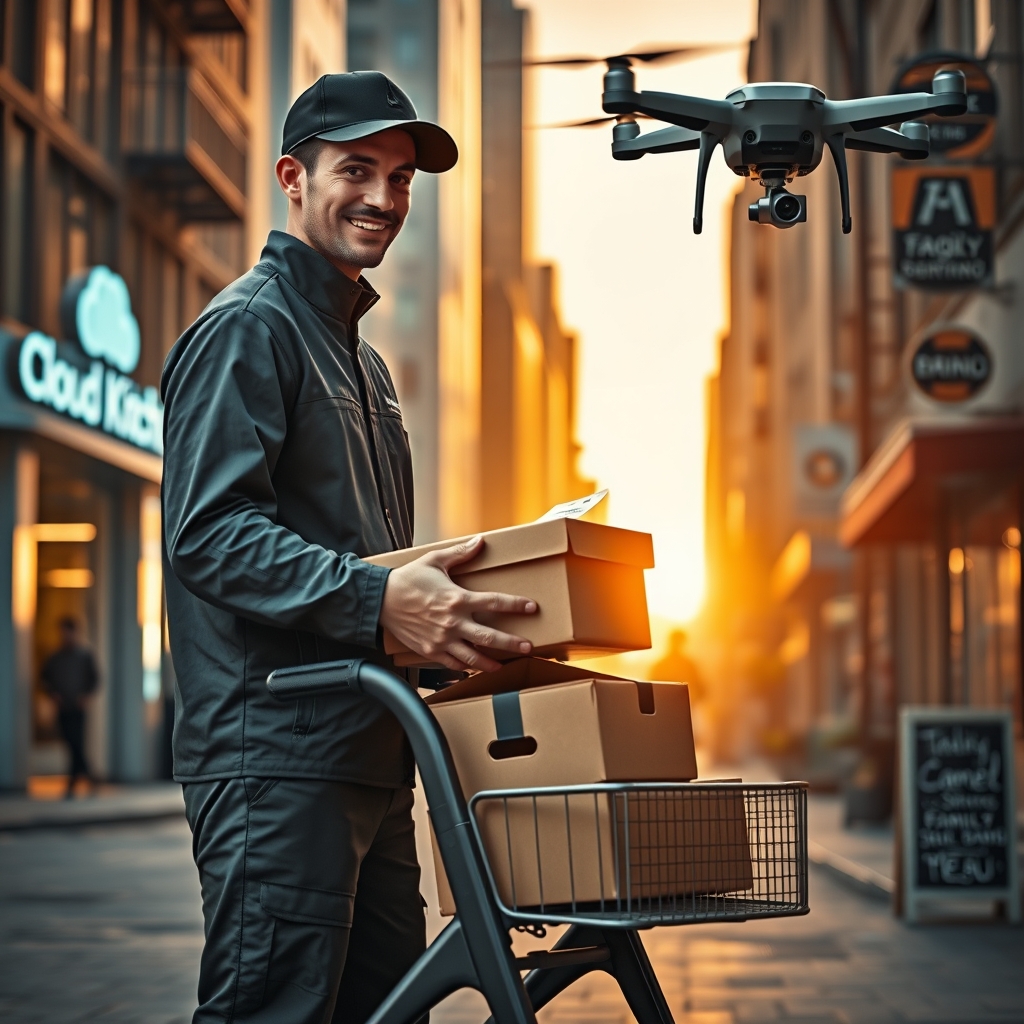
The catering industry stands at a crossroads, where the relentless march of technology threatens to overshadow the human element that has long defined great service. Drones, autonomous vehicles, and AI-driven logistics platforms promise to revolutionize the last mile, but they also risk reducing customer interactions to sterile, impersonal transactions. The businesses that will dominate the future are those that recognize technology as a tool, not a replacement—those that use data to enhance human connection, not erase it.
Take, for example, the role of AI in predicting customer needs. A well-designed algorithm can anticipate when a corporate client might need a last-minute lunch order or when a regular customer is likely to place their weekly dinner request. But it is the human touch—the phone call to confirm the order, the handwritten note in the delivery bag, the willingness to accommodate a last-minute change—that transforms a transaction into a relationship. The most successful catering services will be those that strike this balance, where technology handles the logistics and humans handle the care.
The last mile is not just a logistical challenge; it is a litmus test for the entire catering industry. Businesses that treat it as an afterthought will find themselves outpaced by competitors who understand that speed, reliability, and customer service are not separate disciplines, but interconnected pillars of success. In an age where convenience is currency, the ability to deliver not just food, but an experience, will separate the leaders from the laggards. The question is no longer whether a business can deliver on time, but whether it can deliver on its promise—every time, without exception, and with a level of service that turns first-time customers into lifelong advocates.