The Last Mile Liturgy: How Small Business Catering Services Are Weaponizing Hyper-Local Logistics to Outmaneuver Corporate Giants
The modern food service landscape is a battleground where David doesn’t just stand a chance against Goliath—he’s systematically dismantling him. The weapon of choice? Hyper-local logistics, a strategy so precise it transforms the last mile from a logistical nightmare into a competitive superpower. For small business catering services, this isn’t just about delivery; it’s about rewriting the rules of engagement in an industry dominated by scale, capital, and corporate inertia. The question isn’t whether hyper-local logistics work—it’s how long corporate catering giants will remain oblivious to the revolution unfolding in their blind spot.
The Myth of Scale: Why Bigger Isn’t Always Better
Corporate catering services have long relied on the illusion that scale equals efficiency. Their playbook is simple: centralize production, standardize menus, and leverage bulk purchasing to undercut smaller competitors on price. But this model is built on a fundamental flaw—it assumes that the last mile is a commodity, a uniform challenge that can be solved with brute-force logistics and algorithmic routing. The reality is far messier. Urban traffic, unpredictable weather, and the sheer unpredictability of human behavior turn the last mile into a high-stakes game of precision, where a single misstep can unravel an entire operation.
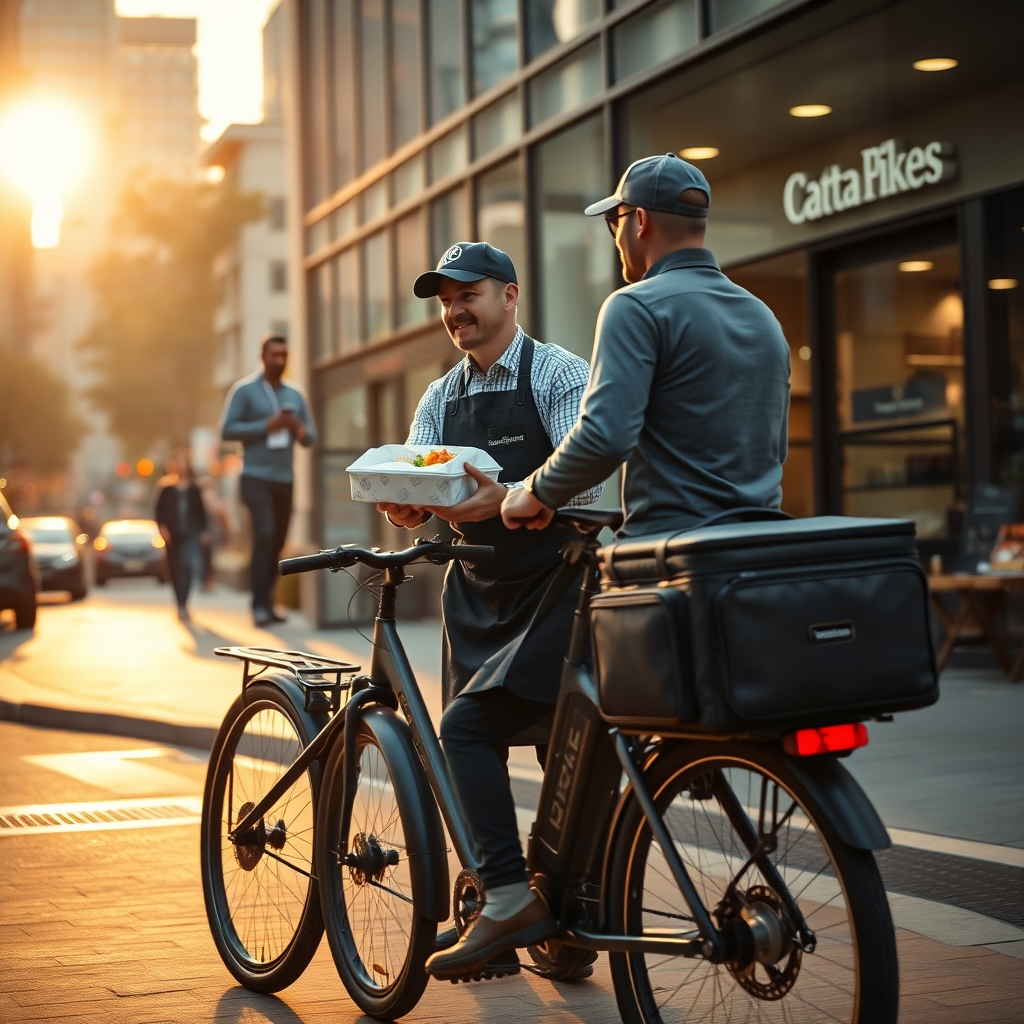
Small business catering services, unburdened by the rigidity of corporate structures, have turned this vulnerability into an advantage. By operating within a tightly defined geographic radius—often no more than a 5-mile radius—they eliminate the inefficiencies that plague larger operations. No more cross-town deliveries that burn fuel and time. No more juggling multiple time zones or navigating the labyrinth of urban infrastructure. Instead, hyper-local caterers treat the last mile as a controlled environment, where familiarity with every street, alley, and shortcut becomes a tactical edge. The result? Faster deliveries, lower costs, and a level of reliability that corporate giants, with their sprawling networks, can only dream of.
The Proximity Paradox: How Being Close Breeds Trust
Trust is the currency of the catering industry, and in the age of on-demand expectations, it’s more volatile than ever. Corporate catering services attempt to manufacture trust through branding, digital interfaces, and algorithmic promises—”Your order will arrive in 30 minutes or less.” But trust isn’t built on guarantees; it’s built on consistency, and consistency is where hyper-local caterers excel. When a small business operates within a tight radius, every delivery becomes a repeat performance. Drivers know the regulars. They recognize the quirks of each neighborhood—the building with the unmarked entrance, the street that floods during rain, the office park where security takes 10 minutes to approve access. This isn’t just operational knowledge; it’s institutional memory, a living database of local idiosyncrasies that no corporate algorithm can replicate.
Moreover, hyper-local caterers leverage proximity to foster a sense of community. A corporate catering service might deliver to a client once a quarter; a hyper-local operator might deliver to the same office park three times a week. Over time, this frequency transforms transactions into relationships. Customers aren’t just ordering food—they’re engaging with a local business that understands their rhythms, anticipates their needs, and adapts to their preferences. In an era where customer loyalty is increasingly rare, this level of intimacy is a competitive moat that corporate caterers, with their impersonal, transactional models, cannot cross.
The Cloud Kitchen Conundrum: Why Hyper-Local Beats Virtual Scale
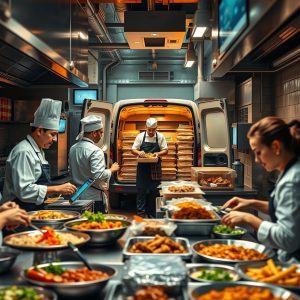
The rise of cloud kitchens has been hailed as the future of food service, a model that promises to strip away the inefficiencies of brick-and-mortar operations and focus solely on delivery. But for all their supposed advantages, cloud kitchens are fundamentally flawed when it comes to the last mile. By centralizing production in industrial zones or low-rent districts, they create a logistical disconnect—food is prepared miles away from its final destination, forcing delivery drivers to navigate the same urban chaos that corporate caterers struggle with. The result is a paradox: cloud kitchens may excel at volume, but they sacrifice the very thing that hyper-local caterers weaponize—proximity.
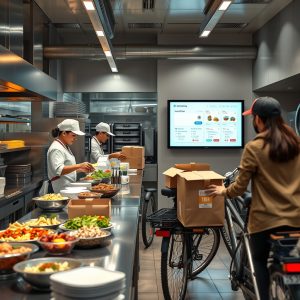
Small business caterers, particularly those operating out of retail shop fronts or home-based kitchens, turn this weakness into strength. By situating their operations within the communities they serve, they collapse the distance between production and delivery. A meal prepared in a neighborhood kitchen can be on a customer’s doorstep in 15 minutes, not 45. This isn’t just a matter of speed; it’s a matter of quality. Food that spends less time in transit retains its temperature, texture, and integrity. For caterers, this means the difference between a dish that arrives as a masterpiece and one that arrives as a compromised shadow of its former self.
The Data Delusion: Why Algorithms Can’t Replace Local Intelligence
Corporate catering services and cloud kitchens place immense faith in data. They track delivery times, monitor driver performance, and optimize routes with machine learning. But data, no matter how sophisticated, is only as good as the context it’s applied to. Hyper-local caterers understand that the last mile isn’t a problem to be solved with algorithms—it’s a dynamic ecosystem that requires human intuition. A driver who knows that a particular intersection is a nightmare between 4:30 and 5:30 PM can reroute on the fly. A caterer who notices that a client always orders extra desserts on Fridays can anticipate the request before it’s made. These are the kinds of insights that data alone cannot provide.
Moreover, hyper-local caterers use their proximity to gather intelligence that corporate operations can’t access. They hear the gossip at the local coffee shop. They notice when a new office building opens or when a competitor goes out of business. They adapt their menus based on real-time feedback from customers, not focus groups or market research. This agility allows them to pivot faster than larger competitors, turning logistical constraints into opportunities. When a corporate caterer is still debating whether to add a new dish to their menu, a hyper-local operator has already tested it, refined it, and rolled it out to their most loyal customers.
The Economics of the Unseen: How Hyper-Local Logistics Redefine Profitability
At first glance, the hyper-local model seems like a recipe for limited growth. After all, how much can a catering service really scale if it’s confined to a 5-mile radius? But this perspective misses the point. Hyper-local logistics aren’t about scaling outward—they’re about scaling inward, maximizing the potential of a tightly defined market. By focusing on a small geographic area, caterers can achieve a level of operational efficiency that larger competitors can’t match. Lower fuel costs. Shorter delivery times. Higher customer retention. These aren’t just marginal gains; they’re the building blocks of a sustainable, profitable business.
Consider the economics of delivery. A corporate catering service might spend $10 on fuel to deliver a $50 order across town. A hyper-local caterer, by contrast, might spend $2 on fuel for the same order. That $8 difference isn’t just savings—it’s pure profit. Multiply that across hundreds of deliveries, and the financial advantage becomes undeniable. Moreover, hyper-local caterers can afford to offer premium services that larger competitors can’t justify. Same-day delivery. Customized menus. Personalized packaging. These aren’t just value-adds; they’re differentiators that command higher prices and foster deeper customer loyalty.
Hyper-local logistics also allow small business caterers to compete on a playing field where corporate giants are inherently disadvantaged: customer service. When a delivery goes wrong—and it will—corporate caterers rely on call centers, automated responses, and scripted apologies. Hyper-local caterers, on the other hand, can resolve issues in real time. A driver who knows the customer can personally apologize, offer a discount on the next order, or even hand-deliver a replacement dish. These aren’t just gestures; they’re the kind of interactions that turn one-time buyers into lifelong advocates. In an industry where customer acquisition costs are rising and loyalty is fleeting, this level of service is priceless.
The last mile isn’t just the final leg of a delivery—it’s the frontline of a war for customer devotion. Corporate catering services, with their sprawling networks and algorithmic approaches, are fighting this war with blunt instruments. Hyper-local caterers, by contrast, are wielding scalpels, turning every delivery into a precision strike. The result isn’t just faster food or lower costs; it’s a fundamental redefinition of what it means to compete in the catering industry. The giants may have the resources, but the Davids have the agility, the intimacy, and the tactical brilliance to outmaneuver them at every turn. The question isn’t whether hyper-local logistics will reshape the industry—it’s how long it will take the giants to realize they’ve already lost.