The Precision Paradox: How Catering Logistics Are Redefining the Economics of Perceived Spontaneity
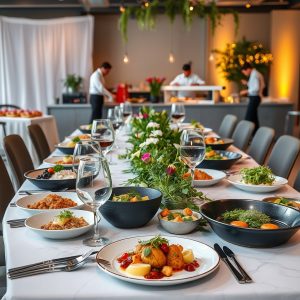
The modern catering industry operates under a deceptive veneer of effortlessness. Behind every seamless corporate luncheon, every flawlessly executed wedding banquet, and every on-demand meal delivery lies a labyrinth of logistical precision that borders on the obsessive. This is the paradox at the heart of contemporary food service: the more spontaneous and frictionless an experience appears to the customer, the more rigid and calculated the backend operations must become. The illusion of spontaneity is not accidental—it is engineered through a complex interplay of data analytics, micro-logistics, and customer psychology.
The Data-Driven Kitchen
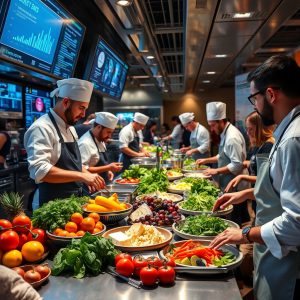
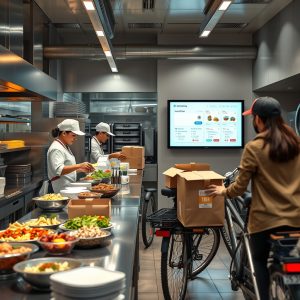
The most successful catering businesses today are not merely culinary enterprises; they are data operations disguised as kitchens. Every order, no matter how small, generates a cascade of information—preparation times, ingredient availability, delivery windows, traffic patterns, and even customer mood indicators (gleaned from order notes or past behavior). Cloud kitchens, in particular, have become the nerve centers of this data revolution, where algorithms predict demand before it materializes and adjust production in real time. The result is a system that appears to anticipate needs before they are articulated, creating an almost psychic level of service that customers mistake for intuition rather than computation.
Consider the corporate catering sector, where the stakes are particularly high. A delayed lunch delivery doesn’t just inconvenience—it disrupts workflows, sours client relationships, and erodes trust in the caterer’s reliability. To mitigate this, leading catering services now employ predictive logistics that factor in everything from elevator wait times in office buildings to the likelihood of last-minute attendee changes. The goal is not just to deliver food on time but to make the entire process feel inevitable, as if the meal were always meant to arrive precisely when it does.
The Illusion of Infinite Choice
One of the most potent tools in the caterer’s arsenal is the curated menu—a carefully constructed illusion of boundless options that, in reality, is a tightly controlled selection designed for maximum efficiency. This is not a limitation but a strategic advantage. By narrowing choices to dishes that can be prepared and delivered with near-perfect consistency, caterers eliminate the variables that lead to delays, errors, or quality fluctuations. The customer perceives freedom; the caterer operates within a framework of controlled predictability.
This principle extends to pickup and delivery services, where the challenge is to make the transaction feel personal despite its inherent scalability. A well-designed online ordering system doesn’t just process requests—it guides the customer toward selections that align with the caterer’s operational strengths. Suggested add-ons, time-slot recommendations, and even dynamic pricing are all tools to shape demand in a way that optimizes the backend. The result is a service that feels bespoke but is, in fact, a masterclass in logistical choreography.
The Last Mile as a Psychological Battleground
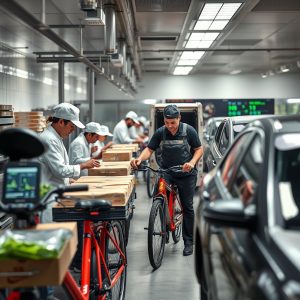
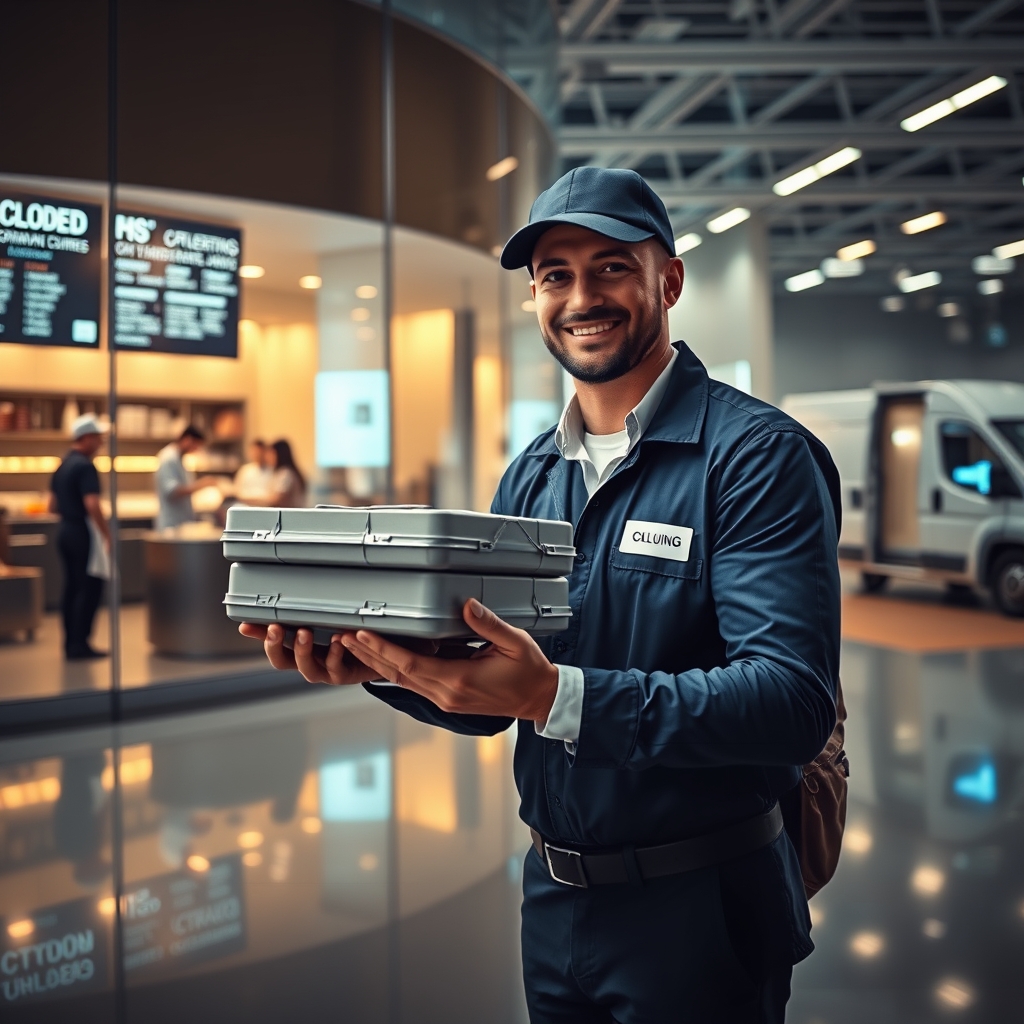
If the kitchen is where the illusion of spontaneity is manufactured, the last mile is where it is either preserved or shattered. This final leg of the delivery journey is a high-stakes performance where every second of delay, every degree of temperature fluctuation, and every minor packaging imperfection can unravel hours of meticulous preparation. The most advanced catering services treat the last mile not as a logistical challenge but as a psychological one, where the goal is to make the customer forget that the food ever had to travel at all.
Express delivery services have elevated this to an art form. By leveraging real-time traffic data, route optimization algorithms, and even weather forecasts, they ensure that meals arrive not just on time but at the precise moment when the customer is most receptive. A lunch delivery that arrives five minutes early can feel intrusive; one that arrives five minutes late can feel like a failure. The difference between the two is not just a matter of minutes but of perception—and perception is the currency of modern catering.
The Human Factor in a Data-Driven World
For all the talk of algorithms and automation, the most critical variable in catering logistics remains the human element. A delivery driver who understands the nuances of customer interaction, a kitchen staff that can adapt to last-minute changes, or a customer service representative who can de-escalate a complaint with empathy—these are the moments that transform a transaction into a relationship. The best catering services recognize that technology is a tool, not a replacement, for human judgment. They use data to inform decisions but leave room for the unpredictability that makes each interaction unique.
This is particularly evident in home catering services, where the intimacy of the setting demands a level of personalization that no algorithm can fully replicate. A caterer who remembers a client’s dietary preferences or adjusts a dish based on a last-minute request is not just providing a service—they are creating a narrative of care and attention that no amount of logistical precision can achieve on its own. The challenge, then, is to scale this level of personalization without sacrificing the efficiency that makes modern catering viable.
The Economics of Perceived Effortlessness
The paradox of the catering industry is that its most valuable commodity—perceived effortlessness—is also its most expensive to produce. Every layer of convenience, from online ordering to express delivery, adds complexity to the backend, requiring investments in technology, training, and infrastructure. Yet customers, conditioned by the frictionless experiences of on-demand services, increasingly view this effortlessness not as a luxury but as a baseline expectation. The caterers who thrive in this environment are those who understand that their true product is not food but the experience of receiving it—an experience that must feel spontaneous, personalized, and inevitable, even as it is meticulously orchestrated behind the scenes.
The future of catering lies not in eliminating friction but in making it invisible. The most successful services will be those that can deliver the warmth of a home-cooked meal with the precision of a logistics operation, the intimacy of a local shop with the scalability of a cloud kitchen. They will do so not by choosing between spontaneity and control but by mastering the art of making one serve the other. In this world, the caterer’s greatest skill is not in the kitchen or even in the delivery van—it is in the ability to make the customer forget that any of it was ever in doubt.